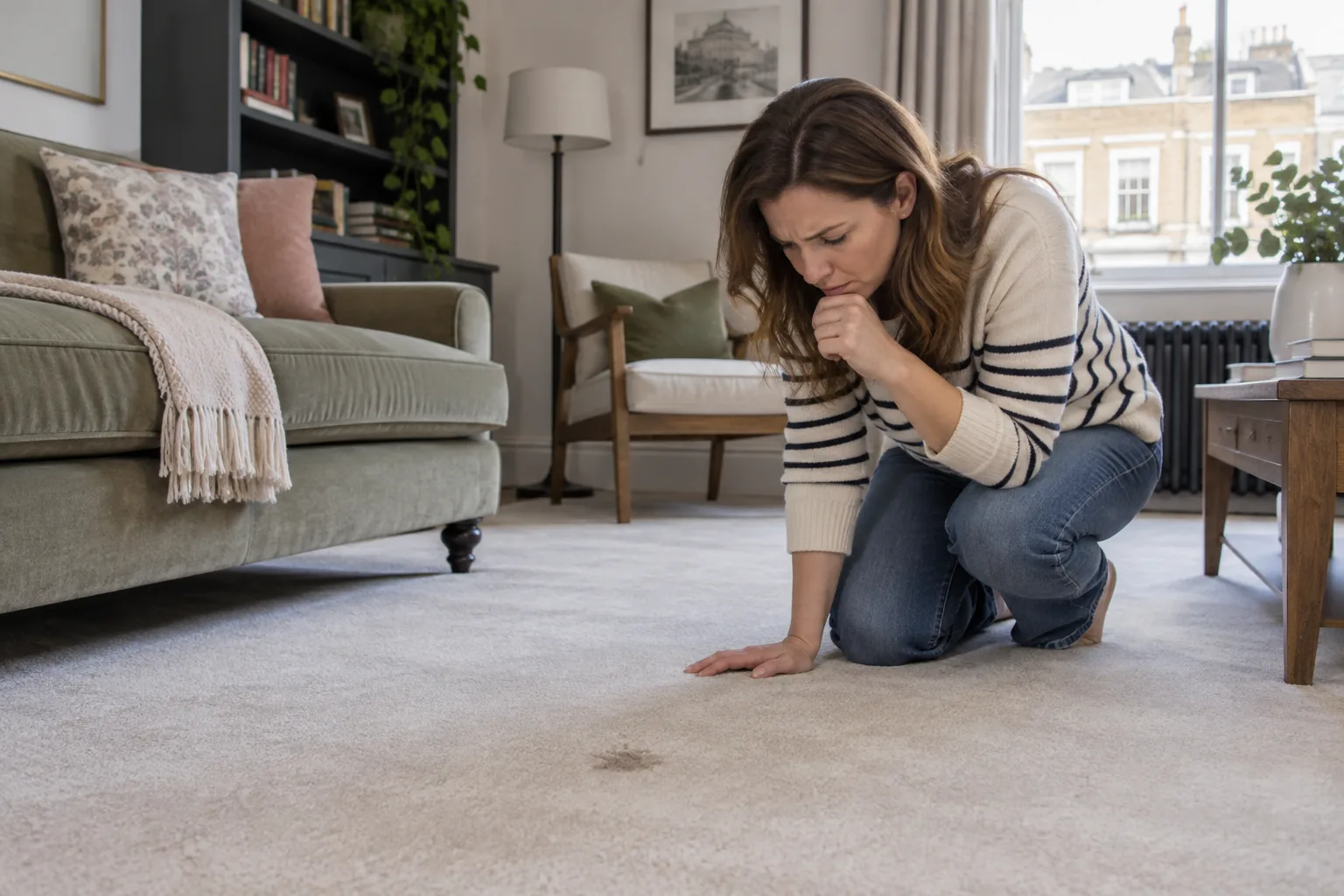
Stop treating a carpet stain yourself when the colour starts transferring, the pile changes texture, the mark spreads, an odour persists, or you cannot identify the fibre and the spilled substance. More product and more rubbing do not necessarily mean more cleaning. Once the response of the carpet becomes uncertain, preserving the material matters more than chasing the last visible outline.
The first stop sign: colour on the cloth
Use a clean white cloth when blotting because it shows what is leaving the carpet. The colour of the drink or food may appear at first; that is expected. Carpet dye on the cloth is different. If a pale cloth begins to take on the colour of the carpet itself, stop adding moisture or product. Continued work can leave a permanently lighter patch that is more noticeable than the original stain.
Colour movement is not always dramatic. Check the cloth under neutral daylight and compare an untouched section of pile. Dark, strongly coloured and patterned carpets deserve particular caution because a small loss can alter the visual balance of the design.
Stop when the pile no longer feels normal
A stain is not only a colour problem. Repeated scrubbing can untwist fibres, flatten a cut pile or make one area feel stiff. If the treated section looks fuzzy, reflects light differently or stays matted after gentle grooming, pause. Mechanical damage cannot be rinsed away.
Do not use a hard brush to force the pile upright. Blot, keep foot traffic away and let the area settle. A professional assessment can separate remaining residue from physical change.
Watch the edge of the damp area
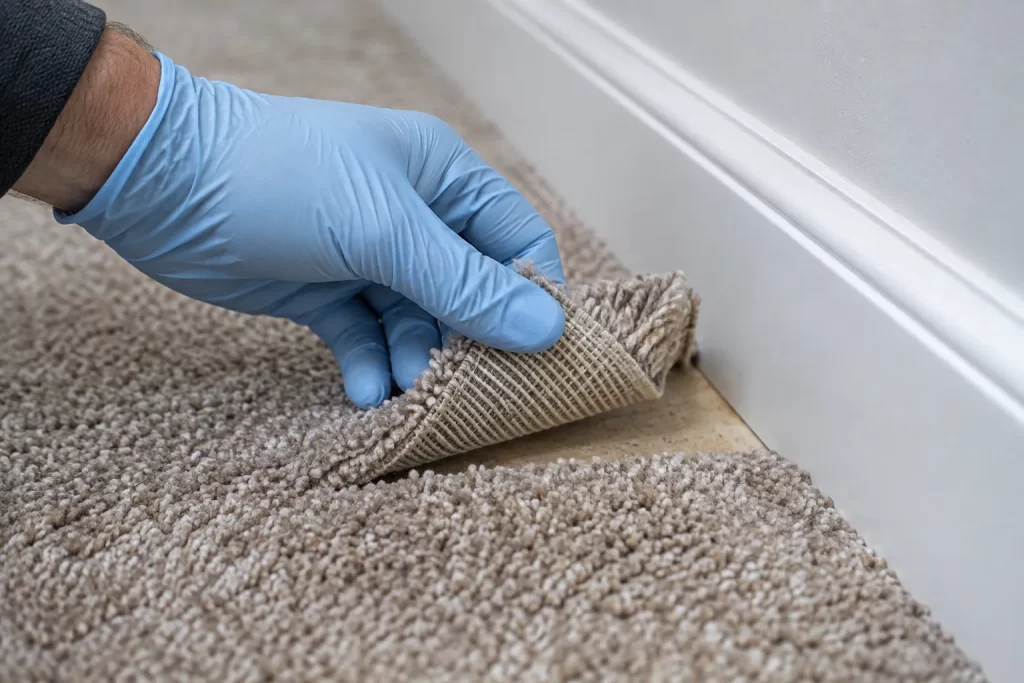
A growing ring indicates that liquid is travelling beyond the original spill. This can carry contamination through the backing, move old residues towards the edge or create a tide mark as the carpet dries. Adding water to “blend” the ring often enlarges the problem.
Mark the outer edge mentally or take a photograph, then stop. Place dry white towels over the area and apply light, even pressure without twisting. Do not cover it with plastic; trapped moisture slows drying and hides changes.
Unknown substances need restraint
If you do not know what was spilled, avoid combining cleaners. Household products can react with one another, set certain stains or leave residues that complicate later treatment. Strong odours, bodily fluids, paint, adhesives, ink and oily products each raise different questions. Keep packaging or ingredient information if it is available.
For hazardous material, sharp fragments or a substance that irritates skin or breathing, isolate the area and seek appropriate specialist advice. Ordinary carpet cleaning is not a substitute for hazardous-waste handling.
Repeated attempts are a warning in themselves
A reasonable first response is short: remove solids without pushing them down, blot liquid from the outside towards the centre, and reassess. If two careful blotting rounds produce no useful transfer, repeated cycles are unlikely to become safer simply because they continue.
Write down what you used and approximately how much. This is more useful to a technician than a long list of improvised treatments remembered later. Include steam devices, washing-up liquid, laundry products and rented machines even if they seemed harmless.
Heat can lock in the problem
Do not apply a hairdryer, iron, steam mop or very hot water to speed the result. Heat can affect dyes, deform synthetic fibres and change protein-based or sugary residues. It can also dry the surface while the backing remains wet. Natural airflow and moderate room conditions are safer while you decide what to do.
When odour remains after the surface looks better
An odour suggests that material may have reached beneath the visible pile. Pet accidents, milk and other organic spills can affect the backing or underlay. Masking the smell with fragrance does not remove its source, and saturating the carpet can spread it further.
Note whether the odour becomes stronger in warm or humid conditions. That observation helps define the affected area. Keep children and pets away until the surface is dry and the cause has been assessed.
Check whether the carpet can dry properly
Stop adding moisture if the room is cold, ventilation is poor or the carpet already feels wet below the pile. Lift no fitted carpet unless you know how it is installed and can do so without damaging it. Move only light, safe items; furniture legs on damp carpet can transfer dye or leave rust marks.
If safe, create airflow across the room and keep the treated section unused. Avoid placing a powerful heater directly over it. Drying conditions are part of the treatment decision, not an afterthought.
Photograph before the appearance changes
Take one wide image showing the location and one close image in neutral light. Add a ruler or familiar object nearby without placing it in the stain. A photograph records the original scale, which is valuable if the edge spreads or the colour changes during drying.
For a rental property, tell the responsible person promptly. Concealing a wet treatment under furniture may increase damage and make an accurate handover record harder.
Information to give a professional
- What was spilled and when, including uncertainty.
- The carpet fibre or manufacturer information, if known.
- Every product, machine and technique already used.
- Whether colour transferred or the pile changed.
- How far the dampness and odour extend.
- Any previous stain protection or professional treatment.
Do not promise yourself that professional treatment will make every mark invisible. Age, heat, dye loss and previous attempts affect what is achievable. The useful question is whether further treatment can be carried out without unreasonable risk.
A safe decision rule
Continue only while you understand the material, the substance is suitable for simple blotting, the carpet colour and texture remain stable, and moisture is reducing. Stop as soon as one of those conditions fails. If a fresh spill has just happened, follow the containment sequence in our guide to the first ten minutes after a carpet spill before reaching for a cupboard full of products.
Stopping is not giving up. It prevents a limited stain becoming a larger colour, texture or moisture problem and preserves better options for the next assessment.
Review the area after it has dried
A wet carpet reflects light differently, so do not judge the final colour immediately. Once safely dry, inspect from several directions and compare texture with the surrounding pile. Note any returning ring or odour rather than starting another unplanned treatment cycle.
If the mark has improved but remains stable, a clear photograph and treatment history provide a better next step than experimenting with a stronger product.
Keep the area visible until it is dry. A chair placed over the spot can hide a spreading edge, restrict airflow and transfer colour from its feet.