
Local Islington team · Appointments across N1, N5 & N7
Home›Cleaning services›Rug cleaning in Islington

Joe’s Home Care · Local Islington team

Rug cleaning in Islington

Care that starts with the rug, not a generic method.

Rugs vary in fibre, dye stability, backing and construction. Share photographs and label details where possible so unsuitable treatment can be avoided.

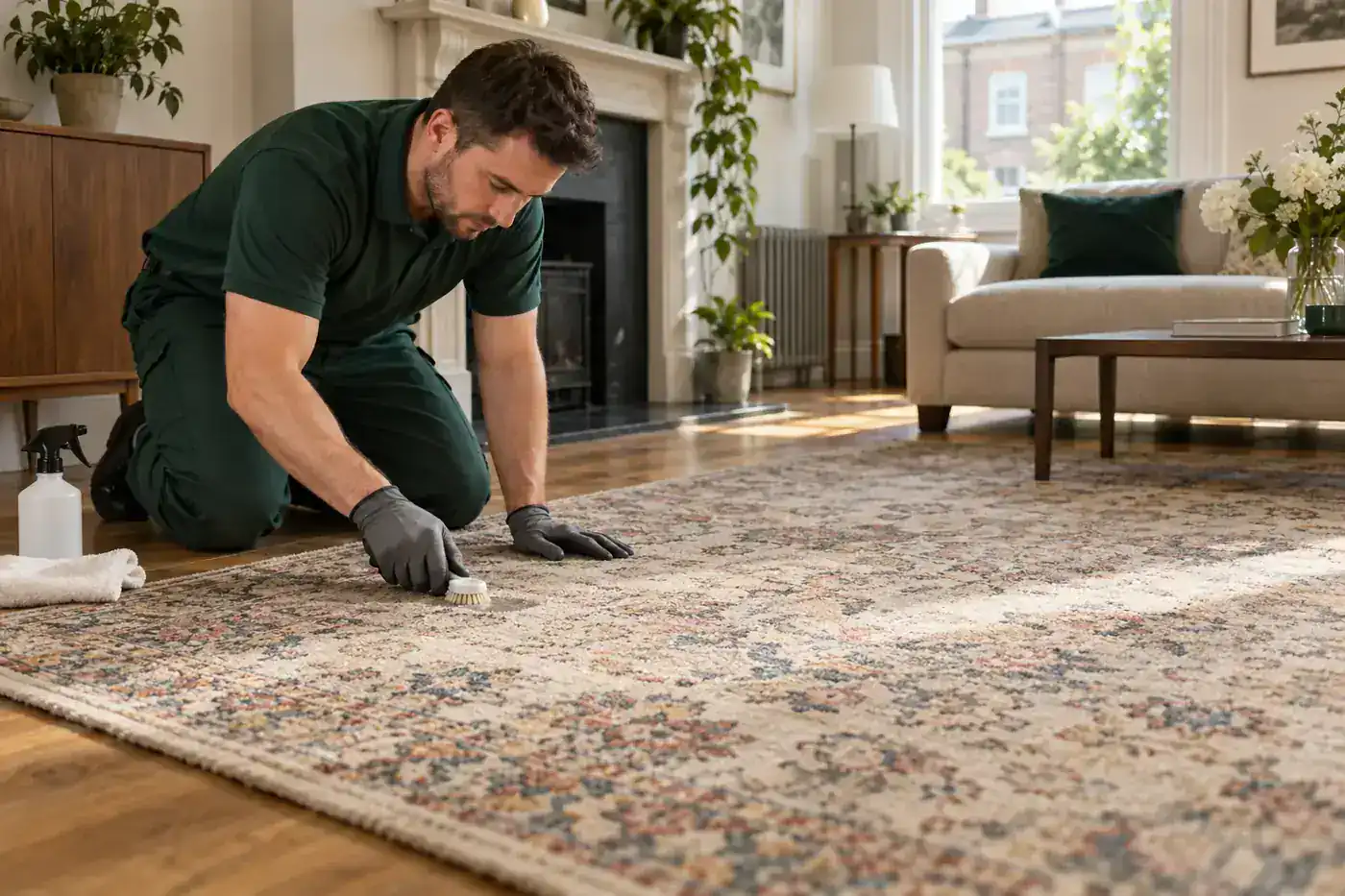
Rug cleaning in Islington in a local Islington property
Why local households call Joe’s✓ Scope agreed first✓ Clear guide pricing✓ Local Islington team
How we plan Rug cleaning in IslingtonPlanned around your property

Islington service signals

N1N5N7
Local base
Essex Road, Islington
Route planning
Appointments grouped around nearby streets
Service context
Islington homes contain everything from modern hallway runners to inherited rugs that need cautious handling.
Photograph the face, back, fringe and label in natural light; those views often reveal whether in-home treatment is sensible.

How we do it

Every rug is assessed as an object, not a small carpet.

Rugs can look simple while hiding very different constructions. Before accepting an in-home clean, we ask for the dimensions, photographs of the front and back, the care label and any information about fibre or origin. Wool, viscose, cotton, synthetic pile and mixed fibres respond differently to moisture and agitation. Fringes, glued backings, unstable dyes and hand-knotted construction can change the safe method completely. Valuable, antique or colour-unstable pieces may need workshop treatment instead.

At the property, the rug is inspected in good light and checked for pre-existing wear, colour movement, pet contamination and damaged edges. Dry soil is removed before any wet process because grit settles deep around the base of the pile. A colour-fastness test is made where needed. Treatment is then applied evenly with controlled moisture, working with the pile rather than scrubbing against it. Fringes are handled separately and are never promised to return to an artificial bright white.

The floor beneath the rug also matters. We protect sensitive timber and do not leave a damp textile sitting on a vulnerable finish. If the rug cannot be moved safely, access and expectations are agreed before work starts. Strong odours or contamination may require treatment on both sides and cannot always be resolved in one in-home visit. Shrinkage risk, browning and dye bleed are reasons to stop and recommend a specialist route rather than experiment.

After cleaning, the pile is set neatly and airflow is arranged around the whole piece. We explain when it can be walked on or returned to its usual position, and why underlay must be fully dry. The final check records stains that are permanent, worn areas that cleaning has revealed and any edge repair that belongs with a rug conservator. Careful rug cleaning is measured by material safety and an even result, not by treating every textile with the same machine.

Joe’s Home CareLocal planning · considered methods · clear handover

Typical scope

What can be included

  • Condition and colour-fastness review
  • Suitable surface and fibre treatment
  • Attention to accessible edges and pile
  • Drying advice after treatment

Before we quote

What changes the scope

  1. Fibre and construction
  2. Size, staining and fringe detail
  3. Whether the rug can be moved safely

Construction, colour stability and the floor beneath the rug matter more than a simple length-by-width measurement.

Guide pricing

Useful figures before you request a quote.

Rug guides reflect size and a straightforward washable construction. Delicate fibres, unstable dyes or work needed on both sides require a separate recommendation.

Request a quote →
Rug cleaning in Islington — indicative pricing
Service or propertyGuide priceWhat to know
Rug up to 15 m²from £30Fibre and construction checked first
Small rug / runnerquote by sizePhotos help confirm the method
Delicate or antique rugspecialist quoteMay require workshop treatment
Minimum service guidefrom £68Where in-home treatment is suitable

Antique, viscose, hand-knotted or badly contaminated rugs may be referred to a controlled workshop rather than treated at the property.

Reading the textile

Inspection determines which cleaning method is suitable.

Type of visitBest suited toHow it is scoped
In-home rug careStable modern pieces with safe drying spaceConstruction check followed by controlled treatment
Workshop referralValuable, unstable or complex textilesSpecialist testing and drying away from the home
This serviceRug cleaning in IslingtonFibre and construction; Size, staining and fringe detail; Whether the rug can be moved safely

Useful answers

Before arranging the visit

Can every rug be cleaned in my home?

No. Antique, hand-knotted, viscose or colour-unstable rugs may need controlled workshop treatment. Photographs of the front, back, fringes and label help us decide whether an in-home method is responsible.

How do you check whether the colours might run?

We inspect the construction and carry out a discreet colour-fastness test where needed. If the colours move during the test, we stop and recommend a safer treatment.

Will the fringes become bright white again?

Not necessarily. Natural ageing, wear and dye movement can permanently change fringe colour. We clean them with a method suited to their fibre, but do not bleach them simply to create an artificial contrast.

What happens to the floor underneath during cleaning?

Sensitive timber or other finishes are protected from moisture, and a damp rug is never left sitting directly on a vulnerable floor. Safe movement and drying space are confirmed before the treatment begins.

Can rug cleaning remove pet odour completely?

It depends on whether contamination has reached the backing or floor beneath. Surface treatment may improve it, but deep or repeated contamination can require cleaning on both sides, specialist decontamination or replacement of underlay.

Unsure whether the rug can be cleaned at home?

Start with clear pictures instead of guessing the treatment.

We will tell you when a specialist workshop is the safer option.
020 3404 4284
Call 020 3404 4284