
Local Islington team · Appointments across N1, N5 & N7
Home›Cleaning services›Hard floor cleaning in Islington

Joe’s Home Care · Local Islington team

Hard floor cleaning in Islington

The finish determines what can safely be done.

Wood, laminate, vinyl, tile and stone respond differently to moisture and products. We identify the surface before agreeing cleaning or more specialist restoration.

Hard floor cleaning in Islington in a local Islington property
Why local households call Joe’s✓ Scope agreed first✓ Clear guide pricing✓ Local Islington team
How we plan Hard floor cleaning in IslingtonPlanned around your property

Islington service signals

N1N5N7
Local base
Essex Road, Islington
Route planning
Appointments grouped around nearby streets
Service context
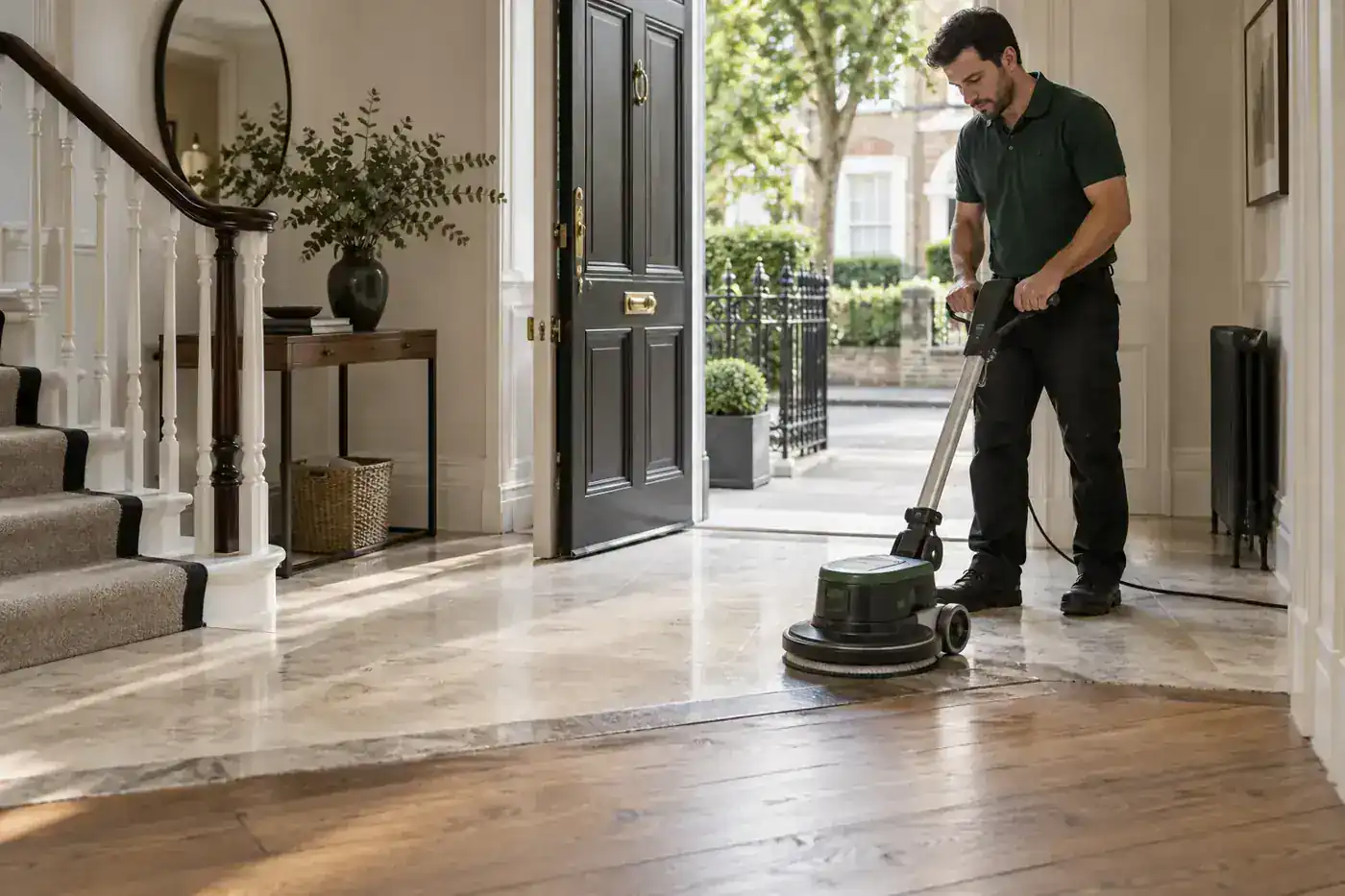
Islington properties often place original timber beside newer tile or vinyl, so one hallway can contain several care requirements.
If you know whether the floor is oiled, lacquered, sealed or previously polished, include that history with the enquiry.

How we do it

We identify the finish before choosing water, product or pressure.

A hard floor can be timber, laminate, luxury vinyl, ceramic tile, porcelain or natural stone, and the visible surface does not always reveal the coating beneath. We ask for photographs and any information about sealing, oiling or previous polishing. The quotation considers area, fixed furniture, access and the type of soiling. Scratches, worn lacquer, etched stone and missing grout are documented as condition issues because cleaning cannot rebuild the finish.

The first practical step is dry soil removal. Grit is vacuumed from edges and joints before it can be dragged across the floor. A discreet test establishes how the finish reacts to moisture and product. The main clean then proceeds in controlled sections, using as little liquid as the material requires. Timber and laminate are not flooded; stone and tile are not automatically exposed to acidic products; textured vinyl receives agitation suited to its pattern rather than excessive force.

Furniture is moved only when weight, construction and floor protection make that safe. Pads or barriers are used where appropriate, and large fixed pieces remain in place with accessible edges cleaned around them. Grout staining may improve, but discolouration within damaged or unsealed joints can remain. Old polish, wax, sealant and adhesive need a restoration scope, not an improvised addition to routine cleaning.

As each section dries, we look across the surface for residue, uneven sheen or moisture collecting at edges. The floor is left free from cleaning film and the household is told when normal use can resume. Chair legs and thresholds are checked for trapped grit before the protective barriers are removed. We also explain aftercare that matches the finish: appropriate mats, prompt spill removal and products to avoid. If sanding, polishing, sealing or stone restoration is needed, it is named clearly as separate work. Protecting the floor is more important than forcing a dramatic but short-lived shine.

Joe’s Home CareLocal planning · considered methods · clear handover

Typical scope

What can be included

  • Vacuuming or dry soil removal
  • Surface-appropriate cleaning
  • Attention to accessible edges
  • Practical aftercare advice

Before we quote

What changes the scope

  1. Floor material and finish
  2. Area, condition and fixed furniture
  3. Staining, grout and previous coatings

Material, finish, area, fixed furniture and worn coatings decide whether the request is cleaning or a restoration project.

Guide pricing

Useful figures before you request a quote.

Hard-floor guides use area and method because a careful timber clean is not equivalent to work on porcelain or stone. The finish is identified before a figure is confirmed.

Request a quote →
Hard floor cleaning in Islington — indicative pricing
Service or propertyGuide priceWhat to know
Professional cleaning£4–£8 per m²Material and finish checked first
Hourly specialist guide£40–£65 per hourWhere hourly pricing is suitable
Typical minimum visit£100–£180Access and equipment considered
Kitchen / hallway area£150–£320London market guide
Restoration / sealingseparate quoteNot included in routine cleaning

Routine cleaning does not include sanding, refinishing, polishing or sealing, and it cannot disguise scratches beneath removed soil.

Protecting the finish

Use the least moisture and pressure the surface requires.

Type of visitBest suited toHow it is scoped
Maintenance cleanSound floors with removable traffic soilDry preparation followed by material-safe cleaning
Restoration enquiryWorn coatings, scratches or damaged stoneSeparate assessment for specialist repair or refinishing
This serviceHard floor cleaning in IslingtonFloor material and finish; Area, condition and fixed furniture; Staining, grout and previous coatings

Useful answers

Before arranging the visit

How do you identify the right method for my floor?

We ask about the material, finish, previous coatings and care instructions, then test discreetly where necessary. Timber, laminate, vinyl, porcelain and natural stone cannot safely share one product or moisture level.

Can you restore scratches or worn patches?

Cleaning removes soil; it does not replace lacquer, repair scratches or rebuild a worn surface. Sanding, polishing, sealing and stone restoration are separate specialist processes and should be quoted as such.

Will dark grout lines become their original colour?

Some grout responds well when the discolouration is removable surface soil. Deep staining, damaged joints, mould beneath sealant and unsealed porous grout may remain and can require repair or recolouring.

Do you move appliances and heavy furniture?

Only light, safe items agreed beforehand. Integrated appliances, very heavy furniture and pieces likely to scratch the floor stay in place, with accessible edges cleaned around them.

When can people walk on the floor again?

That depends on the material and treatment. We leave a safe route where possible and explain when normal use can resume; furniture, rugs and protective mats should not be returned while residual moisture remains.

Not certain what the floor is made from?

Identify the finish before choosing the treatment.

Send a close view, a wider room photograph and any product history you have.
020 3404 4284
Call 020 3404 4284