
How we do it
Different furnishings receive different decisions.
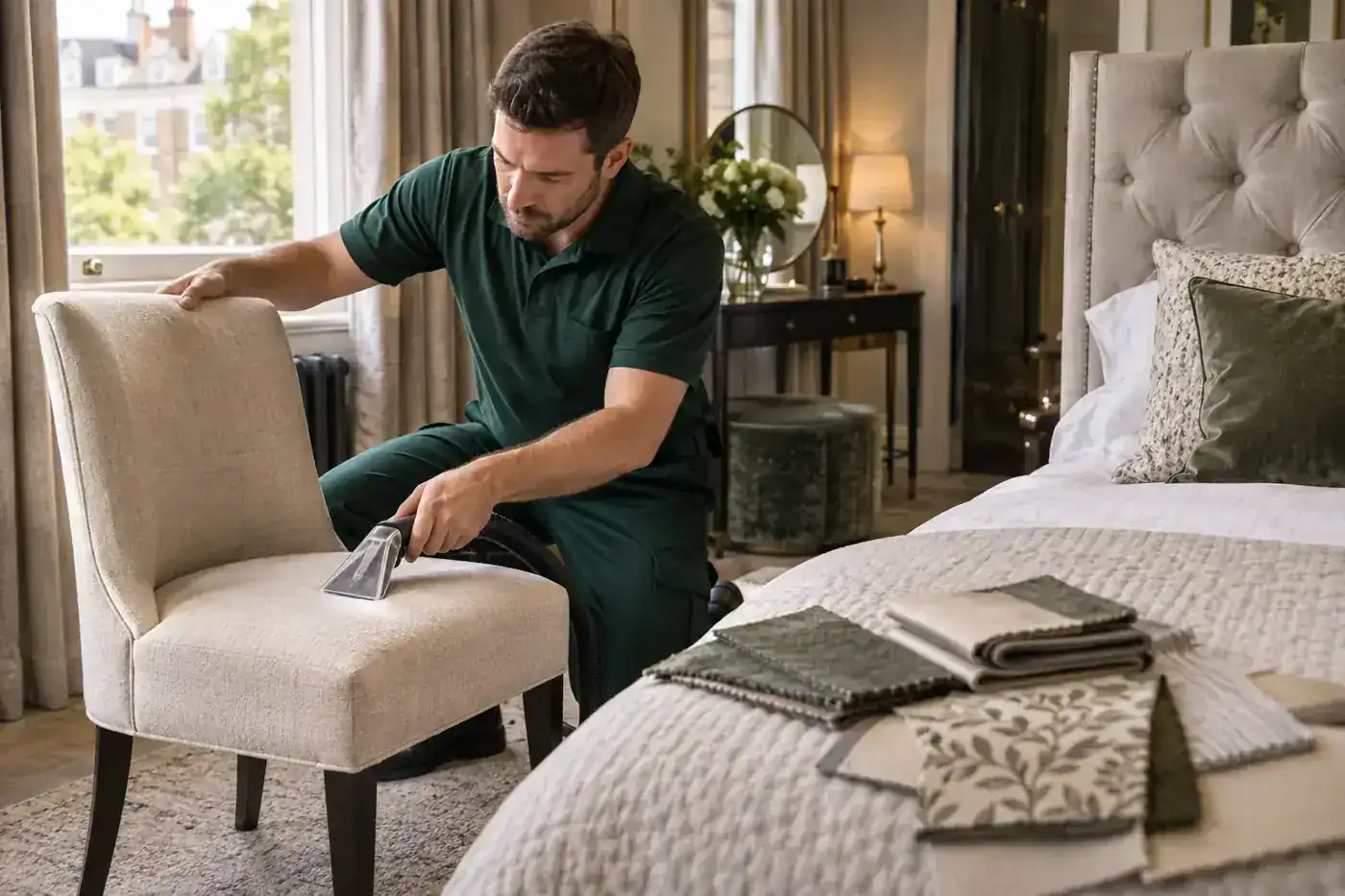
Upholstery cleaning can involve a dining chair, headboard, footstool, mattress or occasional seat in the same booking, but these items are not variations of one object. Each has its own fabric, filling, tension and decorative detail. We request an item list and photographs before quoting, then confirm labels and condition on arrival. A padded headboard fixed to a wall needs a different working angle from a loose dining chair, while a mattress demands careful moisture control and ventilation.
The technician begins with dry soil removal around seams, buttons and edges. Marks are identified by location and likely cause because body contact, food, cosmetics and water rings respond differently. Colour and texture are tested discreetly before treatment. Suitable items are cleaned in manageable panels, keeping pressure and moisture even. Carved frames, timber legs, nail-head trims and glued details are protected rather than soaked.
Item construction determines what we decline as well as what we clean. Antique textiles, silk, unstable velvet, loose covers and fabrics without a reliable care route may need a specialist workshop. We do not use an aggressive method simply because the item is small. Deep-set dye transfer, sun damage and abrasion may remain visible after removable soil has gone. Those limits are explained before the full treatment continues.
Finished pieces are arranged so air can reach the cleaned surfaces, not stacked together or pushed immediately against a wall. We check the direction of the pile, the appearance of seams and the response of the agreed stains. Mattress borders, chair backs and fixed headboards are approached from positions that keep the fabric properly supported. The handover gives separate drying guidance for each item and identifies anything that should stay unused for longer. Treating upholstery item by item takes more thought, but it protects the materials and produces a far more even result than a single generic routine.