Plan upholstery drying by keeping the item unused, spacing removable cushions for airflow, ventilating the room safely and checking the fabric rather than relying on a fixed number of hours. Fibre, filling, treatment method, room temperature and humidity all affect the result, so the correct handover is a condition to check, not a guaranteed clock time.
Arrange the room before cleaning starts
Decide where cushions can stand without blocking doors, radiators or escape routes. Keep pets and children away from the work area. If the sofa is essential seating, arrange an alternative for the rest of the day and potentially longer. Sitting “for a minute” can compress damp filling and transfer clothing dye.
Ask which parts will be treated. Fixed arms, loose covers, feather cushions and synthetic seat pads may not dry at the same rate.
Airflow matters more than aggressive heat
Gentle air exchange carries moisture away. Open windows where security, weather and outdoor air allow, or use normal room ventilation. A fan may help if it is stable, electrically safe and positioned to move air across rather than blast one small patch.
Do not place a portable heater against the fabric or use a hairdryer. Concentrated heat can affect fibres, backing, adhesives and finishes while leaving deeper filling damp.
Position cushions with care
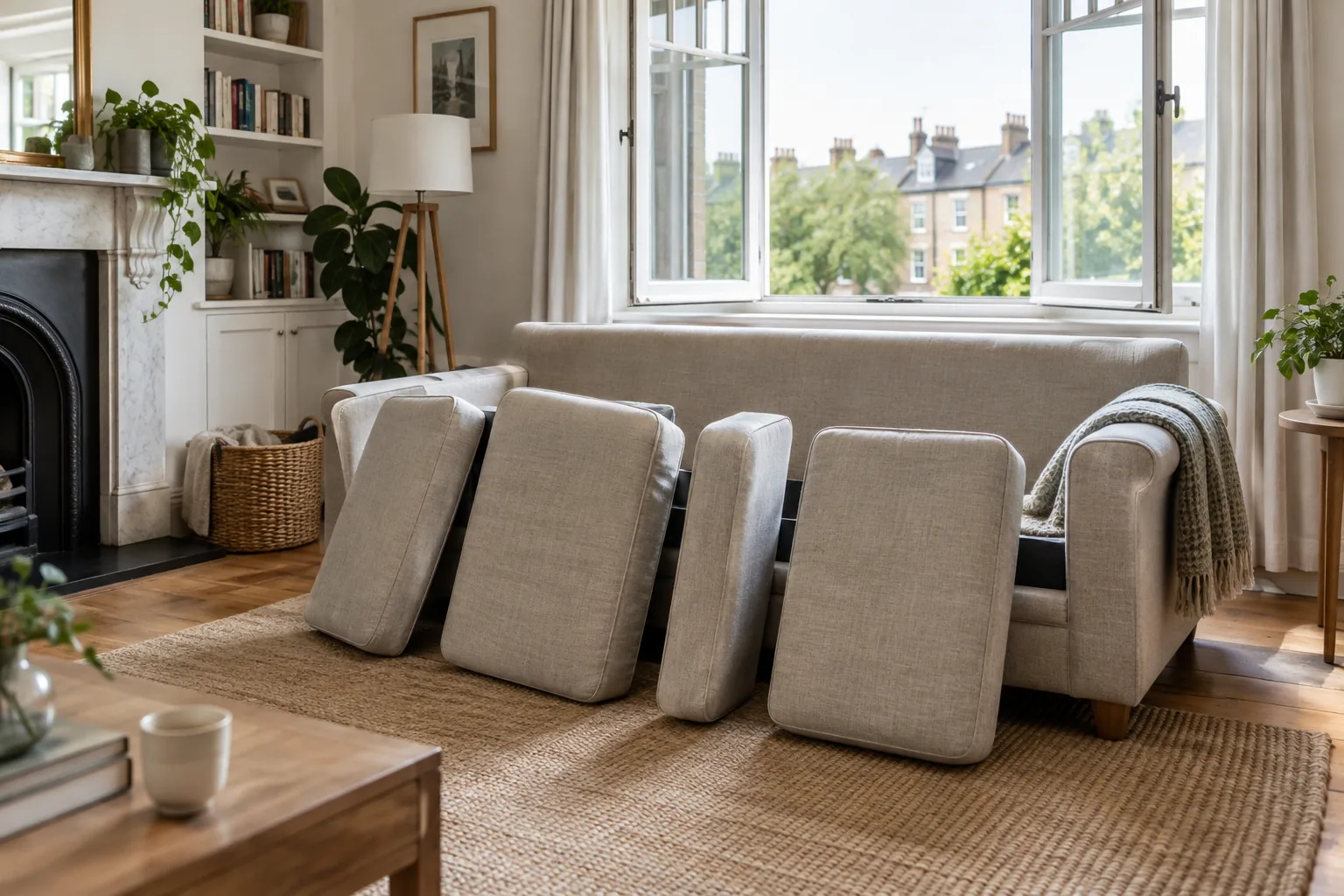
Follow the technician’s arrangement. Removable cushions are often spaced upright so that several faces receive air, but delicate piping, wet edges and heavy fillings need support. Do not balance them where they can fall onto a dusty floor or press against painted walls.
Turn cushions only if advised and only with clean hands. Repeated handling can distort wet fillings and leave finger marks on sensitive fabrics.
Keep protective layers breathable
Plastic sheets trap moisture and should not be draped over drying upholstery. Likewise, throws and blankets delay evaporation and may transfer colour. If floors need protection from a damp cushion, use the method supplied or approved by the cleaner and keep air paths open.
Furniture feet and nearby timber should be checked for moisture contact. Leave any protective tabs in place for the recommended period.
How to check without causing a mark
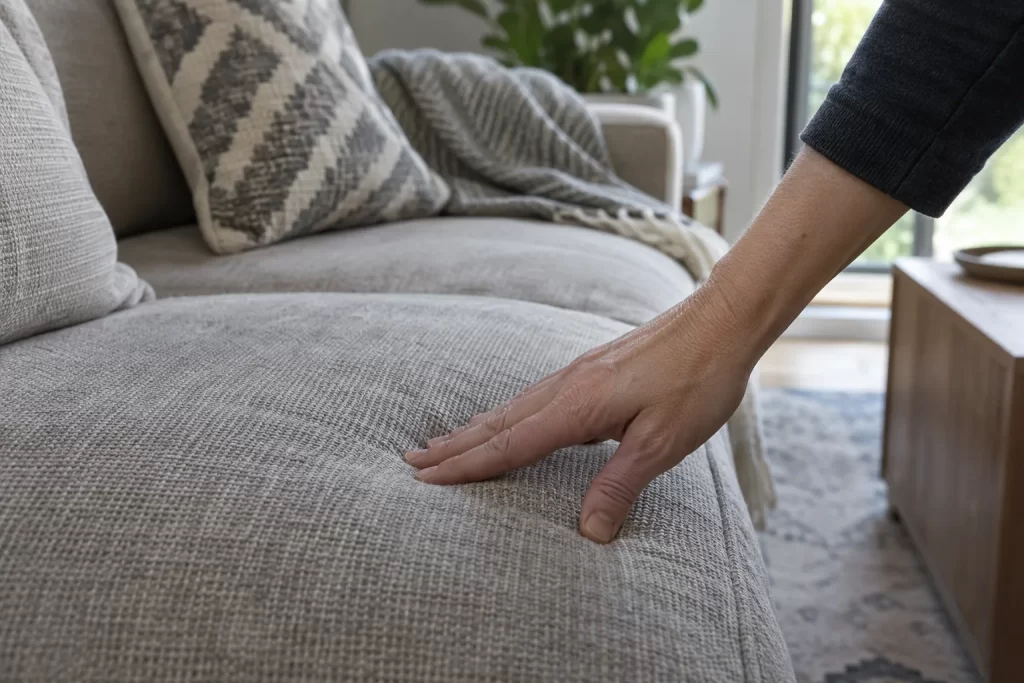
Start with an inconspicuous area. Use a clean, dry hand or white absorbent tissue and light pressure; do not rub. Compare seams, piping and the centre of thick cushions because surface fabric can feel ready before these slower zones.
Look in neutral light. Damp fabric often appears darker, while pile fabrics can look different simply because their nap has changed direction. If in doubt, wait and ask rather than grooming or brushing the area.
Why one sofa can have several drying times
Seat cushions receive more solution and contain deeper fillings. Arms may have thin padding over a frame. Buttoning and seams create dense points. Previous spot treatments can also change absorbency. Uneven progress is therefore not automatically a fault.
A label contributes useful information but does not describe every layer. Our guide to reading a sofa care label explains why construction and prior treatment remain part of the assessment.
Weather and the room change the plan
A warm, dry, ventilated room generally supports evaporation better than a cold, humid one. Rain may make wide-open windows counterproductive. Use ordinary heating consistently if appropriate, rather than alternating intense heat with a closed, cold room.
Condensation on windows is a sign to improve safe air exchange. Do not leave ground-floor windows unsecured or create a situation that conflicts with household security.
Pets, children and normal use
Block access without placing objects on the upholstery. Damp fabric can attract hair and dust, and paws may carry soil from outside. Children may not recognise that a sofa which looks clean is still drying.
Do not replace cushions, throws or decorative covers until all contact faces are ready. Reassembling too early reduces airflow exactly where moisture is concentrated.
What not to do while waiting
- Do not sit, kneel or place bags on treated areas.
- Do not spray fragrance, fabric protector or another cleaner.
- Do not scrub a darker damp patch.
- Do not zip damp removable covers onto inserts unless instructed.
- Do not close the room tightly when ventilation is needed.
- Do not assume the driest visible panel represents the whole item.
Make a simple handover note
Record the time treatment finished, the ventilation arrangement, any parts excluded from cleaning and the signs that should prompt a call. If several people use the home, leave a visible note so nobody unknowingly sits down after returning.
For managed or rental property, say who will revisit the item. Locking the door and assuming it will be dry by the next appointment removes the opportunity to spot poor ventilation.
When to contact the cleaner
Ask for advice if an area remains distinctly wet while others have dried, a strong unexpected odour develops, colour transfers to a white cloth, a seam changes shape, or the room cannot be ventilated safely. Describe the exact location and send a well-lit image if requested.
Water marks, dye movement or pre-existing damage may require assessment; extra home treatment is not the default answer. Professional sofa and upholstery cleaning should include realistic aftercare guidance for the individual item.
Return the sofa to use gradually
Once all areas feel dry and stable, replace cushions in their intended positions. Check the rear and underside where accessible, then use the item lightly before adding heavy throws or protectors. Follow any specific advice about pile setting or fabric protection.
A good drying plan is deliberately unexciting: space, airflow, patience and one responsible check. It avoids the two common mistakes—using upholstery too soon and trying to force it dry with concentrated heat—and gives the cleaning result a fair chance to settle evenly.
Plan around multi-use rooms
In a studio or open-plan home, airflow, cooking and daily movement share one space. Schedule cleaning when steam, smoke and heavy traffic can be kept low. Keep the drying sofa away from an open kitchen route and make sure ventilation does not pull cooking aerosols across damp fabric.
If the only seating is being treated, arrange a safe alternative rather than using dining chairs as makeshift footstools or repeatedly testing the sofa. A realistic household plan is part of successful aftercare.
Consider cushions with different fillings
Foam, feather, fibre and mixed fillings hold and release moisture differently. Feather-filled cushions may need careful support and later dressing according to manufacturer advice, while dense foam can feel dry at the face before the centre. Do not unzip and remove fillings simply to accelerate drying.
Tell the cleaner about replaced inserts or cushions borrowed from another suite. The outer fabric alone does not reveal the drying behaviour beneath it.