Shared entrances and stairs should be cleaned according to observed use and condition, with a dependable baseline visit and extra attention when weather, occupancy or building work increases soil. There is no single frequency for every block. A quiet converted house and a busy multi-storey building can require very different schedules even when their floor area is similar.
Start with footfall, not flat count alone
Count the journeys through the entrance at typical busy times. Residents, deliveries, visitors, carers, contractors and short-term occupancy all contribute. A building with few flats may still have heavy traffic if it contains a clinic or frequently serviced accommodation.
Observe where people pause, turn or queue. Lift lobbies and the first flight often soil faster than upper landings.
Weather creates a variable front zone
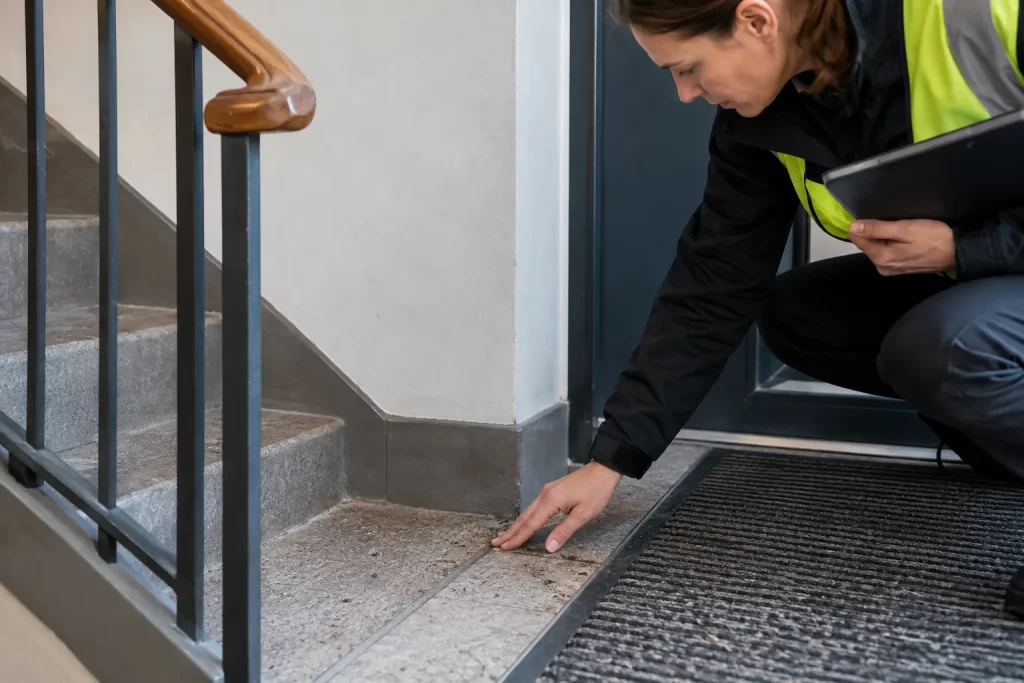
Rain carries grit and moisture beyond the mat. Autumn leaves, winter salt and summer dust alter both appearance and slip risk. A fixed indoor routine may need a responsive entrance check during wet periods.
Mats should be correctly positioned, flat and serviceable. Cleaning around a saturated or curled mat does not solve the underlying risk; arrange replacement or drying through the responsible manager.
Floor material changes the method
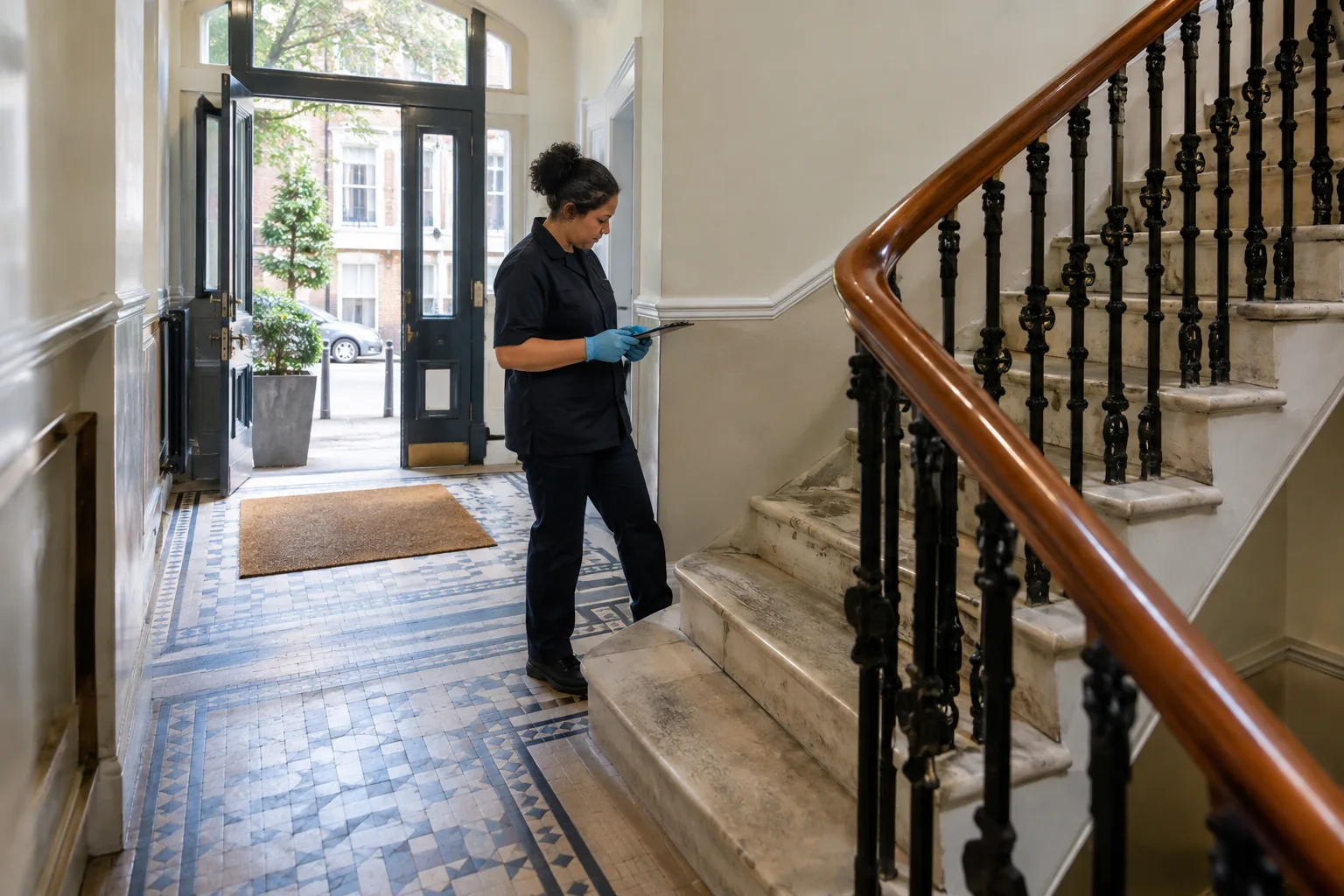
Sealed tile, stone, timber, laminate and carpet do not share one moisture tolerance. Entrance grit can scratch hard finishes, while repeated overwetting can affect joints and edges. Identify the floor and its maintenance guidance before choosing products or machinery.
Mixed buildings need zoning. The entrance may tolerate a method that the timber stairs do not. Our hard-floor identification guide outlines the clues and cautions.
Separate visible soil from touch points
Floors show grit readily, but handrails, door plates, intercom surrounds and lift controls collect contact marks. Their attention may need a different rhythm from full floor work. Avoid treating “disinfection” as a vague promise; products require compatible surfaces and correct use.
Do not spray switches or electrical panels directly. Report broken covers and loose fittings as maintenance.
Use zones to set the baseline
Divide the building into entrance threshold, lobby, first flight, upper stairs and landings, lift, and secondary routes. Assign a baseline for each zone based on observation. The entrance may need frequent short care while a low-use upper landing receives less intensive attention.
This is clearer than saying the “communal area” is cleaned weekly when different parts require different tasks.
Inspect between scheduled visits
A brief documented inspection reveals whether the interval is working. Look for grit beyond the mat, sticky patches, overflowing waste, handrail marks and obstructed routes. Record recurring locations rather than relying on a general impression.
If the building is consistently acceptable just before the next visit, the baseline may be adequate. If soil repeatedly exceeds the agreed standard halfway through, change frequency, zoning or prevention.
Account for exceptional periods
Move-ins, refurbishment, lift repairs and bulky deliveries create short spikes. Plan temporary visits or protective measures instead of permanently redesigning the routine around an unusual week. Contractors should control their own dust and waste routes.
After work, confirm the area is genuinely ready before detailed cleaning. Active drilling on an upper floor can redistribute dust through the stairwell.
Do not overlook edges and vertical details
Skirtings, stair risers, balustrades, corners and the edge below a handrail accumulate gradually. They may not need full attention every visit, but a rotation prevents them becoming a conspicuous project.
Add high cobweb points, light ledges and accessible door tops to a periodic list. Safe reach limits must be stated; communal cleaning does not imply improvised work at height.
A sample evidence-led review
- Choose a two- or four-week observation period.
- Photograph the same zones before scheduled visits.
- Note weather, unusual deliveries and contractor activity.
- Record resident or manager reports with exact locations.
- Adjust only the zones and tasks that repeatedly fall short.
- Review again after the change.
This produces a defensible schedule without claiming that one frequency is permanently correct.
What residents and managers can support
Keep fire routes free of shoes, bicycles, parcels and waste. Report spills promptly with a precise location. Arrange mat maintenance and repair leaking doors or roofs that repeatedly introduce water. Cleaning cannot compensate indefinitely for a building defect.
Provide access to locked floors, bin areas or service cupboards only where those spaces are in scope. Name one contact who can authorise changes.
Set a measurable communal scope
- Name every included zone and level.
- Separate routine tasks from rotating details.
- State the handling of lifts, glass and external steps.
- Identify floor materials and known defects.
- Define who reports spills between visits.
- Agree how weather or building work triggers extra attention.
A communal-area cleaning plan should make these points visible to both cleaner and manager.
When to increase frequency
Increase the baseline when repeated inspections show soil, moisture or waste accumulating before the next visit under normal conditions. First check whether one small high-use zone is responsible; an entrance touch-up may solve the issue more efficiently than a full extra clean of every landing.
Temporary increases suit wet seasons, resident moves or projects. Record an end date so the arrangement is reviewed rather than continuing unnoticed.
When a lower frequency may work
A lower frequency may be reasonable in a small, low-traffic building with effective matting and stable inspection results. Reduce cautiously, retain a reporting route and review during different weather. Cost alone is not evidence that the condition will remain acceptable.
The best schedule is therefore a loop: set a baseline, inspect consistent zones, explain exceptions and adjust. It keeps entrances and stairs presentable without pretending that every building accumulates soil at the same rate.
Build feedback around locations, not opinions
Ask residents and staff to name the floor, landing and issue when reporting a problem. “The stairs are dirty” is difficult to act on; “grit beside the first-floor lift after deliveries” can be checked and linked to a cause.
Close the loop by recording the action and date. Repeated precise reports may justify a schedule change, while isolated events may need a one-off response.
Review safety without claiming an inspection service
Cleaners can report a loose handrail, failed light, lifted mat or leaking entrance, but the responsible manager must arrange repair and formal safety checks. Do not let a cleaning tick sheet become a substitute for building maintenance.
Keep warning signs and temporary barriers available under the site’s procedure when floors are being cleaned, and remove them only when the area is ready for normal use.
Review the plan when occupancy, access systems or floor finishes change. A new entrance mat, parcel area or lift can alter where people travel and where soil collects. The earlier schedule remains evidence, but it should not override the building now in use.