A sofa care label is a useful starting point, not a complete cleaning instruction. It may identify fibre content, cover washing guidance or a manufacturer code, but it does not describe every dye, filling, trim, previous treatment or change caused by age. Read it before applying moisture or product, then inspect the whole item.
If the label is missing or unclear, do not replace uncertainty with a generic internet code. Treat the fabric as unidentified and choose a cautious assessment.
Find every relevant label
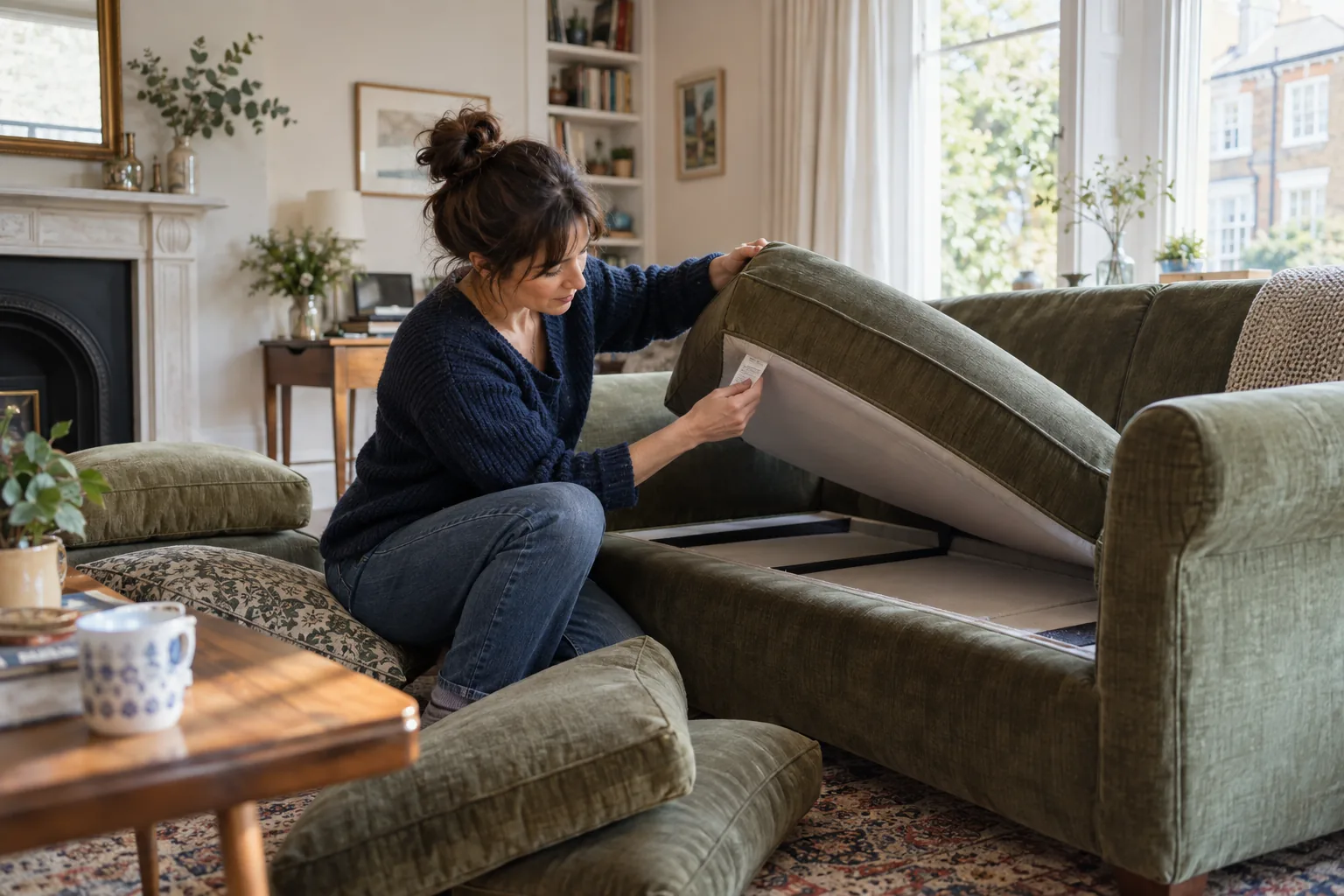
Check beneath seat cushions, along platform fabric and under the frame where it can be reached without tipping the sofa unsafely. Loose cushions may have separate labels from the main body. A replacement cover may not match the original upholstery.
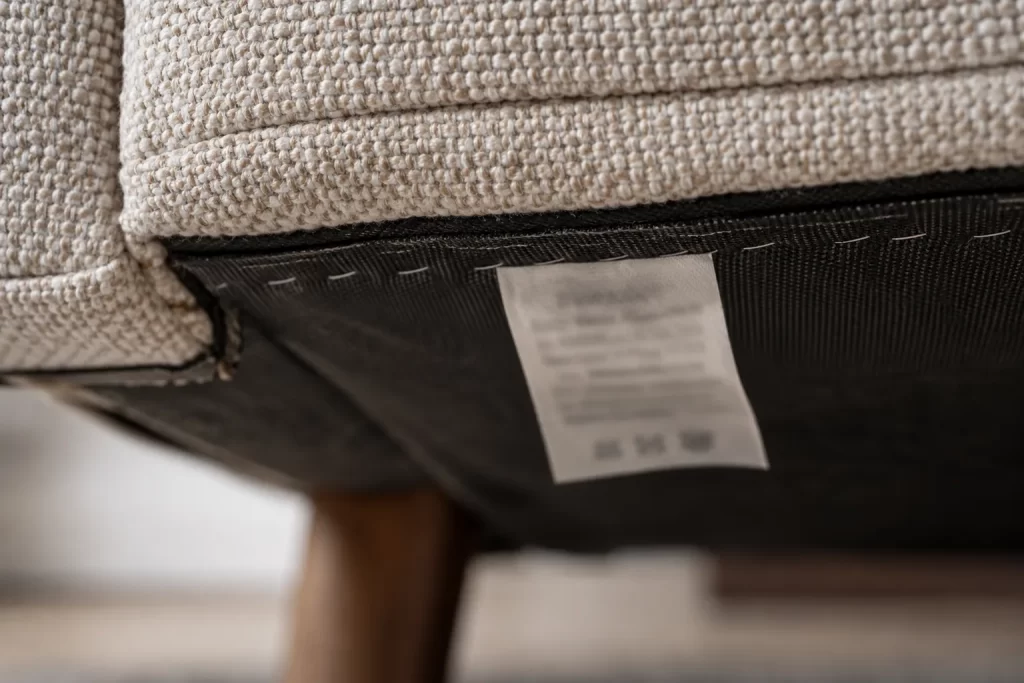
Photograph the label in good light and keep the model information if present. Do not cut labels away before an appointment. Avoid assuming that a symbol used for removable clothing applies to fixed upholstery.
Fibre content is only one part of the decision
Cotton, linen, wool, viscose and synthetic fibres behave differently, but a blended fabric can combine several risks. The visible face may also be supported by backing, adhesive or interlining. Colour stability and texture matter as much as the fibre name.
A label saying “polyester” does not promise that every stain remover is safe. Printing, pile, protective finishes and construction still affect treatment. Ask what method is proposed and whether an unobtrusive test is appropriate.
Removable does not automatically mean washable
A zipped cushion cover may be removable for manufacture, repair or access to filling. It is not necessarily designed for a domestic washing machine. Washing one cover separately can create shrinkage, texture change or a colour difference from the rest of the sofa.
Follow explicit manufacturer guidance. If covers can be washed, confirm whether all matching pieces should be handled together and how they are refitted. Do not put a cover back over damp filling.
Inspect the sofa beyond the label
Look for sun fading, abrasion, loose seams, weakened piping, dye transfer, water rings and previous spot-treatment areas. Check whether cushions contain foam, feather, fibre or mixed fillings. Note buttons, trims, timber edges and metal details that need protection.
Smell and touch can reveal issues a photograph misses, but avoid making health claims. Report strong odour, dampness or unknown contamination honestly so the scope can be assessed.
Understand common code limitations
Some furniture uses letter codes associated with water-based, solvent-based or vacuum-only care. Codes are not globally consistent and do not override manufacturer instructions. A solvent code does not authorise the use of any household solvent, and a water code does not mean saturation is safe.
If a code conflicts with written care guidance, ask the manufacturer or a competent upholstery professional. Do not improvise by mixing methods.
Test without creating a visible patch
When testing is appropriate, use a genuinely unobtrusive area and a small controlled application. Observe colour transfer, texture, tide marks and drying. A successful small test reduces uncertainty but cannot guarantee that a large stained area will behave identically.
Stop if dye transfers, pile changes, the fabric stiffens or the backing becomes overly wet. Record anything already applied to the mark.
Separate surface fabric from filling
Liquid can pass through upholstery into foam or natural filling. The surface may appear improved while moisture remains below. Deep saturation can lengthen drying and create odour or colour movement. That is why repeated home spraying is risky even when the label appears permissive.
Tell the assessor if a drink, pet accident or cleaning product soaked through. The quantity and location matter. Cushions may need a different plan from fixed arms or the frame.
Plan access and drying
Clear space around the sofa and provide ventilation options. Keep children and pets away from the work zone. Decide where loose cushions can stand without touching painted walls, timber or each other while damp. Do not schedule immediate use simply because the surface feels cool rather than wet.
Drying varies with fabric, filling, treatment, airflow and weather. Ask for readiness signs instead of an unsupported fixed time.
Questions to ask before treatment
- Which label or manufacturer guidance is being followed?
- Are the covers intended to be removed?
- What construction or filling changes the method?
- Which stains have already been treated, and with what?
- How will colour stability be checked?
- How should cushions be positioned afterwards?
These questions are more useful than asking whether a method is simply “safe”. Safety depends on the actual item and controlled use.
When professional assessment makes sense
Seek an item-specific sofa assessment when the fabric is unidentified, the stain is large or old, dye moves, fillings are saturated, or the piece has delicate trim. Separate chairs and headboards may fall under a broader upholstery-cleaning scope.
The label narrows the options; it does not make the decision alone. Combine it with construction, condition, stain history and a controlled test. That approach protects more of the sofa than treating a single symbol as permission for an aggressive method.
Find the label without damaging the cover
Look beneath loose cushions, along the platform or on the underside using safe access. Do not tip heavy furniture alone or cut a lining to find information. Photograph the whole label before handling it; faded print can become harder to read after repeated folding.
Match the label to the exact item. Modular seating, replacement cushions and removable covers may have different manufacturers or materials.
Translate instructions into questions
If the label names fibre percentages, ask how the weave, dye and backing affect the method. If it permits removable-cover washing, confirm whether shrinkage allowance and refitting instructions exist. If it prohibits a process, treat that as a limit rather than a challenge.
Cleaning codes used in one market may not apply universally. Preserve the wording and let the person assessing the sofa interpret it with the full construction in view.
Record previous changes
Sun exposure, home spot products, fabric protector, pet accidents and earlier professional work can change how an item responds. Mention replacement foam or repaired seams. A label describes the product when supplied; it does not update itself after years of use.
Test results and observed condition therefore remain important. Stop if dye moves, texture alters or a hidden adhesive responds unexpectedly.
Keep the photograph with any purchase receipt, warranty and professional cleaning note. If the label later detaches or fades, the next assessment still has a traceable starting point. Do not remove the original label merely because its position is inconvenient.
When requesting advice, send both the label and a full image of the sofa in normal light. A code without the item’s condition, shape and construction can invite an answer that is technically tidy but practically incomplete.