An empty-property clean needs a written access plan even when nobody will be present. Record who releases the keys, which doors and alarms they operate, how equipment reaches the property, which utilities remain available and who signs off the result. The cleaner should not have to negotiate these points from the pavement while the appointment clock is running.
Name one responsible contact
Choose a person who can authorise entry, answer scope questions and decide what happens if the property is not empty. Provide a reachable number for the appointment window. Estate agents, concierges and removers may each help, but one person must own the decision.
If that contact cannot attend, agree an alternative rather than sharing several numbers with unclear authority.
Record every key and fob
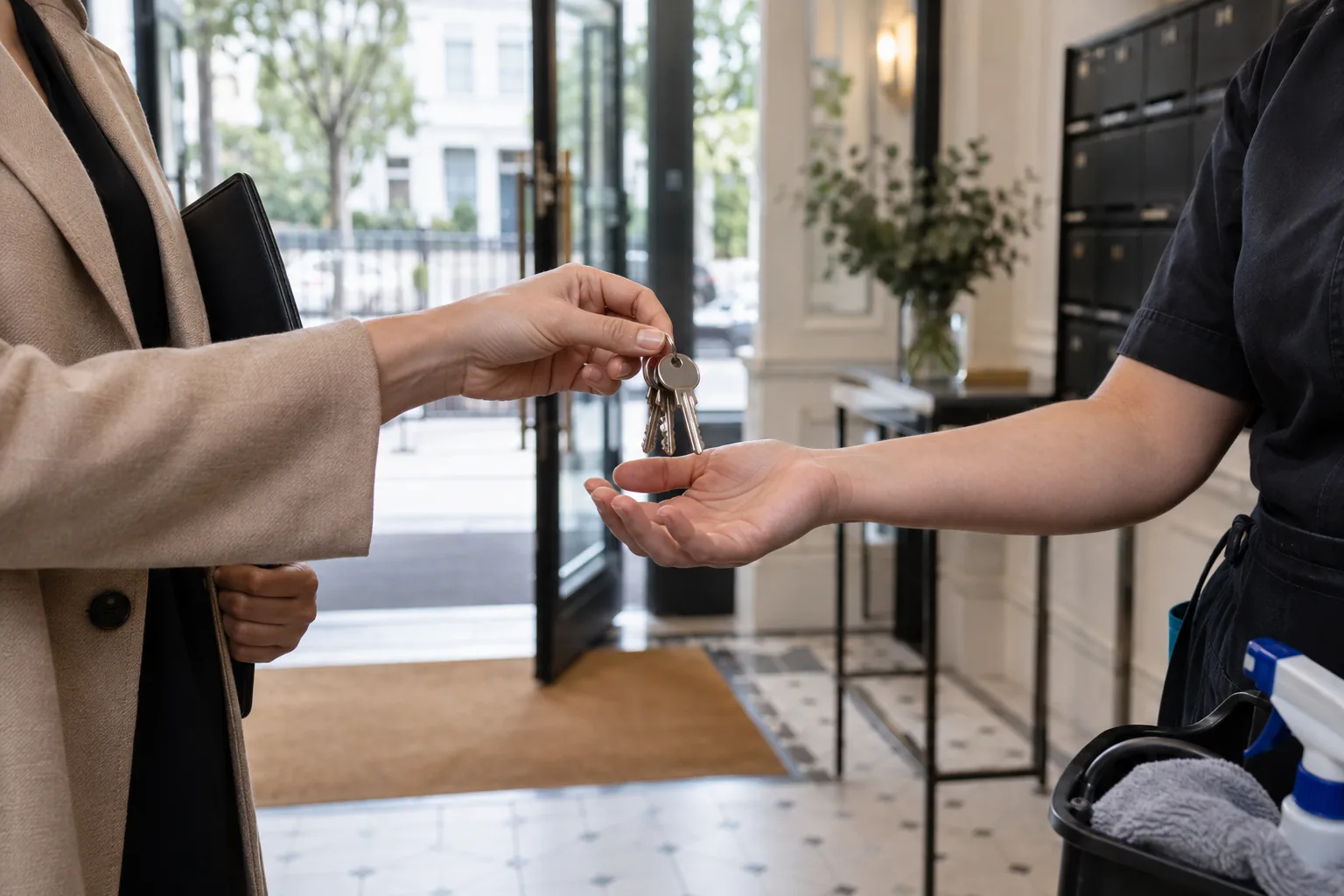
List the building key, flat key, mailbox key, parking fob or alarm token being handed over. Test them before the day. Label them without displaying the full address. Decide whether they return to a person, locked box or staffed desk.
Do not leave keys in an exposed place or invent a hiding spot. If a key-safe is used, share the code through an agreed secure channel and change it afterwards when appropriate.
Map the route from vehicle to rooms
Parking restrictions, stairs, lifts, narrow corridors and controlled doors affect equipment access. Reserve a lift or loading space if the building requires it. Confirm whether a concierge needs names in advance.
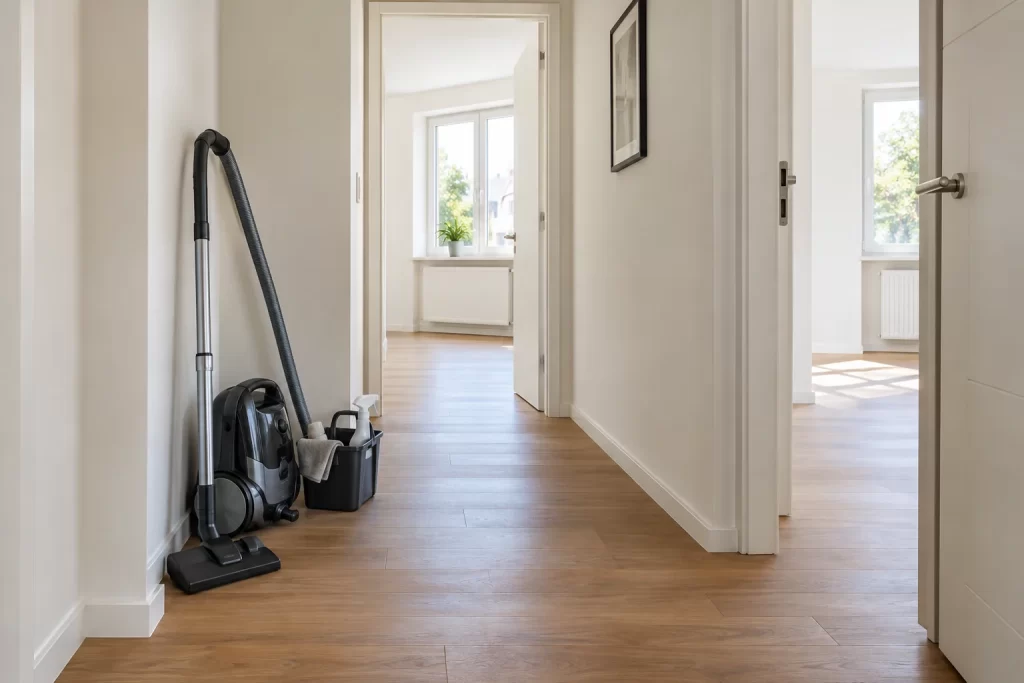
Inside, remove boxes and waste from the route. Keep fire doors and communal corridors clear. A vacuum and caddy should not be left where residents can trip over them.
Keep utilities available
Confirm safe electricity, water, drainage and adequate light. Note isolated circuits, leaking taps or rooms without power. Cleaning should not disturb a contractor’s isolation or rely on unsafe extension arrangements.
Heating and ventilation may affect drying, but settings should be agreed. Do not ask a cleaner to diagnose building systems.
Describe occupancy accurately
“Empty” should mean belongings, food and unwanted waste have gone, not merely that residents are elsewhere. Identify furniture or appliances that remain and whether internal storage is clear. Photographs can show obstacles before travel.
If removers are delayed, the contact should decide whether work begins in released rooms, the scope reduces or the appointment moves.
Agree the completion record
Choose whether the cleaner will call, send agreed photographs or meet a representative. Photographs should show priority areas and any blocked or damaged section, not personal documents or neighbouring homes.
Allow time for surfaces to dry and for a final inspection. An immediate key return deadline can turn the handover into a rush.
Separate access from scope
Possessing a key does not authorise extra disposal, repairs or entry to excluded cupboards. The written brief should name rooms, appliances and specialist additions. Cleaning cannot correct damage, wear or maintenance.
For rental handover, use an end-of-tenancy scope; for occupation changes without inventory requirements, a move clean may be more suitable.
Plan for alarms and security
Write the arming and disarming sequence only where it can be handled securely. Confirm door-locking expectations, window positions and whether internal doors should remain open for ventilation. Report a failed lock or alarm rather than improvising.
If a security procedure changes on the day, the authorised contact should communicate it directly.
Use a departure checklist
- Agreed rooms and extras checked.
- Taps, appliance controls and windows left as instructed.
- Lights, heating and alarms returned to the agreed state.
- Waste created by cleaning removed appropriately.
- Existing damage or inaccessible areas recorded.
- All keys and fobs returned by the named method.
Keep confirmation of the handover until the property transaction or tenancy step is complete. The purpose is accountability, not surveillance.
Prepare for the exception
Set a cut-off for missing keys, non-working access or absent utilities. Decide who may approve extra waiting time. A clear exception rule prevents a small delay becoming an open-ended appointment.
Empty-property cleaning is easier physically but more dependent on coordination. When keys, routes, utilities and sign-off are settled in advance, the cleaner can spend the visit on the property rather than solving access problems.
Run a remote check-in sequence
Agree three messages: arrival and successful entry, a scope query only if something material differs, and departure with key confirmation. This reassures the responsible contact without turning the cleaner into a live video service. Decide which channel will be monitored and what happens if the contact does not respond.
Set authority limits in advance. The cleaner may be allowed to reduce work around unexpected boxes, but disposal, contractor access or extra paid time should require a named decision.
Account for shared-building rules
Some blocks restrict loading times, lift use, noisy equipment or entry by contractors. Obtain any permit and inform the concierge before the day. Confirm where a vehicle may stop without blocking residents or emergency access.
Protect communal floors if equipment crosses them, and never wedge a secure entrance open. The appointment covers the property but still operates within the building’s access rules.
Check services at least a day beforehand
Do not rely on a previous tenant’s assurance that power and water remain connected. Test lighting, sockets used for ordinary equipment, hot and cold taps and drainage. Report unusual smells, active leaks or tripping circuits to the property manager rather than working around them.
If utilities are scheduled for disconnection, place the clean before that point and allow a margin for delay. Reconnection on the morning of the visit is an avoidable risk.
Plan keys for more than one contractor
When removers, inventory clerks and maintenance trades share one set, create a timed handover rather than telling everyone to collect it from someone else. Name the person who has custody at each stage. A lockbox should not become an uncontrolled communal key store.
Tell the cleaner who else may enter. Unexpected arrivals can compromise security, disturb completed rooms and make responsibility for new marks unclear.
Handle a failed entry safely
Specify how long to wait, whom to call and whether a second authorised key exists. Do not force a lock, follow another resident into a secure building or accept a key from an unidentified neighbour. Photograph only the relevant entrance detail without showing access codes.
A failed-entry rule protects time and security. It also gives the property contact a clear basis for rearranging the visit.
After the visit, revoke temporary digital access and recover every physical key listed at handover. Store photographs and access notes only as long as they are needed, then handle them under the responsible organisation’s privacy and security process.
Finally, give the cleaner the full property address in writing, including flat number and postcode. Similar street names and entrances are an unnecessary source of delay.