
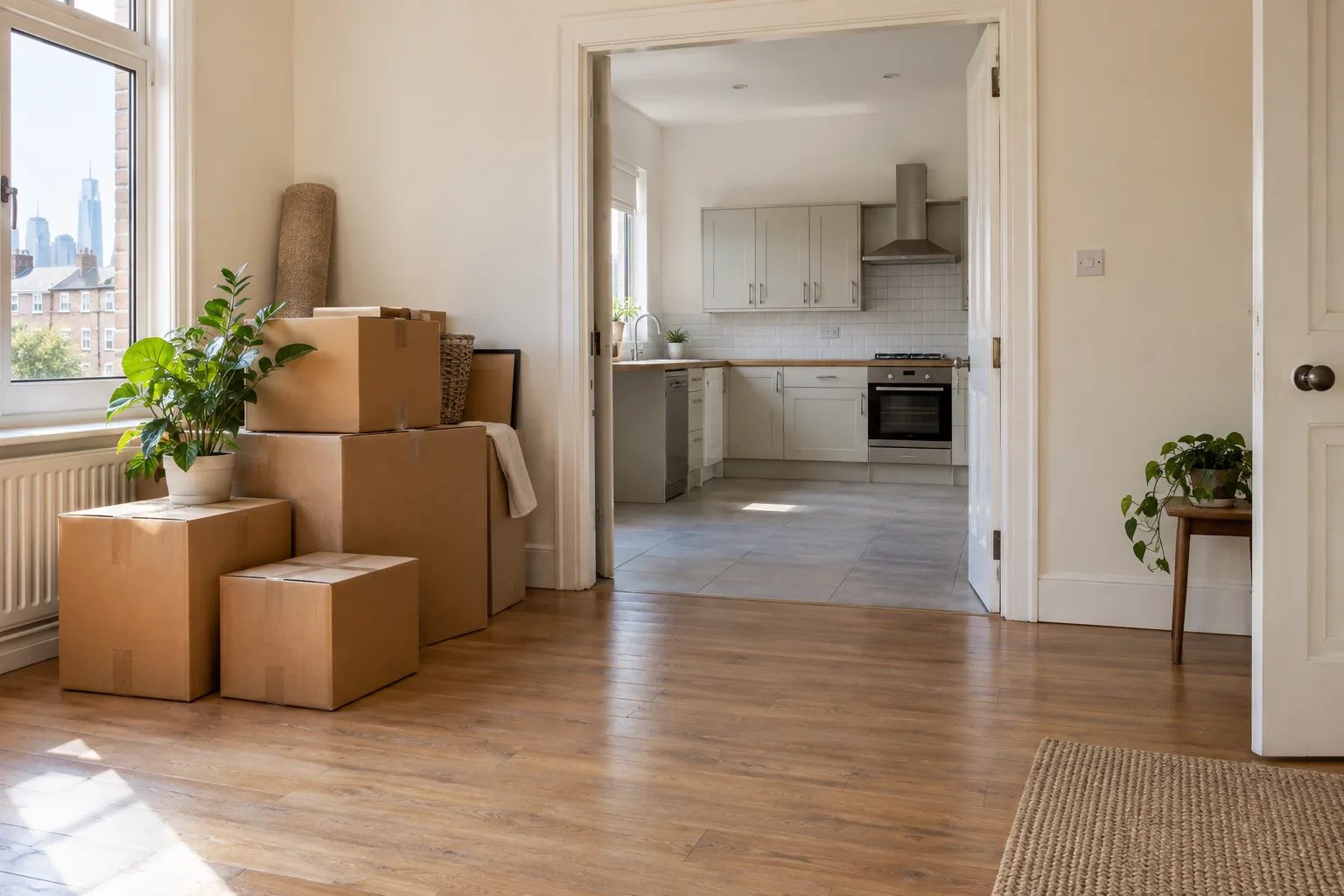
The cleanest sequence is usually to clean after the property has been emptied and before the next load arrives. Empty rooms expose floors, skirting, cupboard interiors and corners that boxes conceal. Moving days are not always that orderly, though. Keys may be released late, removers may need the only available slot, and two properties may have to be managed at once. The practical answer is to choose one of two workable plans and make the dependencies explicit.
If cleaners and removers must overlap, assign them different zones and protect completed areas. Avoid a plan in which people repeatedly carry boxes through a freshly cleaned kitchen or across a damp floor. The question is not simply “before or after?” but “which work can finish once, without being undone by the next team?”
The ideal empty-property window
For a move-out, the strongest window begins after furniture and belongings have left, unwanted items have been removed and utilities still work. The cleaner can see the actual condition, reach storage and floor edges, and distinguish residue from scratches, wear or maintenance. The property can then be checked and locked without further traffic.
For a move-in, cleaning before delivery creates the same advantage. Cupboards can be handled before food and crockery arrive; floors can dry without boxes standing on them; bathrooms can be made ready before the household needs them. The difficulty is access. If key collection and delivery are close together, build a buffer rather than assuming every earlier appointment will run exactly to time.
Plan A: clean after removal, before handover
This is the clearest choice for a rental check-out. Ask removers to finish first and take packing waste with them. Keep electricity and water available. Leave only items that are specifically part of the property, such as appliance manuals or agreed keys. The cleaner then works through a genuinely empty space, with optional appliance, carpet or window tasks confirmed beforehand.
Do not schedule the final inspection for the minute cleaning is expected to end. Floors and treated textiles may need to dry, and the final check may identify damage or maintenance that cleaning cannot change. A short buffer also allows for key return and photographs if those have been agreed.
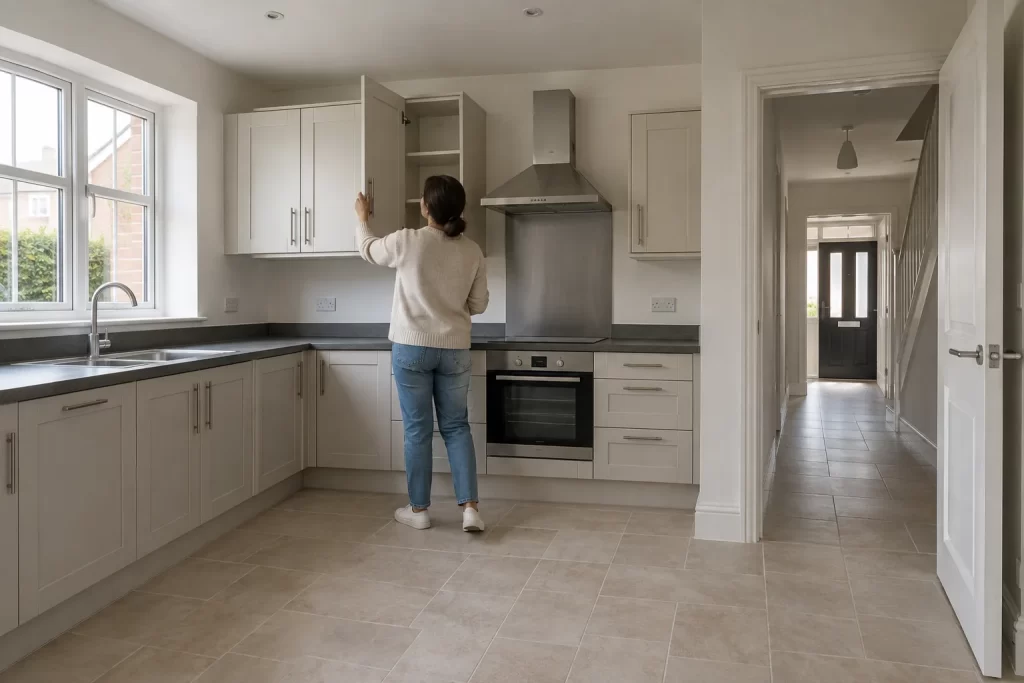
Plan B: divide a partly occupied property into zones
When overlap cannot be avoided, decide which rooms become “finished zones”. A bedroom or reception room can hold sealed boxes while the empty kitchen and bathroom are cleaned. Once those rooms are complete and dry, belongings can move only if necessary, while the vacated holding room receives a lighter final pass. This is less efficient than an empty-property clean but far better than people crossing every room continuously.
Give the removal team and cleaner one contact person. That person decides when a zone is released, where equipment can stand and which route remains open. Without that coordination, both teams lose time waiting or moving the same objects repeatedly.
Sequence the rooms around use
In a move-in, the kitchen and main bathroom are usually worth completing early because the household will need them first. Internal cupboards must be empty if they are included. Appliance interiors should be agreed separately and switched off or prepared as instructed. Bedrooms can follow, then living areas and the route nearest the exit.
In a move-out, work from the least-used areas towards the exit where practical. Keep one washroom available until the final stage if people remain on site, then include it in the handover check. Avoid cleaning the entrance floor while equipment and boxes are still passing over it.
Keys, parking and building access can decide the day
A well-written room list does not help if nobody can enter the building. Confirm who collects the keys, whether a concierge needs advance notice, how alarms work and whether lifts are booked for removals. If equipment must travel from distant parking, allow for that route. In a shared building, do not block fire doors, stairs or communal corridors with boxes.
For unattended access, record the number of keys and fobs, the return method and who can authorise a change in scope. Agree whether completion photographs are wanted and what they should show. Do not leave sensitive documents, medication or valuables in an otherwise empty property.
Separate cleaning from removal and repair
Cleaning does not include disposing of furniture, bags of waste or abandoned food unless that has been expressly arranged. It cannot repair chipped paint, worn flooring, failed sealant, broken fittings or appliance faults. These distinctions matter because a room can be clean and still look used. At a rental handover, document remaining defects rather than asking a cleaner to force a result that could damage the surface.
If the property has heavy renovation dust, paint splashes or adhesive, it may need an after-builders scope rather than an ordinary move clean. If carpets or an oven are essential, book them as named additions instead of assuming they fit automatically into general work.
Build a delay plan before the day
Choose the trigger that changes the schedule. For example: if removers are more than an hour late, the cleaner starts only in the kitchen and bathroom; if keys are not available by an agreed cut-off, the appointment moves; if large furniture remains, the floor scope is reduced to accessible areas. Share the decision with all parties before anyone travels.
Keep contact details available, but avoid making the cleaner negotiate with an estate agent, concierge and removal company simultaneously. One responsible person should relay changes. If you are moving between two homes, nominate a second contact at the property you cannot attend.
Use a final handover check
Walk through in ordinary light after surfaces have dried. Check the agreed cupboards, appliance exteriors or interiors, bathroom fittings, floors and accessible ledges. Make sure windows, taps, heating controls and doors are left in the agreed position. Identify marks that are wear or damage, and record any task that could not be reached because boxes or furniture remained.
A professional move-in or move-out clean works best as one part of the moving plan, not an appointment squeezed between unpredictable events. Give it a clear access window, stable zones and a named decision-maker. The property then has a genuine finished point rather than being cleaned repeatedly while the move continues around it.
Send the final plan in writing the day before: address, parking or concierge instructions, key contact, empty or occupied status, priority rooms, agreed extras and the handover deadline. Update it if the removal schedule changes. Five accurate lines are more useful than a long checklist copied from a different property, because they describe the conditions the cleaner will actually meet.