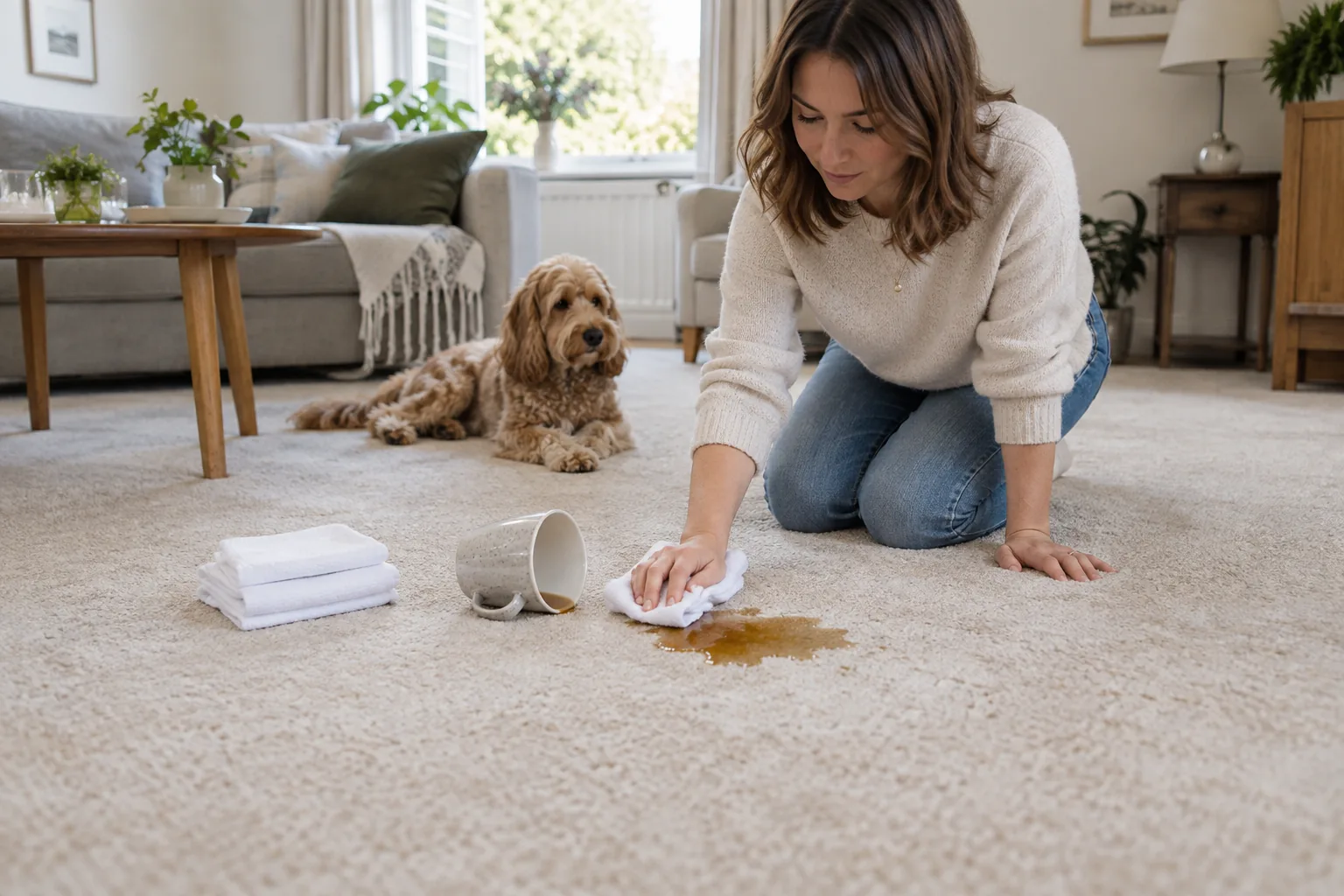
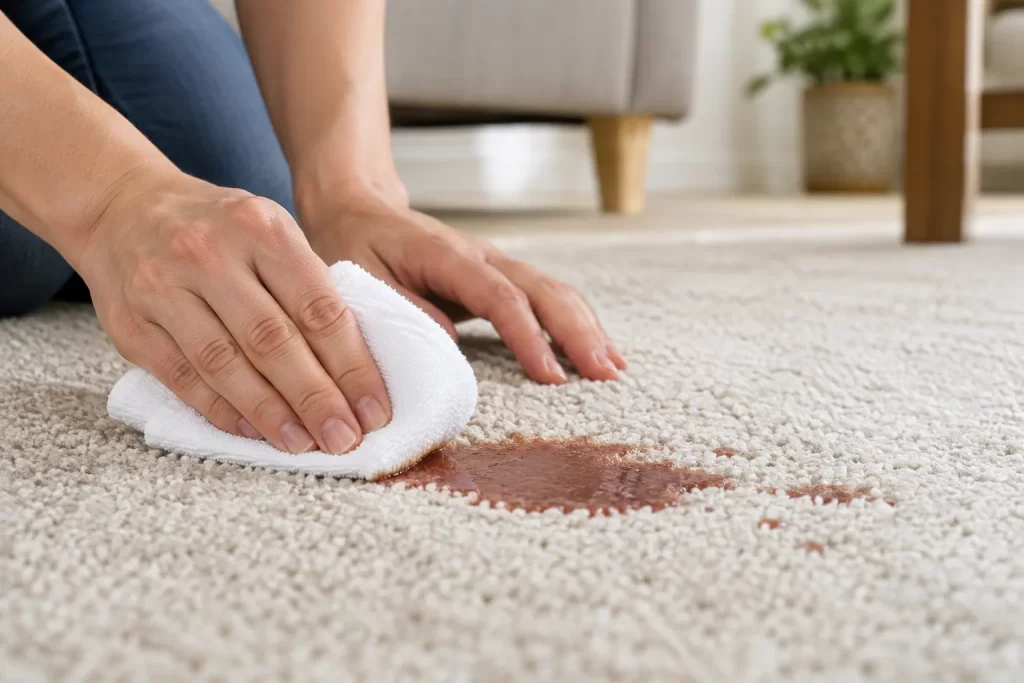
In the first ten minutes, the aim is containment, not a perfect result. Stop more liquid reaching the carpet, lift any solids carefully and blot moisture with a clean, colourfast white cloth. Work from the outer edge towards the centre so the affected area does not spread. Do not scrub, flood the pile or combine several products. If the substance is hazardous, unknown or likely to require specialist handling, keep people and pets away and seek appropriate advice.
A fast response can limit movement through the pile, but no method guarantees removal. Fibre, dye, backing, previous treatments and the spilled material all influence what is safe. The most useful record is simple: what spilled, when it happened and what has already touched the carpet.
Minute zero: make the area safe
Move cups, plates or leaking containers before attending to the carpet. Pick up glass only when it is safe to do so and use suitable protection. Keep children and animals out of the area. If an electrical item or socket is involved, do not continue as if this were an ordinary drink mark.
For a food spill, lift pieces with a spoon or another blunt edge rather than pressing them into the pile. For liquid, place absorbent material over the centre while you gather clean cloths. Do not use coloured towels that may transfer dye.
Blot; do not rub
Press a folded white cloth onto the wet area, lift it and move to a clean section. Repeat with controlled pressure. Rubbing can spread the spill, distort the pile and drive material deeper. Twisting the cloth against the carpet creates the same problem under another name.
Begin at the boundary and move inward. If the cloth picks up carpet colour rather than only the spill, stop. Colour transfer suggests that further wet work could alter the carpet. The same caution applies if the pile becomes fuzzy, flattened or rough.
Identify the carpet before adding anything
A fitted synthetic carpet, a wool-rich carpet and a delicate rug may look similar in a photograph but respond differently. Check any available manufacturer information and consider the backing beneath the visible pile. A cleaning product described as suitable for “carpets” is not automatically suitable for every dye, fibre or construction.
If you cannot identify the material, keep the response conservative. Removing free liquid is safer than experimenting with heat, strong alkali, bleach, solvents or a sequence of household mixtures. Never mix cleaning chemicals. Natural ingredients are still chemicals and can discolour fibres or leave sticky residues.
Use very little liquid
Flooding enlarges the problem. Moisture can travel into the backing and underlay, carry colour beyond the visible mark or leave a slow-drying patch. Apply any suitable, known treatment to a cloth rather than pouring it directly onto the carpet, and test an unobtrusive area first when the manufacturer permits it.
Work in small stages and observe the result between them. A stain that appears lighter while wet may return as the carpet dries. Repeated product application can create rings or residues that later attract soil. More liquid and more agitation are not reliable substitutes for the right method.
What not to reach for automatically
- Hot water: heat can affect some stains, dyes and fibres; “hotter” is not a universal improvement.
- Bleach: it can remove carpet colour and damage fibres.
- Washing-up liquid: excess foam and residue can be difficult to rinse from fitted carpet.
- Multiple stain removers: combining unknown formulations creates unpredictable results.
- A stiff brush: force can change the pile before the mark has been assessed.
Online recipes rarely know the exact carpet in front of you. A cautious pause is more useful than a dramatic treatment that creates a larger permanent area.
Record what has happened
Note the time, substance and approximate quantity. Keep the product label or a photograph of it if the spill came from a packaged drink, cosmetic or household material. Record each treatment applied, including water. This information helps a carpet-cleaning specialist avoid repeating incompatible steps.
Take one photograph in normal light and another that shows the surrounding area. Colour is not always accurate on a phone screen, but the images can document spread and changes after drying.
Know the early stop signs
Stop home treatment if carpet colour transfers to the cloth, the mark spreads, the pile changes texture, the backing becomes very wet, a strong odour develops or you do not know what the substance is. Large spills, contamination, antique or unstable textiles and marks involving bodily fluids need a different assessment from an ordinary drink.
Also stop if the first careful attempt produces no change. Repeating the same step with more pressure often increases risk without adding information. Allow the area to be assessed rather than layering one product over another.
Dry the area without creating a new problem
After free moisture has been blotted, support normal ventilation and keep the area out of use. Do not place furniture feet, coloured textiles or paper over damp carpet. Avoid intense direct heat. Drying conditions vary with fibre, backing, underlay, temperature and airflow, so a fixed promise would be misleading.
Check the surface and surrounding edge once it is dry. A tide mark, returning odour or colour change is useful evidence. Do not hide the area under a rug before it has been properly assessed and dried.
Why the first ten minutes matter
The early response sets limits around the spill. It removes what can be lifted safely, prevents foot traffic carrying it further and preserves information about the original mark. It does not need to finish the treatment. In many cases, restraint protects more of the carpet than an urgent attempt to make the stain disappear.
If the affected textile is a movable rug, its dyes, fringes and backing introduce additional questions; see the rug-cleaning assessment rather than treating it as fitted carpet. For a sofa or chair, liquid can enter fillings, so an upholstery assessment may be the safer next step.
Keep the area unchanged once you decide to seek help. Do not add fragrance, powder or another spot product to make it look better before an assessment. Tell the person assessing it if the carpet was wet below the pile or if furniture stood on the damp area. Those details affect the inspection even when the surface appears dry.
If another person caused the spill, write down their account while it is fresh rather than guessing later. The exact drink, food, cosmetic or household substance is often more useful than a description such as “dark stain”. A calm record preserves choices; hurried experimentation removes them.
Once the immediate response is complete, mark the area discreetly so nobody walks across it while it dries.