
Check window-cleaning access pane by pane before the appointment: opening style, height, restrictors, furniture, exterior ground conditions and any part that cannot be reached safely. “Three windows” is not a complete scope when one tilts inward, one is fixed above a stairwell and one opens onto a balcony with restricted access.
Make a simple window schedule
Walk through the property and number each window by room. Record whether the requirement is interior glass, exterior glass, frames, sills or all accessible parts. Add a photograph taken from a normal standing position.
This prevents double-counting multi-pane units and exposes assumptions about skylights, fanlights and glazed doors before equipment arrives.
Identify how each window opens
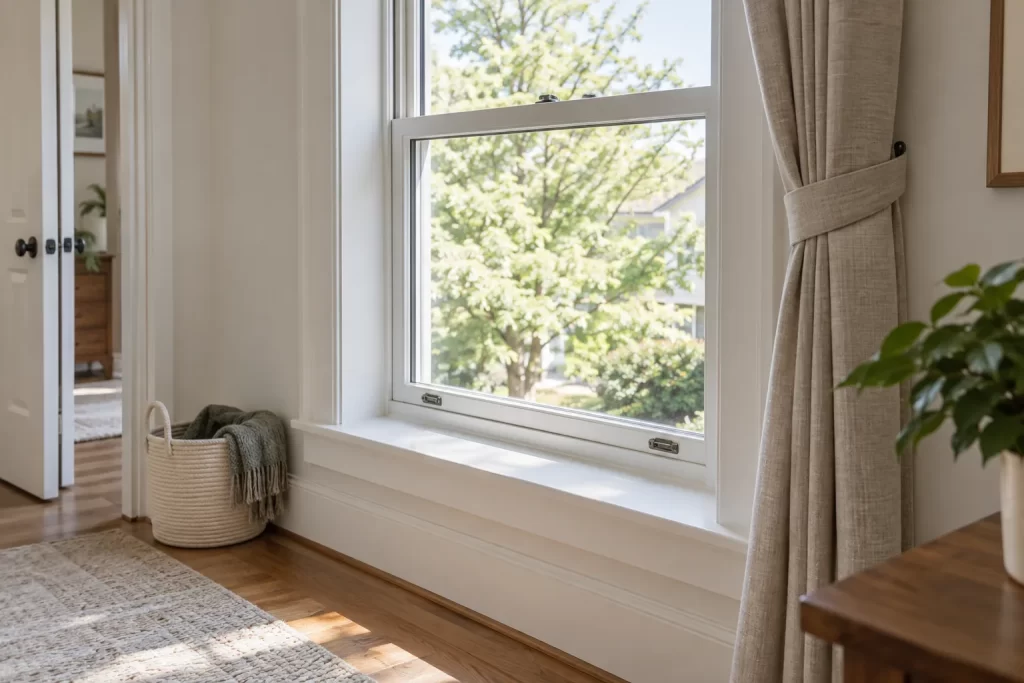
Casement, sash, tilt-and-turn, sliding and fixed windows create different access. Test normal operation without forcing stiff handles. A window that does not open as designed is a maintenance issue, not an invitation to lean farther.
Tell the cleaner about child restrictors, security locks and missing keys. Do not remove a safety device merely to improve reach.
Look at height from both sides
An interior pane at floor level may face a several-storey drop outside. Likewise, a low exterior window can sit above an internal stair void. Note changes in level, basement light wells, sloping roofs and balconies.
Do not estimate that a ladder will “probably reach”. Access methods depend on ground, angle, obstructions and safe working arrangements, not height alone.
Clear the interior route
Move light ornaments, plants and papers from sills. Arrange safe movement around furniture, cables and curtains. Heavy furniture, fitted blinds and valuable electronics should be discussed rather than dragged aside on the day.
Protect privacy by removing documents and personal items from the immediate area. Keep the route from entrance to window free of trip hazards and allow space for equipment.
Describe exterior ground accurately
Flag steps, soft soil, gravel, narrow paths, parked vehicles, bins, railings and locked gates. Mention overhead cables and conservatory roofs. A photograph from the exterior approach often explains more than a general statement that access is “easy”.
Communal gardens, courtyards and neighbouring land may require permission. Confirm it before the appointment rather than asking a cleaner to negotiate entry.
Balconies and terraces need a route
Check whether a balcony is private, shared or subject to building rules. Clear ordinary belongings without blocking drainage or fire routes. Report fragile decking, low parapets and doors that lock automatically.
Never assume a balcony makes the outside of every pane safely reachable. Its geometry and guarding still limit work.
Skylights and roof glazing
Record whether roof windows rotate for cleaning and whether the mechanism works. High internal glazing above stairs or double-height rooms may need specialist access. Roof travel is not implied by a request for ordinary window cleaning.
Provide model information if available and do not improvise long tools from unstable platforms.
Frames, vents and damaged units
Identify peeling paint, loose putty, cracked glass, failed seals and unstable frames. Heavy cleaning cannot reverse condensation between sealed panes. Trickle vents may be cleaned at the accessible face but should not be dismantled casually.
Photograph defects beforehand. If a pane is cracked or a frame moves under light operation, leave it alone and seek repair advice.
Weather changes exterior work
Wind, rain, heat and freezing conditions affect safe access and the result. Agree how postponement or a reduced interior-only scope will be handled. A forecast is useful, but the condition at the property remains decisive.
Secure pets and children while doors, gates or windows are open. Avoid creating an unattended security risk for the sake of ventilation.
Questions to answer in advance
- Which faces and frame components are included?
- Which windows open, and are keys available?
- Are restrictors or alarms fitted?
- What are the internal and external height changes?
- Is the ground firm, level and unobstructed?
- Does access cross communal or neighbouring space?
- Are there cracked panes or unstable frames?
- What happens if weather makes the plan unsafe?
Separate cleaning limits from access limits
A pane can be safely reachable yet retain scratches, mineral etching or failed-unit condensation. Another pane may be in good condition but inaccessible with the agreed method. Record these as different constraints so nobody mistakes an access exclusion for poor cleaning.
Discuss both interior and exterior expectations with the window-cleaning service. Photographs and the schedule allow the proposed scope to match the building.
The five-minute arrival check
On arrival, confirm that conditions match the information supplied. Walk the route, point out locks and defects, and agree any exclusion before equipment is set up. If a vehicle or scaffold now blocks access, revise the scope rather than improvising.
Keep one contact available to answer building-management questions. In an empty property, include window access in the written key and alarm plan.
A useful final record
At completion, note panes that were inaccessible, damaged or excluded, and any maintenance issue discovered. This is particularly valuable in managed buildings, where another contractor may need to address failed seals or mechanisms.
A good access check turns a vague window count into a safe, verifiable plan. It protects appointment time, reveals specialist requirements and makes the final result easier to assess without asking anyone to stretch, climb or cross a boundary that was never agreed.
Check internal coverings separately
Blinds, shutters and heavy curtains can restrict access even when the pane opens normally. Confirm whether they can be moved using their standard controls and whether they are fragile, motorised or recently fitted. Cleaning the covering itself is a separate task.
Do not detach a blind or curtain track simply to reach glass. If it cannot be moved safely, record the affected pane or edge as restricted.
Plan water and equipment movement
Identify an agreed water point where the method requires one and note long internal routes. Protect sensitive floors and avoid trailing hoses or cables across shared entrances. Building rules may limit where equipment can be filled or stored.
For interior work, decide where wet tools can be placed without contacting timber furniture, documents or electronics. Clear a modest working zone rather than relocating an entire room.
Include secondary glazing and screens
Secondary panels, insect screens and decorative grilles can make the main pane inaccessible. Record whether they are designed for routine removal and who is authorised to do it. Old or brittle clips should not be forced.
Where only one accessible face can be cleaned, describe it accurately. A mark trapped between glazing layers will remain and may require repair or specialist dismantling.
Share any change to the schedule before arrival, particularly scaffolding, locked gates or newly fitted restrictors. A current plan supports safe work; last month’s photographs do not override today’s conditions at the building.