
Furniture changes what a tenancy cleaner can reach. A light chair may be moved and returned; a fixed wardrobe can hide a whole section of floor. Fabric seating, rugs and supplied appliances also have different care needs from hard surfaces. An accurate end-of-tenancy plan begins with the inventory and the layout, then states what may be moved, cleaned and photographed before keys change hands.
Record the furnished layout
Walk through each room with the inventory. Photograph the position of beds, sofas, tables, wardrobes and loose rugs, and note any existing scratches or unstable items. Identify which pieces belong to the property and which personal belongings the tenant will remove. A room can appear clear from the doorway while furniture blocks skirting, floor edges and wall sections behind it. The starting record prevents a later assumption that every hidden area was reachable.
Agree whether drawers, wardrobes and storage furniture must be emptied. A cleaner should not sort private items, discard food or decide which contents belong to the landlord. Emptying an item before the visit gives access to its interior and reduces the risk of damp cloths touching papers or textiles. If the furniture remains full, limit the scope to its accessible exterior and record that boundary.
Take care with fragile pieces. A table with loose legs, a wardrobe attached to the wall or a sofa with damaged fabric should not be moved casually. The owner or manager can decide whether a separate handling plan is needed. Cleaning can proceed around sound accessible areas without disguising a defect.
Gain access without unsafe movement
Move light chairs or side tables only where this is agreed and safe. Clean the exposed floor by its material instructions, let it dry and return the item to its recorded place. Protect furniture feet and the floor from grit while moving. A heavy sofa, bed or wardrobe may require more than one person or may remain fixed. Do not drag it across an unfamiliar floor simply to reach a strip of dust.
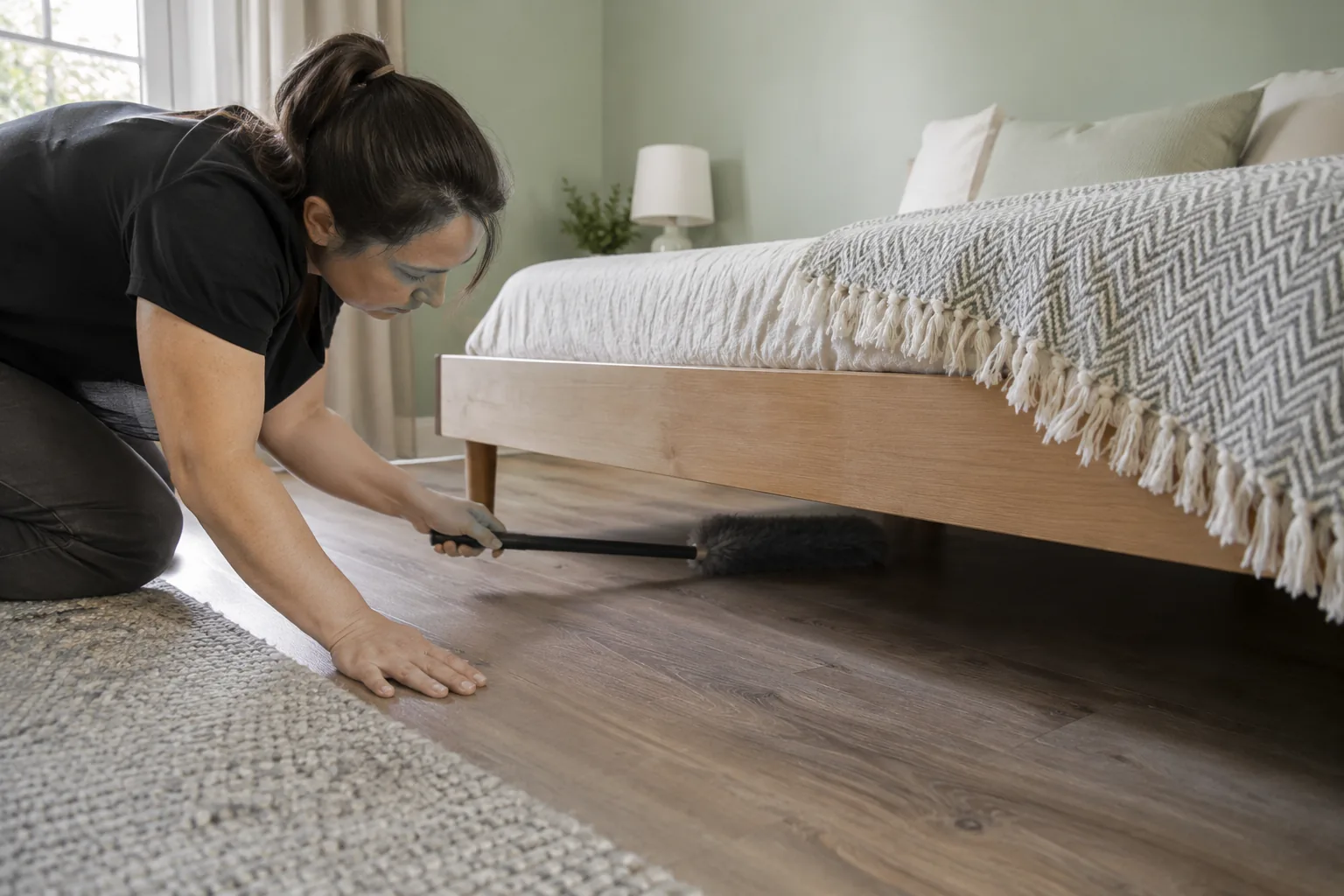
Use a suitable vacuum attachment for reachable edges beneath and beside furniture. Avoid reaching blindly behind a cabinet where there may be cables, loose fittings or broken glass. If the area cannot be reached safely, note it as inaccessible. A photograph showing the furniture position explains the limit better than a vague statement that a room was “done”.
Keep routes through the property clear while pieces are moved. A chair placed in a hallway can obstruct equipment or a safe exit. Work one room section at a time and return items after the surface is dry. This is particularly important close to handover, when another person may enter before the cleaner has finished reassembly.
Scope textiles separately
A furnished inventory may list a sofa, mattress, rug and curtains, but they do not all receive the same treatment. Ordinary vacuuming of accessible fabric is different from wet upholstery cleaning. Check each care label and condition before applying moisture or a stain product. A delicate or unstable dye may require a specialist assessment. Do not promise removal of an old mark merely because the item is included in the inventory.
Ask whether textile treatment is part of the booking and whether there is time for drying before keys are handed over. A separate upholstery-cleaning service may be appropriate for a suitable sofa, while curtains or a rug may need another method. If the property will be occupied immediately, a wet treatment that cannot dry safely may need to be scheduled earlier.
Removable cushion covers should be washed only according to their labels and with the owner’s agreement. Do not assume a zip means the cover is machine-washable. A mattress may be vacuumed where included, but a stain within it is not the same as dust on its surface. Record the visible condition and the method used.
Include supplied appliances and storage
Furnished properties often include appliances alongside furniture. List the oven, refrigerator, extractor and any laundry equipment named in the inventory, and decide whether interiors and removable parts are included. An exterior wipe does not replace a full oven clean. Allow for cooling, defrosting and drying where relevant. Record a broken seal or shelf separately from food residue.
Inside wardrobes and drawers, work from the top down after they have been emptied. Remove loose dust and use a suitable method for the finish, keeping moisture away from raw board edges. Dry before closing them. If an old unit smells damp despite a clean interior, check for a leak or ventilation issue instead of covering it with fragrance. Cleaning cannot repair swollen board.
Coordinate with the moving timetable. Boxes brought back through a room can mark a floor after it has been finished. The guide to cleaning before or after the boxes can help place the appointment. In a furnished property, the furniture remains, so the route still needs careful planning even after personal goods have gone.
Apply the access plan room by room
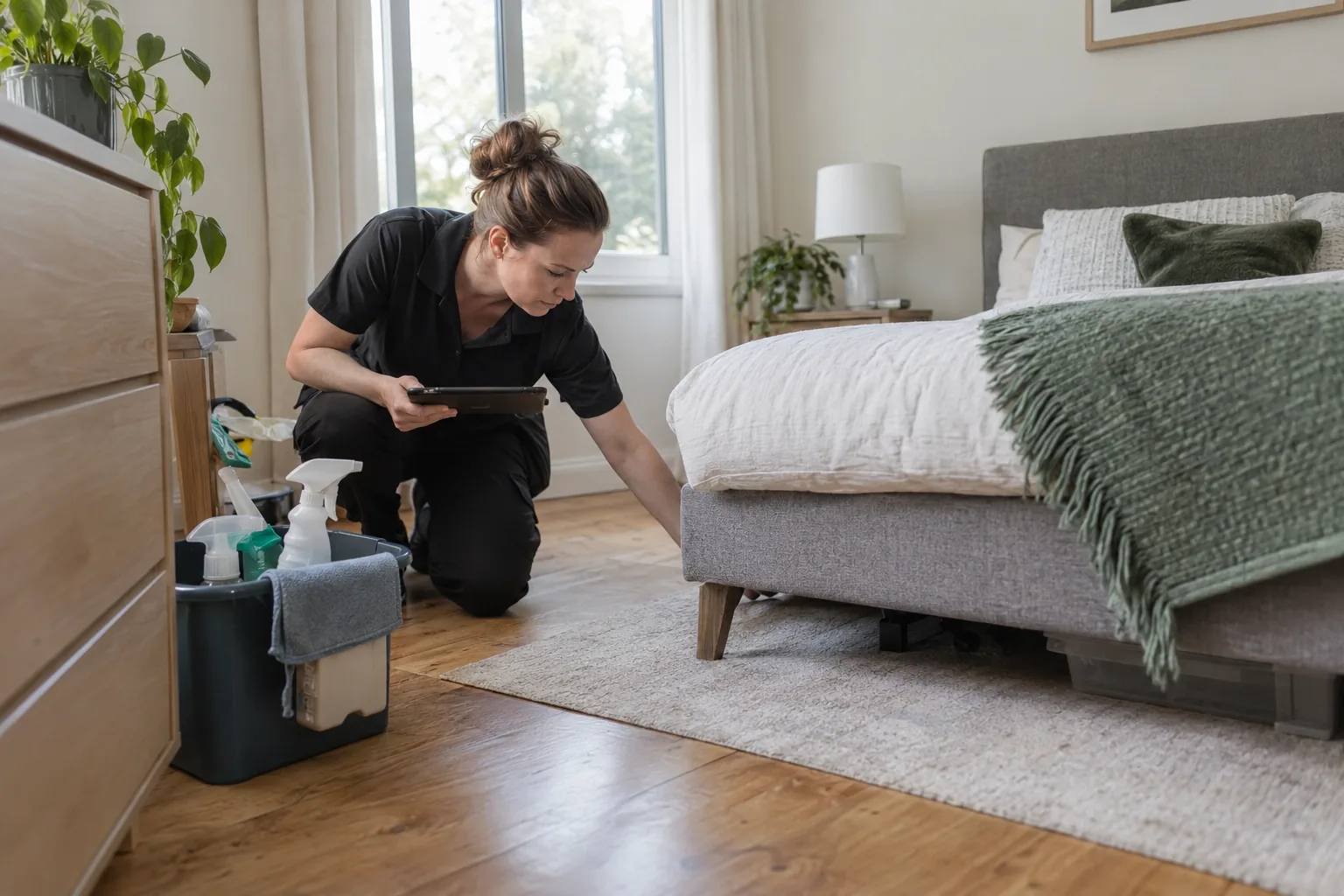
In a bedroom, a bed may cover most of the floor while a small bedside table is easy to move. Clear personal items from the table and wardrobe before the visit. Dust and clean the accessible surfaces, then use a suitable attachment along the bed edge without reaching blindly underneath. If the bed cannot be shifted safely, record the hidden floor as inaccessible. Check the mattress and headboard only if they are included in the inventory and agreed scope.
In a living room, light chairs can be moved after their positions are photographed. A sofa may be too heavy or may have delicate feet that could mark the floor. Vacuum reachable seams and floor edges separately. If the rug can be lifted safely, inspect its backing and the floor below; return it only after the floor is dry. A stain in the sofa and dust behind it should not be bundled into one undefined “living room clean”.
In a dining area, chair legs often leave contact marks on the floor, while table undersides collect crumbs. Remove loose debris before damp work and check whether a mark is removable residue or a scratch. If the table has a delicate finish, use its care guidance rather than the product chosen for the floor. Return chairs to their original arrangement after drying and check that no felt pad or loose foot has come away.
These examples show why the inventory and layout matter together. The same number of rooms can require very different time depending on furniture size, condition and the amount that may be moved. Give the cleaner that information before booking so a final inspection can reflect the surfaces that were genuinely accessible.
Inspect and document the agreed scope
Use the inventory as a finishing list. Check accessible floor edges, cupboard interiors, supplied appliances and the areas exposed by movable furniture. Let floors and textiles dry before pieces return. Take final photographs in even light, including wider views that show where large items remained. Note any area that could not be reached and why.
Separate cleanable residue from damage: dust beneath a chair, a scratch in a floor and worn sofa fabric need different responses. Photograph each condition without trying to conceal it with a harsh treatment. A tenancy clean can address the accessible agreed surfaces; repairs and specialist textile work need their own scope.
Tell the person receiving the keys if furniture was left moved to allow drying or if an item should not be used yet. A fair handover record describes what was completed and what access prevented. It does not imply that every concealed corner was cleaned simply because the visible room looks tidy.