
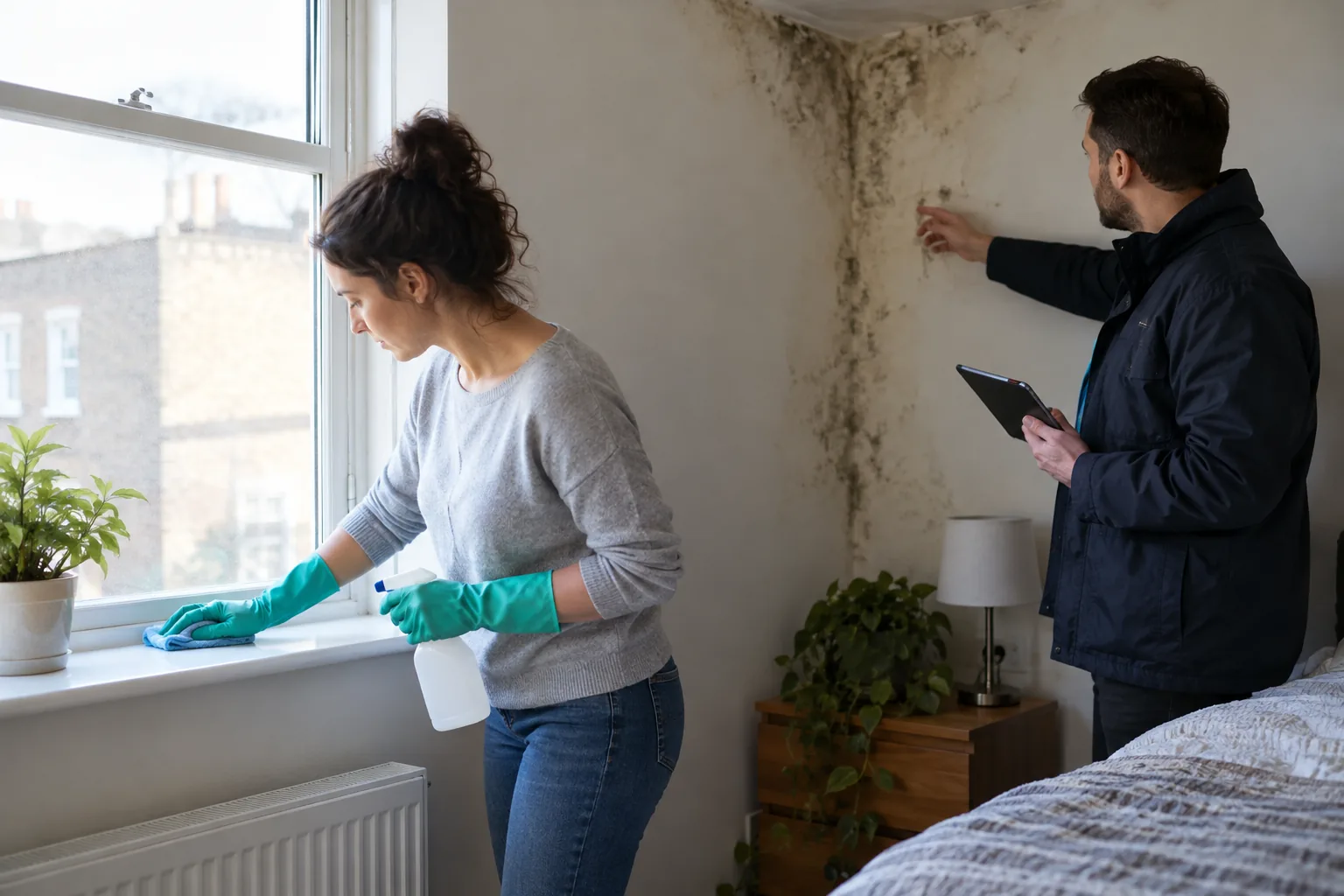
Finding a dark patch while preparing to leave a rented home is stressful. It is tempting to scrub it hard, paint over it or hope the final clean will make it disappear. Each response can make the position less clear. A stain may be superficial residue, a sign of persistent condensation or evidence of a leak. Cleaning and repair have different owners and different remedies. Before moving out, the most useful approach is to record what you can see, clean only surfaces that can be cleaned safely and raise any building issue promptly.
Start with evidence, not a bottle of cleaner
Take clear photographs of the affected area before you touch it. Include a wider view that shows its position in the room and a closer view of the patch. Note whether it is beside a window, behind furniture, on a ceiling or around plumbing; those locations suggest different sources of moisture. Record the date, any previous reports and whether the surface feels wet, cold or damaged. You need not diagnose the cause. A precise description is more useful to a landlord or managing agent than an unsupported claim that a tenant or a defect is responsible.
Check the tenancy paperwork and previous inventory photographs for context, but do not assume that an old mark proves the present problem has the same cause. If water is actively entering, paint is blistering, plaster is soft or a fitting is leaking, report it immediately through the usual repair channel. Ask for acknowledgement in writing. A cleaner can remove accessible surface contamination where safe; they cannot fix a roof, pipe, failed seal or inadequate extraction. Our related guide on cleaning versus repair at the end of a tenancy explains that boundary in more detail.
Work out whether a small surface clean is appropriate
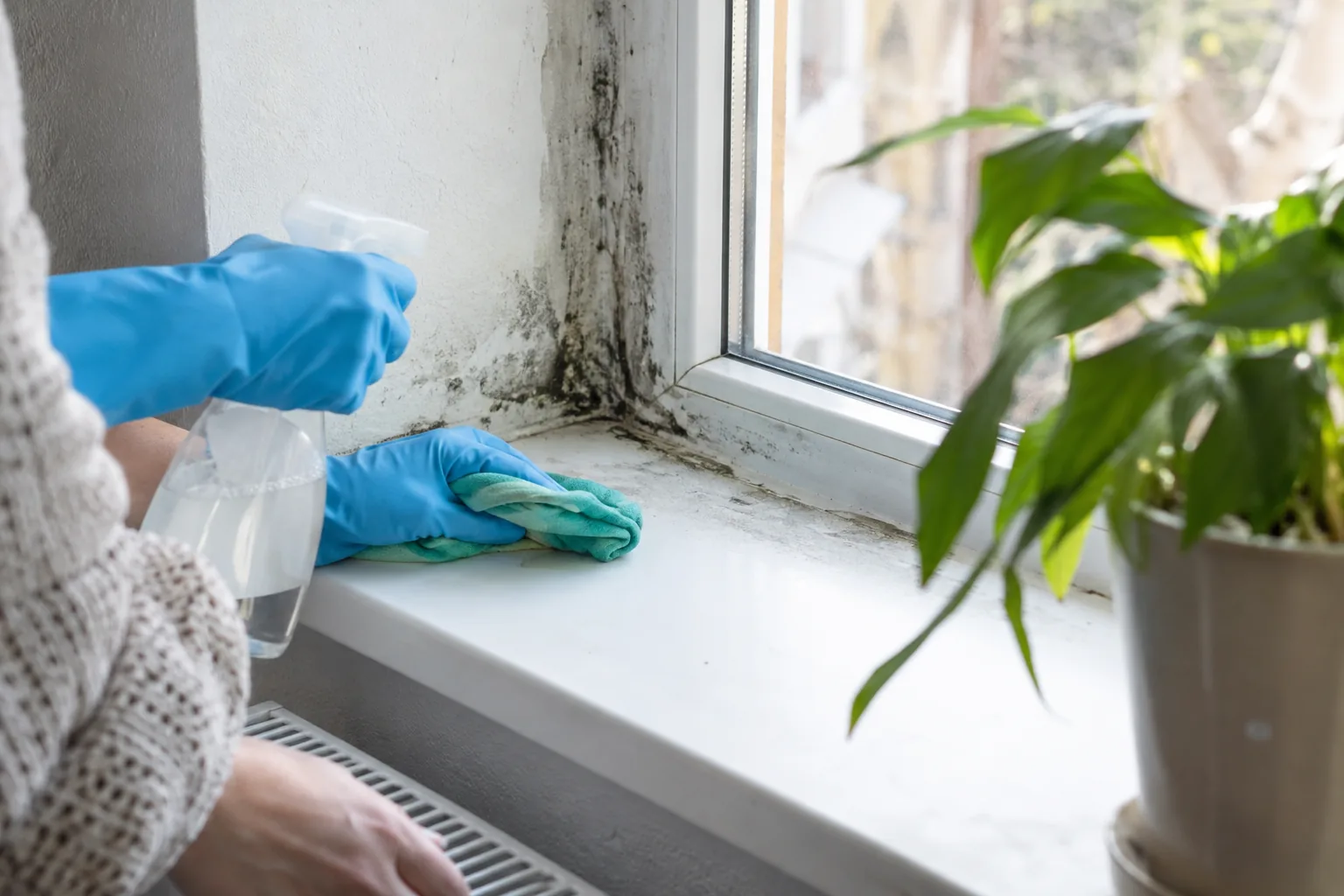
Size and condition matter. A few spots on an intact, washable surface are different from extensive growth, recurring patches or contamination on porous plasterboard, wallpaper and soft furnishings. If the area is large, keeps returning, has spread into materials, or anyone in the home has health concerns, stop and seek appropriate professional advice. Do not brush dry growth or use a household vacuum on it: disturbing material can spread particles. Keep children and pets away from the work area, ventilate as appropriate and follow the product label and the surface manufacturer’s instructions.
Even a small patch should be treated cautiously. Test any compatible product on an inconspicuous area; protect nearby fabrics and finishes; wear suitable gloves; and never mix cleaning chemicals. Bleach is not a universal answer and may damage finishes or leave the moisture source untouched. Avoid saturating the wall. Wipe with controlled moisture, use a clean cloth and dry the area thoroughly. If pigment remains after safe surface cleaning, further scrubbing may remove paint rather than solve the problem. Photograph the result and describe any residual stain honestly.
Look for the moisture pattern
Condensation often appears where warm, humid air meets a cold surface: glazing, external corners and places where air cannot circulate behind large furniture. That pattern can help you choose sensible daily measures, such as using an available extractor while cooking or bathing, keeping vents unobstructed and allowing a little airflow around cupboards. It does not prove that ventilation alone is the cause. A patch that tracks a pipe, spreads after rain or leaves a persistent wet line deserves a repair report rather than repeated cleaning.
Do not conceal evidence while investigating. Painting over a damp area can trap moisture, obscure the condition for inspection and create a dispute at checkout. Nor should you scrape loose plaster as part of a clean. Where a wall covering or seal has failed, note it separately from removable dirt. In a rented property, agree any decorating or repair with the person responsible before arranging it yourself. Keep a dated record of what you reported and any response, especially if the checkout is close.
Plan the rest of the move-out clean around the issue
Complete ordinary cleaning tasks that are independent of the damp concern: empty cupboards, remove food residue, wipe accessible fittings and clean floors after the last boxes leave. Keep damp-affected items separate so they do not transfer marks or odours during packing. If a piece of furniture hid a patch, photograph both the newly exposed wall and the furniture’s position before you move on. A thorough end-of-tenancy clean can address general residue and accessible surfaces, but tell the cleaner about the affected area in advance so it can be assessed rather than silently treated as a routine stain.
If the property is empty before the appointment, arrange safe access and a working supply of water and electricity. Share any relevant product restrictions, fragile paint or previous treatment. The cleaner may reasonably decline a task that requires specialist remediation or risks spreading contamination. Leave time after the clean for surfaces to dry and for an accurate final inspection. A last-minute wet wipe immediately before checkout can make an area look temporarily darker and can hide whether the underlying moisture persists.
Keep the checkout discussion factual
At checkout, distinguish three things: visible dirt that was removed, permanent staining or material damage, and the unresolved source of moisture. Show dated photographs and copies of repair reports rather than relying on memory. A clean surface does not establish why the problem occurred; a stain does not automatically establish neglect. If a disagreement arises, the inventory, correspondence and independent evidence carry more weight than a guess about causation. Keep receipts for any professional cleaning and the exact scope that was agreed.
Where the issue is substantial, ask the landlord or managing agent how they want the area inspected and handled before commissioning treatment. This protects the property and gives everyone a chance to identify the moisture source. A repair can take longer than the remaining tenancy, but reporting it promptly still matters. If you need help with the general moving clean, move-in or move-out cleaning can be planned around accessible rooms while the damp concern is managed separately.
A practical final sequence
Check belongings that sat against the affected wall before sealing boxes. Cardboard, books and textiles may retain moisture or an odour even when the wall looks better. Do not pack damp items tightly with clean possessions, because a closed box gives them little chance to dry and makes it harder to identify where a smell originated. Photograph any affected possessions separately. If a wardrobe or bed was pushed against a cold external wall, its position may explain restricted airflow, but it still does not settle responsibility for the building condition. For the next occupant, a clear note about which area needs inspection is more useful than an overpowering fragrance. Avoid air fresheners as a substitute for cleaning or repair; they can mask an odour during one viewing while leaving the source in place. A dry, ventilated property and an accurate handover record are the sounder finish.
First record the condition and report active damp or damage. Next decide whether a small, intact surface is safe to wipe or needs specialist assessment. Then complete the ordinary clean without soaking the affected material. Finally photograph the dry result, retain your messages and make the condition visible at checkout. This sequence is slower than covering a patch with paint, but it avoids adding damage or confusion. The goal is an honest, clean handover and a clear route for the underlying moisture problem to be addressed.