
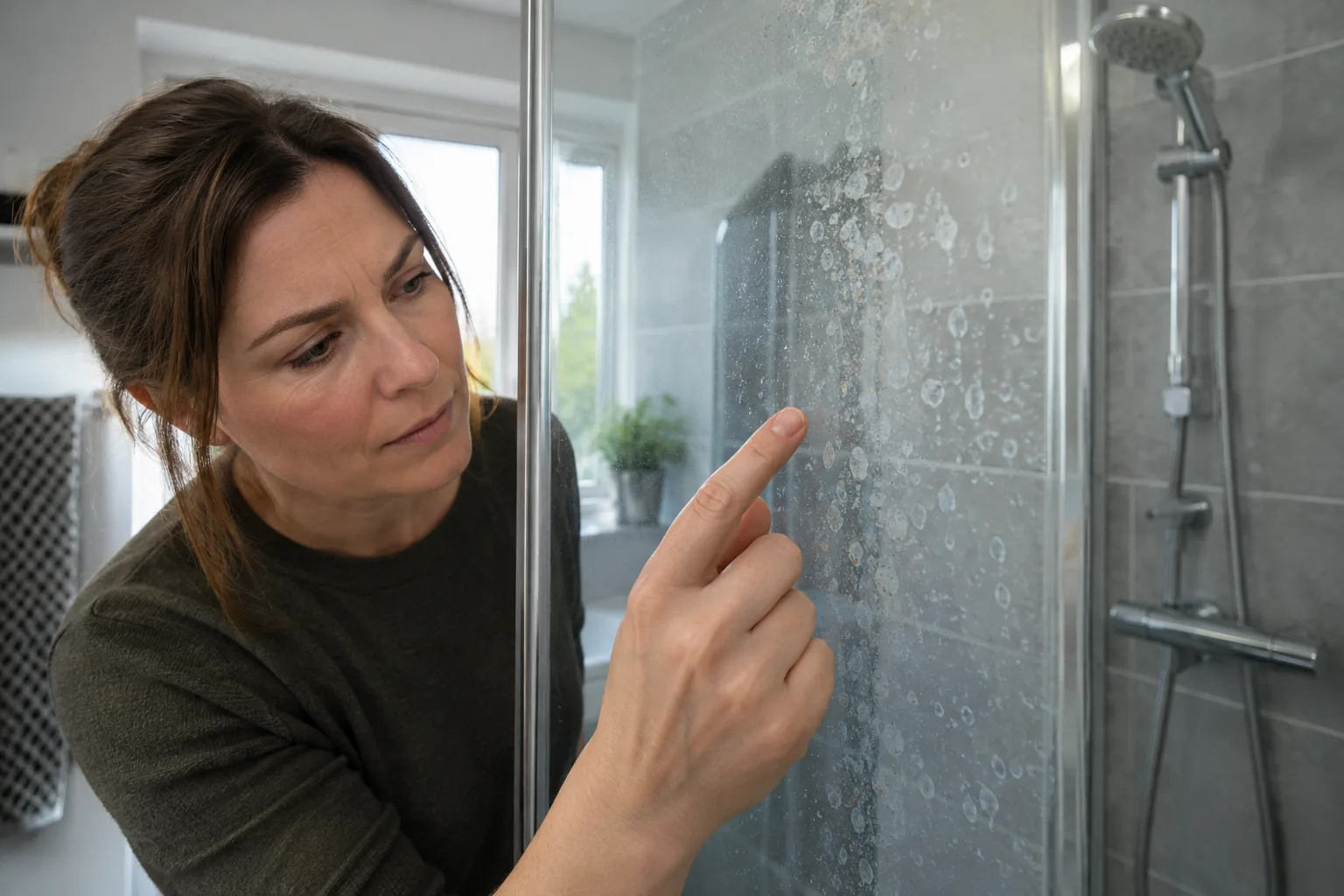
A cloudy shower screen may carry removable mineral deposits, but it can also have a damaged coating, scratches or etched glass. These conditions need different responses. A strong descaler and scraper used without checking the pane may make a permanent mark more visible. Start with the manufacturer’s care advice and a small controlled test, then inspect the glass after it is completely dry.
Check the glass, coating and nearby fittings
Look for installation paperwork or a maker’s label that identifies an anti-scale coating or printed pattern. A product suitable for ordinary glass may not be suitable for a treated pane. Examine the frame, metal fittings, flexible seals and nearby tiles too. An acidic product that can dissolve scale on glass may affect natural stone or certain plated metals if it runs onto them. Protect adjacent materials before beginning.
Use even light and view the pane from more than one angle. A deposit may feel rough under a clean cloth, while etching can remain smooth and hazy; neither observation is a complete diagnosis. Note whether the cloudiness is on one face, trapped behind a coating or concentrated where water dries at the bottom. Photograph the condition before treatment if the distinction matters for a tenancy handover or quotation.
Choose a discreet area for the first test, away from a loose seal. Do not test the strongest product on the most visible central patch. If there is damage to the glass, rollers or frame, record it. Cleaning can remove suitable surface deposits, but it cannot repair etched glass or a broken door mechanism.
Soften a removable deposit with a controlled method
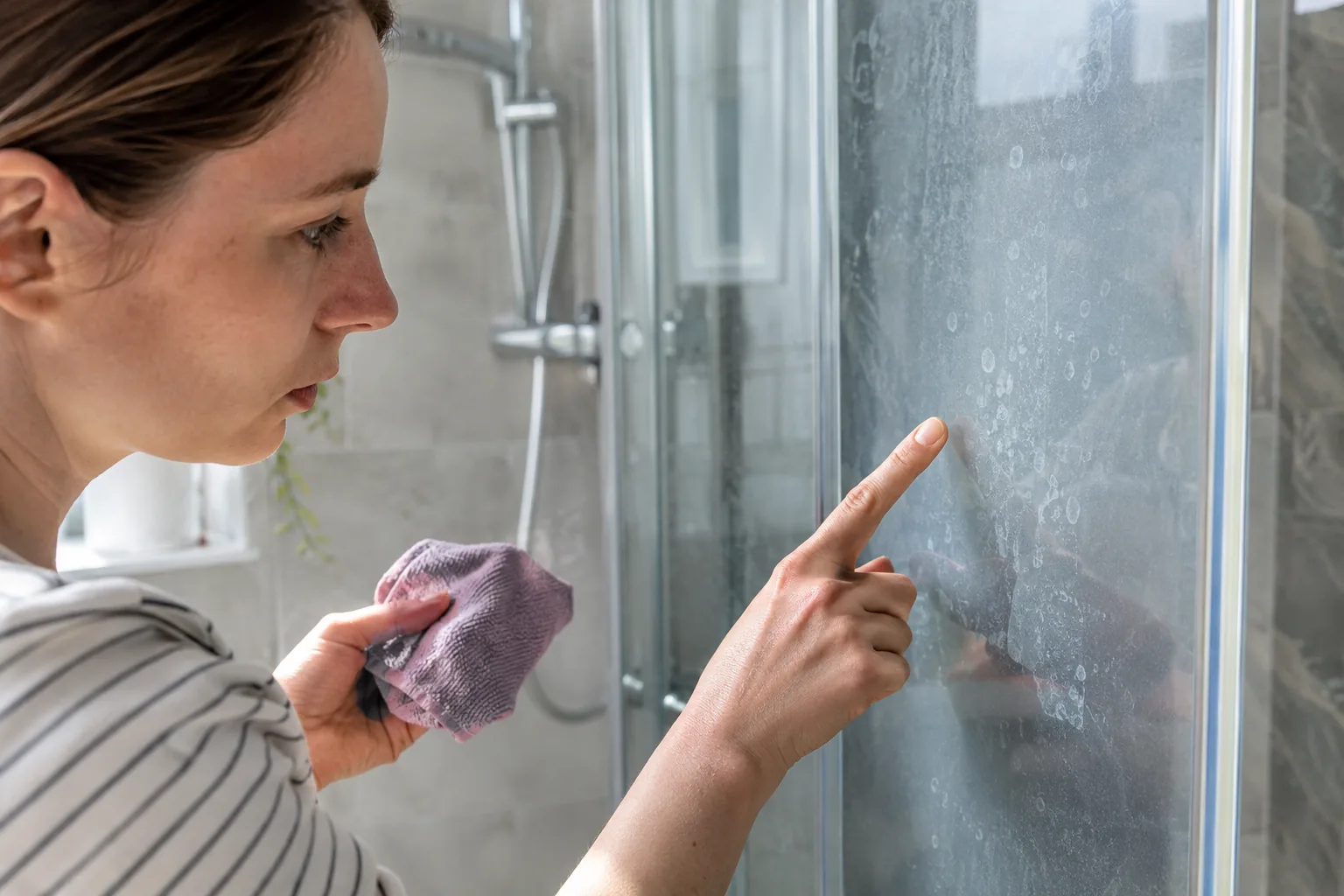
First clear soap residue and loose debris by a method permitted for the screen. Then apply a descaler suitable for the glass and its coating, following its label for dilution and contact time. A cloth can help keep the product in a small area and away from vulnerable trim. Do not allow it to dry on the pane while attention moves elsewhere. Work in sections so each patch receives the intended treatment and rinse.
Use a soft cloth rather than a blade or abrasive pad. Heavy scale may need more than one careful pass, but longer contact than the label allows is not a shortcut. If the patch does not improve after a proper test and rinse, stop before treating the whole screen. Repeated acid and hard scraping can damage a coating and obscure the original cause of the haze.
Never mix a descaler with bleach or another bathroom cleaner. If a different product has already been used, clear it as its label instructs before starting the test. Ventilate as required and keep children and pets away from products during the work. The test is useful only if it is both controlled and safe for the whole assembly, not merely effective on a piece of plain glass.
Rinse, dry and inspect
Rinse according to the product instructions, taking care not to drive liquid into a loose seal or an electrical fitting nearby. Use a clean cloth or suitable squeegee to dry the pane. Inspect when it is fully dry; a wet surface can hide a film that reappears as a white streak. Compare the test patch with the untreated area in similar light. If the test patch clears and the coating remains sound, the same method can be extended in manageable sections.
Pay attention to the bottom track. Scale, soap residue and hair can collect there, while rinse water pools at its ends. A soft brush or folded cloth may reach accessible channels without prising up sealant or rollers. Dry the track after cleaning so fresh mineral marks do not form immediately. If the door sticks or the track has corroded, note the defect rather than forcing it free during a clean.
Keep cloths used for treatment separate from those used for final drying. A cloth loaded with product can spread a film back onto the clear area. Check the glass edge, handle and frame after drying, not only the broad pane. A clean central panel can still be spoiled by residue left where a hand touches the door.
Read the pattern of the remaining mark
Location can tell you which question to ask next. White spots scattered across the pane often follow individual droplets. A continuous band at the lower edge may reflect water collecting in the track. Cloudiness that follows a past cleaning stroke or sits beneath a decorative pattern may indicate a change to the coating rather than a new mineral deposit. Use those observations to select a test area, not to declare a diagnosis without checking the surface.
A useful record has three photographs: the whole screen, the untreated mark in even light and the dry result of the small test. Avoid a flash reflection that makes a clear pane look white. If the test clears only part of a patch, note the difference. That may mean more than one condition is present, such as scale over an already etched area. Repeating treatment on the newly clear section will not restore the underlying damage.
Ask whether the screen was fitted with a protective treatment and whether a previous product was used. The answer matters because a compatible descaler for untreated glass may be excluded by a coating warranty or care guide. Do not use a metal scraper to find out whether a rough deposit will lift. A small controlled chemical test with a soft cloth, when permitted, is a safer way to learn what is removable.
Protect the rest of the shower assembly
Work with a cloth below the test patch so runoff does not sit on a stone sill or metal rail. If a nearby tile is natural stone, keep acidic product away from it and follow its care instructions separately. Some plated handles can lose their finish if a cleaner is left in a droplet around a fixing. Wipe and dry these parts after the glass is rinsed, using a method that suits them rather than the glass product by default.
The flexible seal at the base may be old or lifting. Do not force a brush beneath it in pursuit of a dark line. Water driven into an open joint can create a larger maintenance problem. If material under a clear seal remains discoloured after the outer surface is clean, record it as a seal condition. Repair or replacement can then be arranged without pretending that more glass treatment will reach beneath it.
Recognise the limit of cleaning
If a cloudy patch remains after a compatible test, it may be etched, scratched or within a damaged coating. It may also be a deposit that requires a specialist method; do not claim certainty from appearance alone. Stop aggressive treatment, record the condition and consult the maker or a glazing professional where appropriate. A worn seal or corroded frame needs maintenance separately from scale removal.
A quotation for a deep clean should distinguish removable deposits from possible permanent haze. Give photographs in even light and mention any coating. This lets the cleaning scope be discussed honestly rather than promising a perfectly clear pane when the surface itself may have changed. The broader guide to deep, one-off and regular cleaning can help when several bathroom areas need attention.
Slow new deposits after the clean
A brief wipe or suitable squeegee after each shower can remove droplets before they dry on the screen. The lower track and accessible glass can then be included in a regular domestic cleaning brief, with any coating instructions passed on. Let the bathroom ventilate and keep the track free of trapped water. These habits can reduce new spotting, but they will not reverse an etched patch or restore worn hardware.
Review the screen after a few weeks of normal use. If marks return in the same place despite drying, inspect where water is collecting and whether the door closes properly. A poor seal or misaligned panel may be directing water to an edge. Treat that as a maintenance question. The practical goal is to remove what is safely removable while preserving the glass, coating and fittings for continued use.