Choose a regular visit for ongoing upkeep, a one-off clean for a defined list on a particular date, and a deep clean when accumulated build-up or overlooked detail needs more time. The names matter less than the condition and outcome. A well-maintained home does not become a deep-clean job because the appointment is long, and a heavily built-up kitchen does not become routine work because it is booked for only one day.
Start by describing what has changed since the home last felt manageable. Then decide whether the need repeats, is tied to one event or involves residue that routine methods have not addressed.
Three services, three different planning questions
| Visit | Main question | Useful for |
|---|---|---|
| Regular | What must stay under control each week or fortnight? | Routine kitchens, bathrooms, dusting and floors |
| One-off | What should change during this single appointment? | A focused reset, guests, events or a backlog with clear priorities |
| Deep | Where has build-up collected, and which details need extra work? | Edges, fittings, grease, scale and areas missed during routine upkeep |
These are not quality grades. Regular cleaning should still be careful, and deep cleaning is not a promise that damage or permanent staining will disappear. The difference is the brief and the time allowed for detail.
Choose regular cleaning when the need repeats
A regular cleaning visit is built around a dependable core. The kitchen sink and worktops, bathroom fittings, accessible dusting, vacuuming and suitable floor care may appear each time. Less urgent tasks can rotate. The plan becomes more accurate as the cleaner learns which rooms change fastest and which remain stable.
Regular visits work best when the household can maintain basic access between appointments. If every surface must be cleared before work begins, time moves away from actual cleaning. The routine should also be reviewed when circumstances change: a new pet, home working, building work or an additional occupant can alter priorities.
Choose a one-off clean for a particular moment
A one-off appointment suits a defined need that does not automatically repeat. You might want the kitchen, bathroom and main living area reset before visitors, or selected rooms addressed after a busy period. The strongest brief is short and ranked. It does not assume that a cleaner can provide deep detail everywhere simply because the visit happens once.
A one-off clean can be light or substantial. Its defining feature is the single appointment, not the condition. If the home carries extensive build-up, discuss a deeper scope rather than hiding the condition behind a general label.
Choose a deep clean for accumulated detail
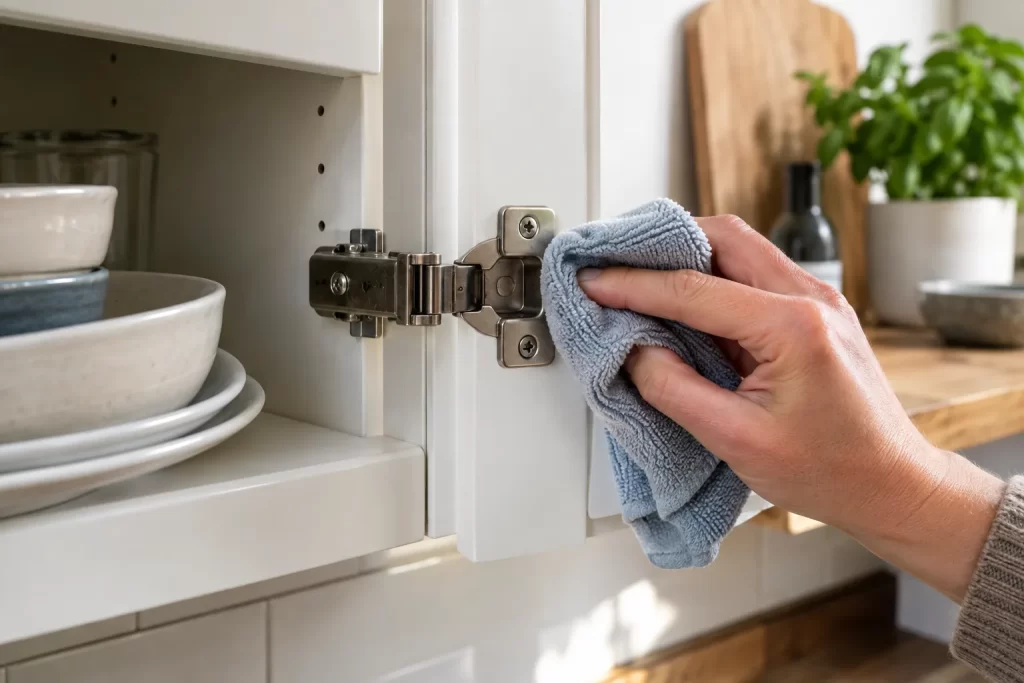
A deep clean allows a more deliberate pass over areas that routine upkeep does not cover to the same degree. In a kitchen, that may include cupboard fronts, edges, fittings and controlled work on grease. In a bathroom it may include accessible tile detail, fittings and manageable scale. Doors, frames, skirting and reachable ledges may receive more attention throughout the home.
The scope still needs boundaries. Inside appliances and cupboards, carpet extraction, upholstery, post-building dust and high external windows may be separate tasks. Deep cleaning removes suitable soil; it does not restore scratched surfaces, failed sealant, worn grout or discoloured materials.
Use condition signals instead of marketing labels
Look at the type of work required. Routine dust on open furniture and ordinary bathroom marks point towards upkeep. Grease around kitchen edges, repeated scale on fittings and dust settled behind accessible objects point towards deeper detail. A home can contain both: the bedrooms may need routine work while one bathroom needs concentrated attention.
Photographs can help explain condition, particularly for a quote, but they may hide texture and residue. Describe when the area was last cleaned in detail, what has already been tried and which surfaces are delicate or damaged.
Four common scenarios
A maintained flat with a busy household
Choose regular cleaning and agree a protected core. Rotate occasional details rather than waiting for the entire home to require a reset. A first visit may be longer if a baseline needs to be established.
Guests are arriving next week
Choose a one-off clean with reception rooms, the guest bathroom and kitchen ranked above spaces visitors will not use. Do not spend limited time on every cupboard if the visible, functional areas are the actual objective.
The kitchen and bathroom have fallen behind
Discuss a deep-clean scope for those rooms. It may be more useful to finish two demanding areas than to advertise a whole-home deep clean and provide only a light pass everywhere else.
The property is empty at the end of a tenancy
Use an end-of-tenancy scope. Empty-property access, internal storage, appliances and handover expectations make it different from an occupied-home deep clean.
Questions that reveal the right scope
- Is this a repeating need or a single date?
- Which two rooms would be most disappointing if unfinished?
- Is the issue ordinary surface soil or accumulated residue around details?
- Will the home be occupied and furnished?
- Are appliance interiors, cupboards, windows, carpets or upholstery essential?
- Is any mark actually damage, wear, paint, adhesive or failed sealant?
Answers to these questions are more useful than a bedroom count alone. They also make quotations easier to compare because each provider is pricing the same outcome.
Do not combine every service into one impossible visit
A long list can contain regular tasks, deep details and specialist treatment all at once. That does not mean one cleaner and one appointment can complete it safely. Decide what must happen now, what can rotate into a later visit and what needs separate equipment or expertise.
If budget or access limits the appointment, reduce the scope rather than pretending the result will be unchanged. A finished kitchen and bathroom with clearly deferred bedrooms is better than an incomplete pass across the whole property.
Review the outcome, not the label
After the visit, check the agreed priority areas in ordinary light. Note tasks that remained because of condition, access or damage. If a one-off clean revealed persistent build-up, decide whether a separate deep appointment is justified. If a deep clean established a manageable baseline, a regular routine may protect it.
The right choice is the service whose working method matches the problem. Regular, one-off and deep cleaning overlap in the rooms they touch, but they organise time differently. Be precise about the result, and the label will usually become obvious.
Before confirming the booking, ask for the agreed scope in plain language. It should identify the priority rooms, any separately priced extras, access arrangements and the point at which additional work would need approval. Keep that note for the appointment. It gives both sides a practical reference and makes it easier to discuss a genuine change in condition without turning every small decision into a dispute about the service name.