
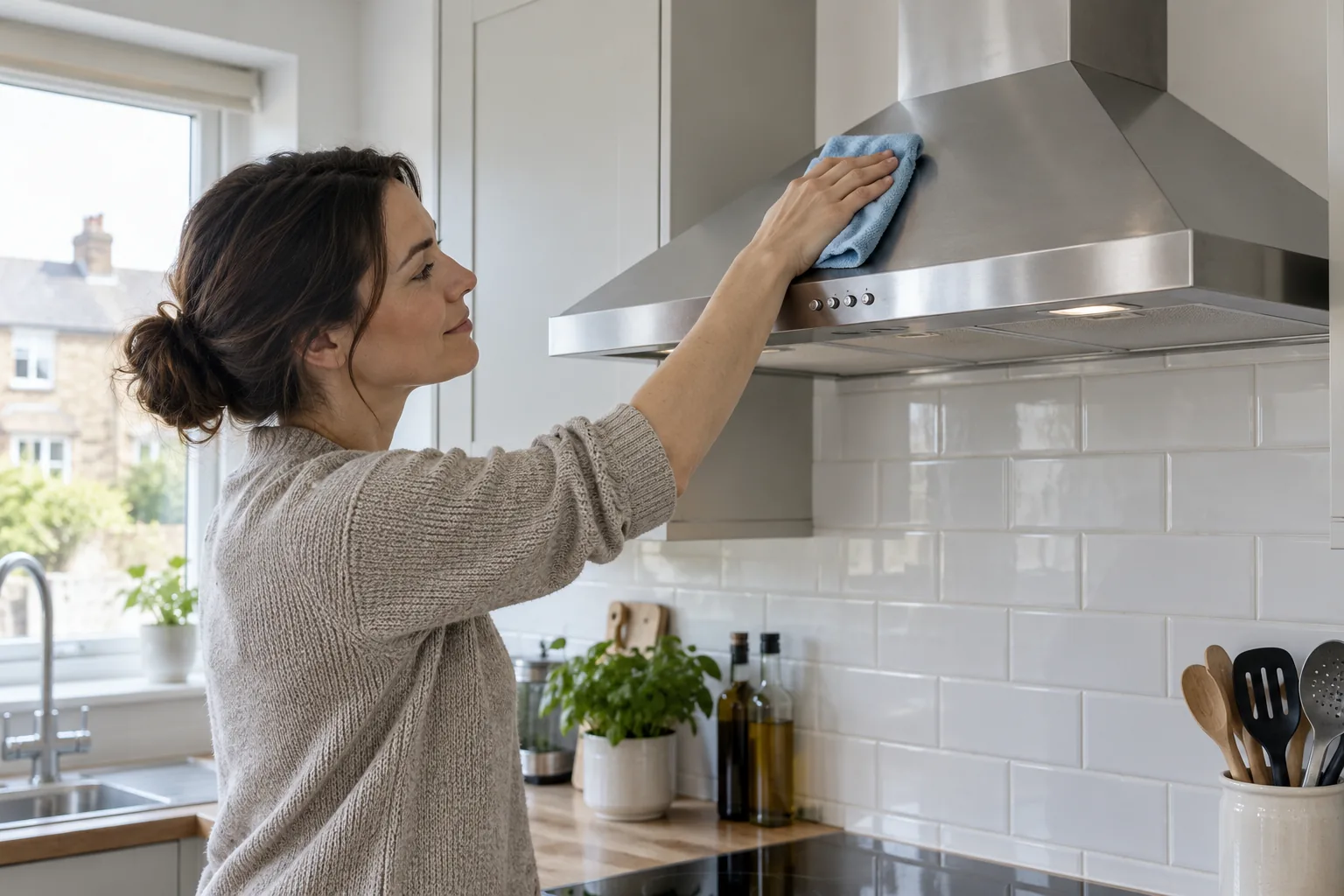
A vent grille or extractor cover can collect visible dust or grease, but the fan, wiring and duct behind it are different work. Cleaning the exterior should not require reaching into a powered housing. Before removing a cover, identify the appliance and check what its manufacturer permits. A clean-looking grille is useful; it is not proof that the ventilation system works properly.
Define what is safely accessible
Start with the visible exterior. Is the grille within a comfortable reach? Is the cover sound, or is it cracked, loose or painted into the wall? A brittle cover can break if it is prised free. Find the model instructions before releasing clips or screws. If the cover is part of a wired assembly, leave it in place. Protect the surrounding wall, worktop or hob from falling dust before work begins.
Switch off or isolate the appliance in the manner specified by its maker for any permitted cover removal. Do not assume that a wall switch makes all internal parts safe to touch. Ordinary domestic cleaning should remain outside the motor and electrical housing. If access to the visible surface itself is unsafe because of height or an unstable fixture, record the limitation and arrange suitable help.
A kitchen hood, bathroom fan and passive air vent may look similar from the room yet have different care instructions. Filters can be washable, replaceable or unsuitable for immersion. The correct model information matters more than the shape of the grille. Note the model number from accessible paperwork or an exterior label; do not dismantle the unit just to find it.
Remove loose dust before wet work
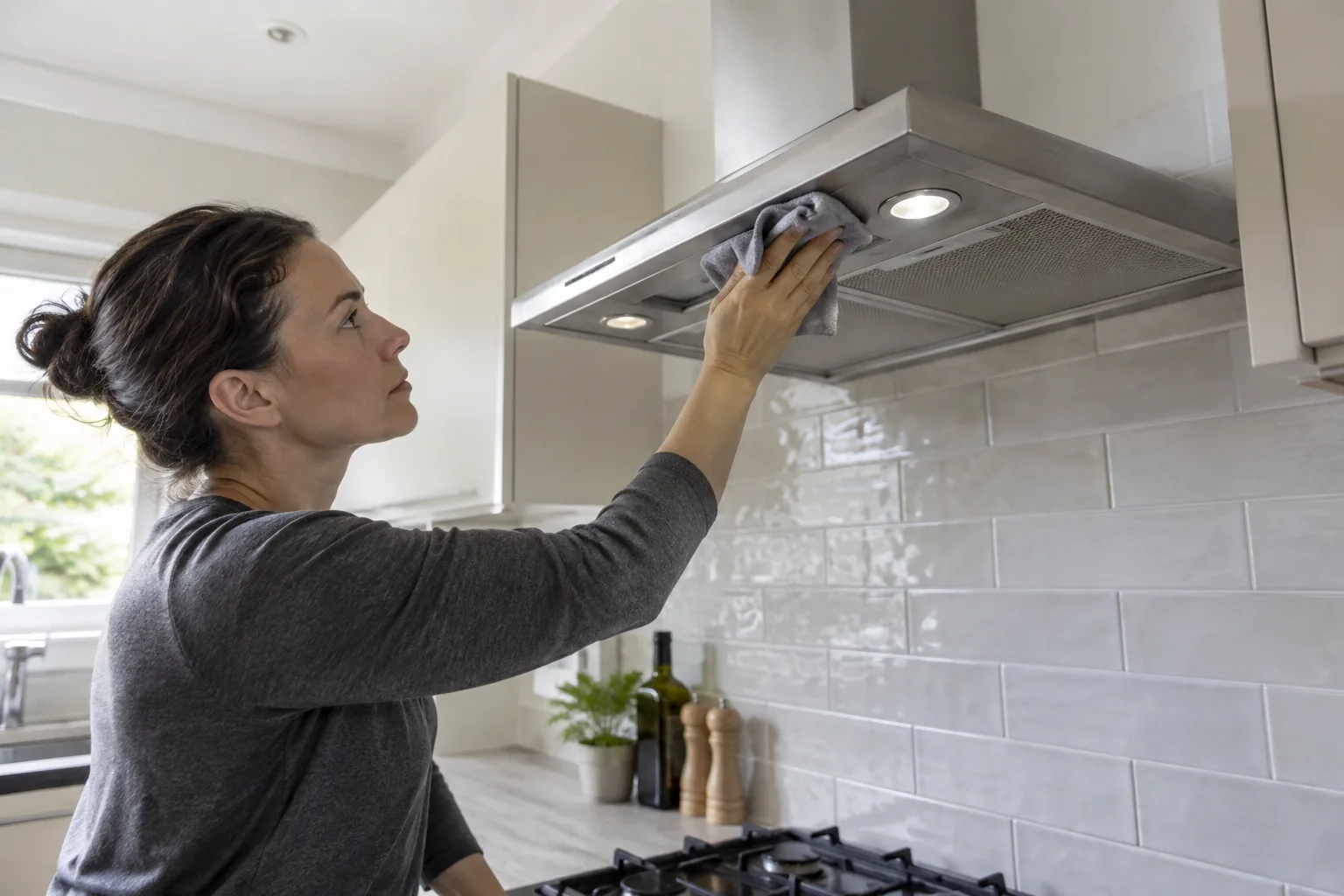
Use a soft brush and a suitable vacuum attachment on the outer slots. Hold the vacuum close enough to capture loosened dust rather than pushing it through the grille. Work gently around paint and clips. A wet cloth used first on a dusty kitchen cover can create a paste that lodges in the slots. Removing the loose layer makes any later compatible wipe more effective.
Dust on a bathroom grille may include fibres from towels and lint; a kitchen extractor may have a sticky grease film. Do not treat them with the same product automatically. For a greasy accessible exterior, apply a suitable cleaner to a cloth and keep liquid from running into openings. Follow its label for contact time and removal. Wipe the surrounding wall only if the paint or tile finish permits it.
If the cover rattles, has a missing fixing or moves when touched, stop. Cleaning cannot secure a damaged housing. Report it to the property owner or a competent technician before the fan is used further. Do not conceal the fault by pressing the cover into place for a final photograph.
Wash removable covers only when permitted
If the maker explicitly allows the cover to be removed and washed, note its orientation and keep the small fixings together. Take it to a separate work area where water cannot run into the appliance. Use a cleaner compatible with its plastic or metal finish, then rinse as directed. Dry the slots, clips and fixing holes completely before refitting. A damp cover fitted over a motor housing can carry water where it does not belong.
Do not put an unidentified filter or cover in a dishwasher. A filter may rely on a material that water or heat will damage. Check whether it is designed to be replaced and whether a new one is available. A washable filter may have a specific interval and method. Keep filter maintenance distinct from wiping the visible cover so the household knows what has actually been done.
Refit only if the cover sits securely without force. A broken clip or distorted panel needs repair or replacement, not stronger pressure. If the cover was never meant to be detached, limit the work to the accessible exterior and leave the fixing untouched.
Leave motors and ducts to competent service
Grease deeper inside a cooker hood, weak airflow or an unusual noise is not solved by polishing its grille. The duct may have a blockage, the filter may need replacement or the motor may have a fault. A cleaner cannot establish which by sight from the outside. Record the symptom, when it occurs and the model if known, then ask a competent person to inspect it.
In a bathroom, persistent steam after normal use may suggest inadequate ventilation, but condensation also depends on use and conditions. Do not make an airflow claim from the cover’s appearance. Tell the landlord or manager if a fan does not run or the room stays wet. Keep the record of exterior cleaning separate from any service request.
Never spray into a housing, reach towards wiring or use a tool to scrape a visible fan blade while the unit remains installed. These actions move beyond routine surface cleaning and can damage equipment or create an electrical hazard. The safe boundary is clear even when dirt is visible just behind the grille.
Clean the area around the opening
Dust and grease may extend beyond the cover. On a tiled kitchen splashback, remove loose crumbs and use a method suited to the tile and grout. A painted ceiling or wallpaper around a bathroom fan may be more fragile: test a small area before using moisture. Do not create a clean ring around the grille by rubbing away the surrounding paint. If the wall is flaking or stained from ongoing dampness, note the condition for maintenance rather than trying to wash it flat.
Protect the area beneath the fan. A cooker hood may shed dry grease onto a hob; a ceiling vent may drop dust onto a basin or floor. Cover the suitable surface before brushing and collect the debris afterwards. Do not leave it on a food-preparation area. Keep one cloth for grease and another for the final surrounding wipe, so the wall is not smeared with residue from the grille.
Check the seal between the cover and wall only visually. A gap or loose screw may allow movement or show staining, but sealing or tightening may be a maintenance task under the maker’s instructions. Do not apply caulk during a cleaning visit to hide an uneven edge. Photograph and report the condition if it affects how securely the cover sits.
Plan future upkeep from what you find
A lightly dusty outer grille may be included in a regular domestic cleaning rotation, while a greasy extractor above frequent cooking may need more attention. Set the interval from use and observed build-up, not a universal calendar. Keep the model instructions with the household appliance records so a later cleaner can see whether the cover or filter may be removed. If a filter was replaced, record the date and type separately from the exterior clean.
On the next visit, check whether the same outer slots have filled quickly. A rapid change may be worth mentioning to the person responsible for ventilation maintenance. It is an observation, not proof of a fault. The cleaner’s job is to leave the accessible exterior clean and identify limits honestly; a technician can assess performance when needed.
Include the cover in a realistic cleaning scope
An accessible exterior may be included in a deep clean when its condition, height and maker’s instructions are known. Explain whether the task is light dust, a greasy kitchen cover or a permitted removable part. The cleaner can bring suitable tools and allow time for drying. Do not describe an internal fan service as part of a general clean.
After the cover is clean, photograph the visible result if a record is needed, and note any filter left for replacement or technician visit. A clean outer grille can improve appearance and reduce loose dust at the opening. It does not certify the motor, duct or airflow. That accurate distinction lets cleaning and maintenance proceed without one being mistaken for the other.
For a broader choice of appointment type, see the guide to deep, one-off and regular cleaning. Accessible vent exteriors may rotate within ordinary upkeep, while heavy grease or multiple covers may justify more time. In either case, model instructions and safe access set the limit.