
How we do it
Clear glass begins with a safe route to every pane.
Window cleaning is first an access conversation. We need to know whether the request is internal, external or both; the floor level; how each window opens; and what sits in front of it. Islington sash windows, modern tilt units, glazed doors and fixed panes all create different working positions. We confirm whether frames and sills are included and identify any pane that needs specialist height equipment before accepting it as part of a normal domestic visit.
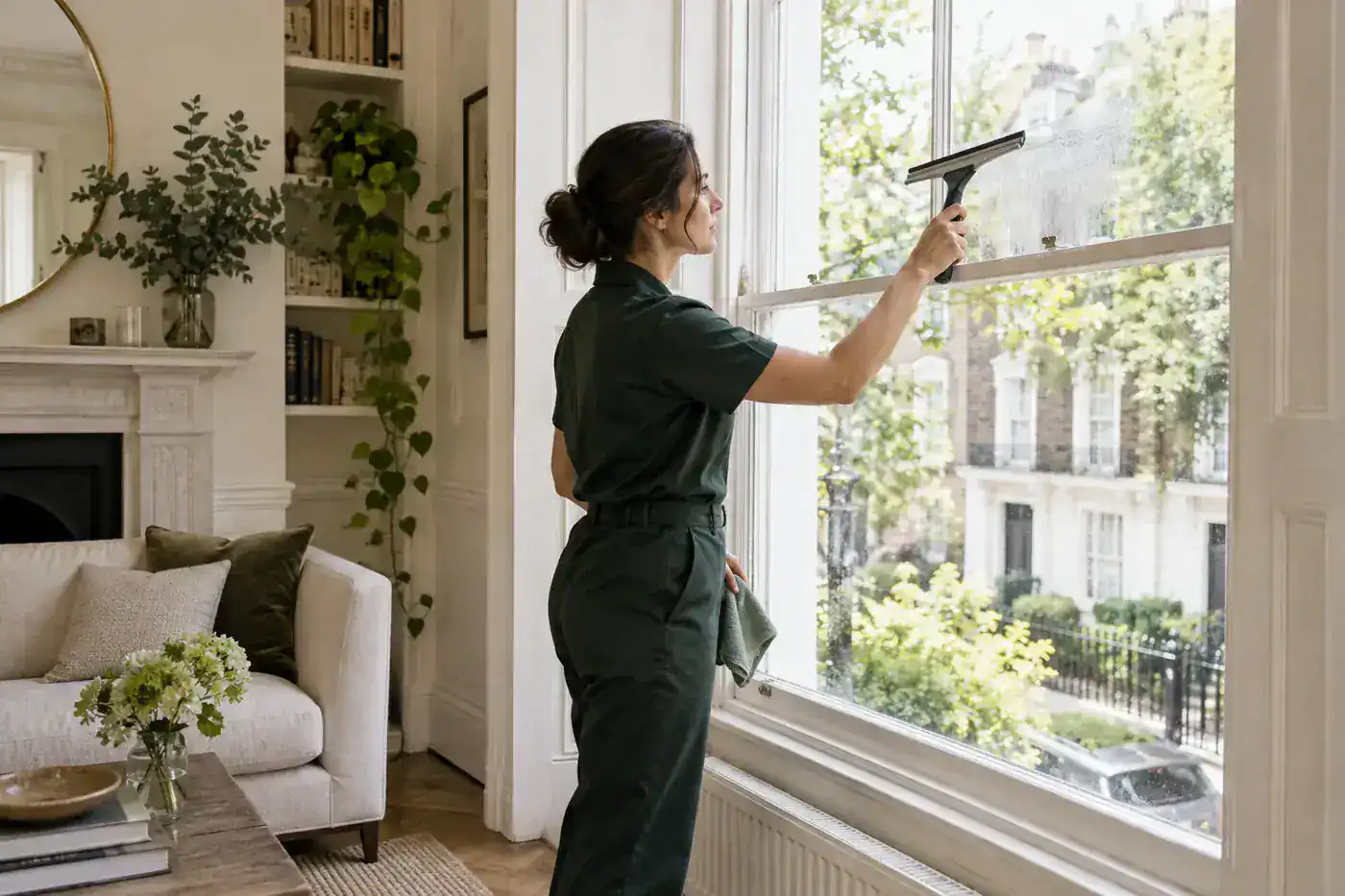
Inside the room, nearby furniture and flooring are protected before water is introduced. Loose dust is removed from reachable frames and sills so it does not turn into muddy runoff. Glass is wetted evenly, worked with a suitable applicator and finished with a controlled squeegee pass. Edges are detailed with a clean cloth rather than repeatedly wiped across the whole pane. Mirrors and internal glazed doors follow the same careful preparation when booked.
Safety decides the limit. A cleaner does not lean from an opening, stand on improvised furniture or reach across a fragile roof to complete one difficult pane. Restricted external elevations, specialist façades and unsafe heights are referred to a contractor with the correct access system. Old putty, flaking paint, loose seals and scratched glass are recorded before work because ordinary cleaning can make existing defects more noticeable without causing them.
The final check is made from more than one angle. Direct daylight reveals streaks that are invisible from close range, while the room side shows missed edges and drips on the sill. Frames are left as agreed and nearby surfaces are checked before protection is removed. Weather, traffic film and hard-water deposits do not all respond in the same way, so persistent mineral marking is discussed separately. The result is clear, safely reached glass with no risky improvisation hidden behind the finish.