
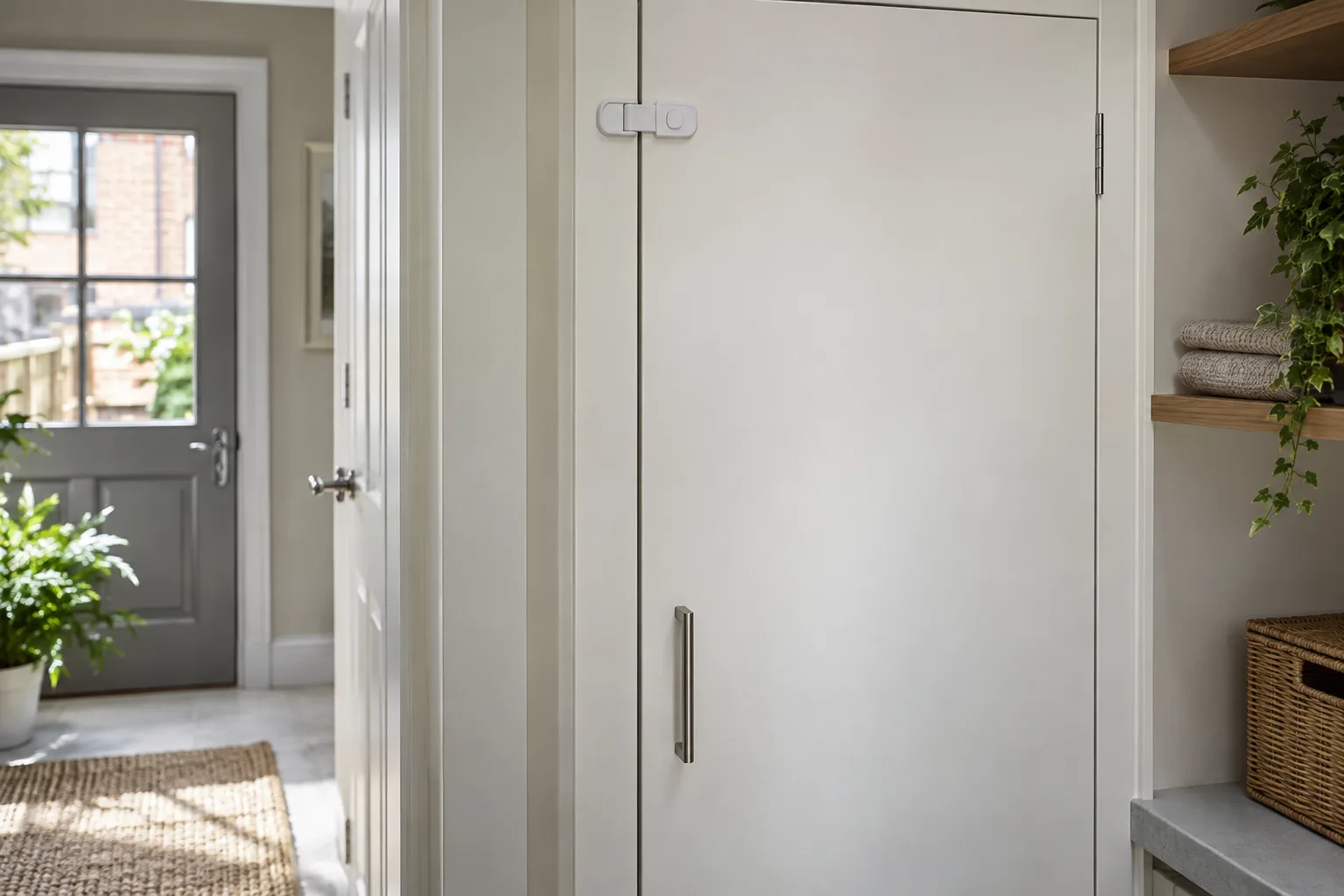
A cleaning cupboard should let an adult identify a product before it is opened, take it out without knocking over another bottle and put it away securely. That is a more useful test than whether the shelves look neat. Household cleaners differ in their storage and use instructions, so the original label should guide the arrangement. A short cupboard audit can remove most of the uncertainty that accumulates with half-used bottles and decanted sprays.
Read labels before choosing a cupboard
Start by looking at every container, not by rearranging them. Is the name readable? Is the cap intact? Does the label specify upright storage, temperature limits, ventilation or a secure location? Keep each product in its original container so the directions and emergency information remain with the contents. Never transfer a cleaner into a drink bottle or an unmarked spray bottle, even for short-term convenience. Someone else may use it later without knowing what it contains.
Choose a dry, stable shelf that can carry the weight of the bottles. Stand them upright with the labels facing forward and leave enough space to lift one out without dragging the rest across the shelf. Heavy containers belong where they cannot fall when a door opens. A shallow tray can contain a small leak and make it visible, but the tray should not become a pool that hides a damaged bottle. Check a cupboard beneath a sink for plumbing drips; water can loosen labels and damage cardboard packaging.
Keep products away from food, utensils and animal supplies. If storage space is limited, use a clearly separate, secure location rather than placing bottles among pantry items. Check the product label before putting it in a cold shed or a hot utility space. A bottle may remain sealed there but no longer meet the maker’s storage directions.
Separate incompatible products
Bleach-containing cleaners and acidic descalers must not be mixed. They should also not be used one after the other on a wet surface without following the label and clearing the first product. Keep them in distinct trays or compartments so a leaking cap is less likely to bring their contents together. Treat vinegar and other household acids as chemicals in this context, not as harmless additions to a bleach routine. Never combine cleaners in a bucket to “make them stronger”.
An unknown liquid is not safe to identify by smell. If a label has fallen off or a former occupant left an unmarked bottle, stop using it and seek suitable disposal advice. Do not pour it into a familiar container to tidy the shelf. The new label would be wrong and residue from the old container could react with the liquid. If a spill occurs, follow the directions for that specific product and keep people and pets out of the affected area while it is handled.
Products for different purposes can look similar. A bathroom descaler, oven cleaner and general surface spray may all be in trigger bottles, yet have different contact times and material restrictions. The storage layout should help the user choose the correct one rather than relying on bottle colour. Where a product needs dilution or a measuring cap, keep the proper cap with its container and follow the measured directions.
Protect children, pets and visitors
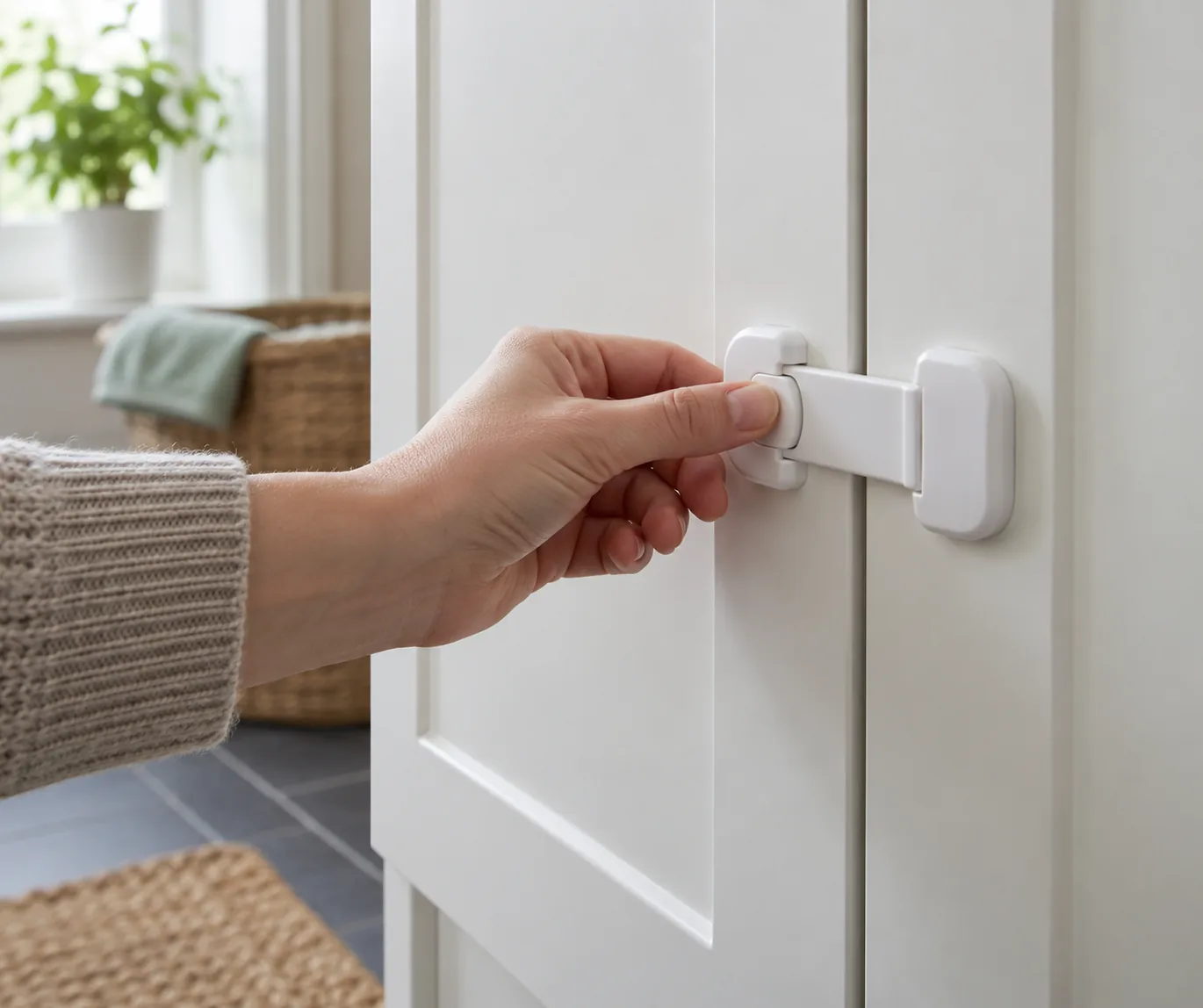
Use a high or lockable cupboard where appropriate, and make sure the latch is actually closed after every use. A child-resistant cap does not replace secure storage. Think about the moment during cleaning when a bottle is set on the floor or an open shelf while the user answers a call. Put it away before moving to the next room. Keep pets away from active work and from cloths or buckets that may contain cleaner residue.
Visitors and visiting cleaners also need a clear system. Tell a cleaner which products are supplied for the visit and which are not to be used. If they bring their own materials, agree where those can be placed temporarily and make sure they leave at the end. Do not let an unfamiliar bottle join the household cupboard simply because it appears similar to an existing product. Keep the storage rule simple enough that another adult can follow it without a long explanation.
If someone may have swallowed or been exposed to a product, use the emergency guidance on its label and seek appropriate urgent help. Keep the original container available for identification. Do not improvise a remedy from another household chemical.
Store cloths and equipment separately
A wet cloth sealed in a box beside chemical bottles can develop an odour and leak onto labels. Give reusable cloths a place to dry after washing and keep clean ones apart from used ones. Brushes should be rinsed and dried according to their materials. Check reusable gloves for holes before the next session and replace them when worn. Keeping the tools in order makes the next clean more reliable without adding another product to the shelf.
If the cupboard also contains a vacuum or mop, leave room to remove the equipment without striking a bottle. A tall mop leaning against a tray can knock it over. Avoid storing electrical equipment where a leaking chemical or damp tool could reach it. The aim is to make the everyday movement of tools as safe as the static storage arrangement.
Make the system work for the whole household
A cupboard arranged by one person can become confusing when someone else shops or cleans. Agree a simple place for everyday surface cleaner, bathroom products and specialist items, then tell all adults where each belongs. A small written inventory on the inside of the door can help in a shared home, provided it does not expose the cupboard to children. List product names rather than vague descriptions such as “blue spray”. If a new product replaces an old one, update the list and remove the empty container.
Keep the use instructions available when a task is delegated. A person asked to clean a worktop should know what material it is and which labelled product is suitable, not be told to choose whichever bottle is closest. If a finish was damaged by a product previously, record that caution. In a rented home, do not assume the cleaner may use a chemical left by a former occupant. The household should decide what is safe and needed before the appointment.
After a larger clean, take one minute to check that caps are closed, triggers are set as the maker directs and trays are dry. Return products to their assigned shelf and remove empty containers. This closing step prevents a well-planned cupboard from reverting to a jumble after one busy visit. It also makes the next leak or damaged label easier to spot.
Inspect stock and dispose of unwanted products
Check the cupboard periodically for damaged packaging, duplicate products and labels that are no longer readable. Buy a new specialist cleaner only after checking whether a suitable one is already present and whether the surface permits its use. Several overlapping formulations make it harder to remember which one was used on a particular finish. Never top up an old bottle with a different formula, even if the name sounds similar; the remaining contents and the label may no longer match.
For an unwanted or unidentified product, use the maker’s directions and local disposal guidance. Do not pour different leftovers together or assume every liquid belongs down the drain. Keep damaged packaging contained while advice is obtained, with its label visible where possible. Record what you remove so another household member does not search for an unsafe product or buy a duplicate unnecessarily.
A domestic cleaning visit is easier to organise when supplied products are labelled and accessible. Tell the cleaner about any material that needs special care and which product the household prefers for it. If you are arranging a one-off clean, check the stock before the appointment rather than buying several new products on the day. The guide to preparing for a one-off clean also covers clearing access before the team arrives. A secure, legible cupboard lets the cleaner focus on the work rather than identifying mystery bottles.