
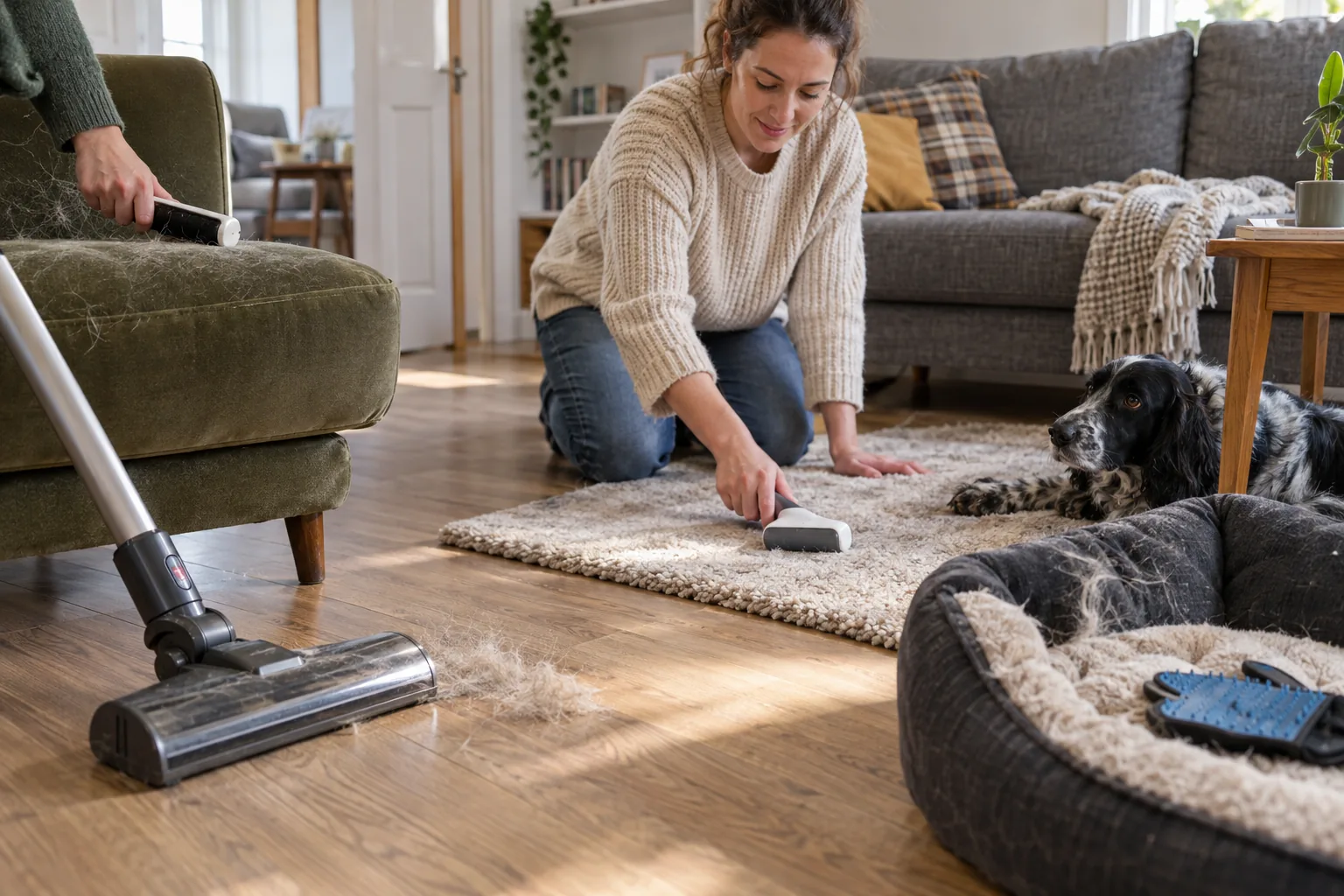
Pet hair is rarely distributed evenly. It gathers where an animal sleeps, against skirting, in a carpet’s pile and along sofa seams. One tool used everywhere can leave hair behind or damage a delicate surface. Start by identifying the floor or fabric, remove loose strands before adding moisture, and use enough pressure to lift hair without pulling fibres or scratching a finish.
Start with the surface and fibre
On a smooth floor, hair usually sits on top with dust and grit. In cut-pile carpet it can be held by friction; in a looped weave it may catch around the yarn. Upholstery varies again, from tightly woven fabric to velvet, leather and coated material. Check care labels, loose loops and worn patches before choosing a brush or roller. Test a new tool on a small hidden place and stop if it snags, transfers colour or leaves a shiny rubbed area.
Remove grit first. A pet can carry small particles indoors, and dragging them across a hard floor with a cloth or vacuum head may mark the finish. Use a suitable vacuum head or soft broom for loose debris, checking that wheels and brushes are clean. Do not wet-mop the hair into a line along the skirting; damp clumps are harder to remove from joins and corners.
A rug deserves its own decision. Check its backing, pile and care instructions. A tool that works on a durable hall carpet may pull fibres from a delicate rug. If the dye is unstable, the backing is weak or hair is deeply embedded, ask for material-specific advice rather than increasing pressure. A rug-cleaning service may require an assessment before any deeper treatment.
Lift hair from hard floors
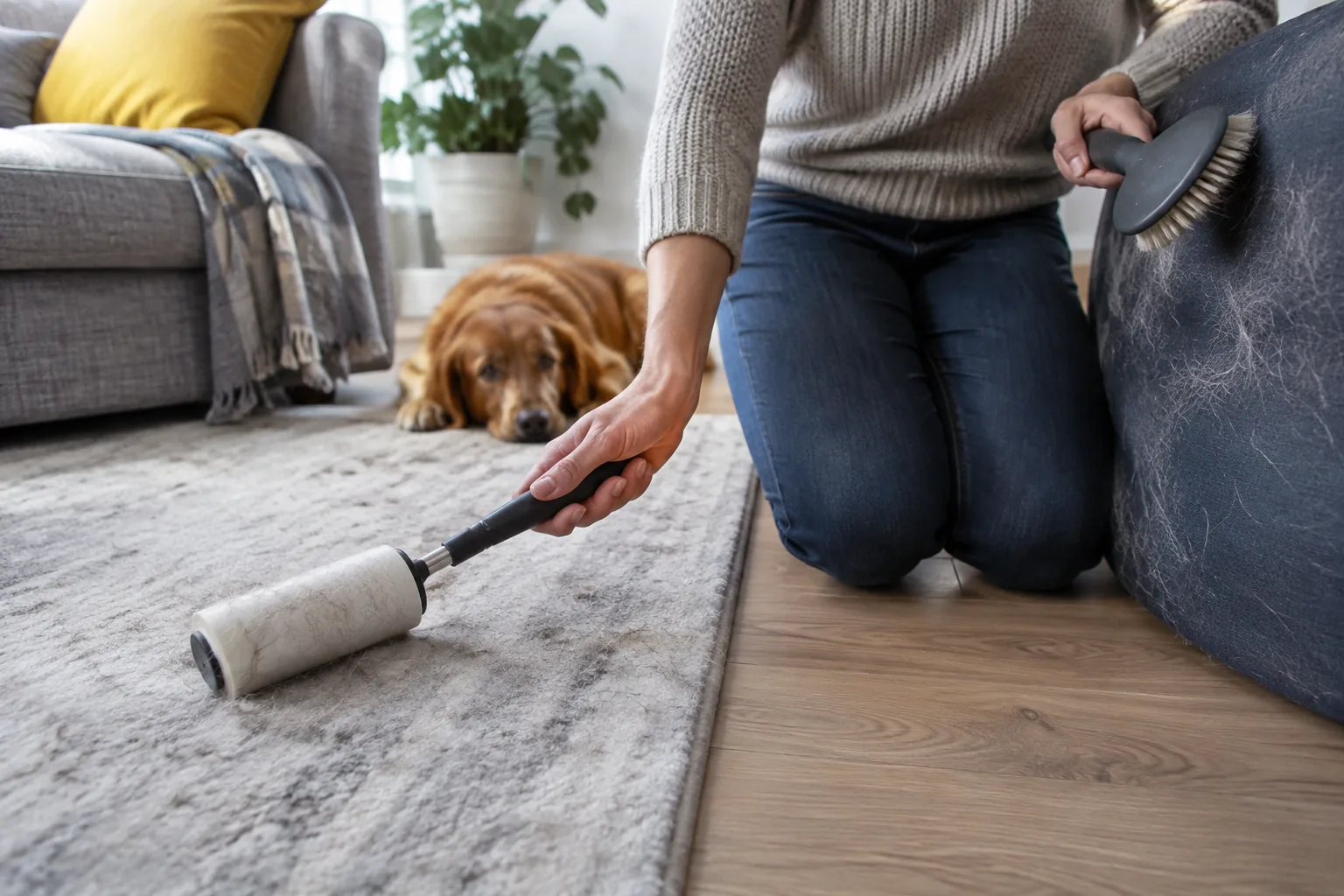
Work from open floor towards edges so the loose hair has somewhere to collect. A vacuum attachment suited to the floor can capture strands without scattering them. Run a crevice tool along accessible skirting and furniture legs. Check under light movable items, but do not drag a heavy sofa across a floor for a small clump. If a vacuum brush roll becomes wrapped with hair, stop and clear it according to the appliance instructions; reduced suction makes the work slower and can leave a film of fine hair behind.
Once the dry hair and grit are gone, clean the floor by its material guidance. Wood, laminate, vinyl, tile and stone do not all tolerate the same moisture or product. Keep water out of timber and laminate joins. A damp pass may collect the final fine film, but it should not be the first step. Let the floor dry before the pet or people walk over it, particularly near an entrance where it could become slippery.
Stairs call for a slower method. Use a stable position and a small suitable attachment at tread edges, where hair tends to collect. Avoid stretching across several steps with a powered tool. If the carpet has loose loops or a worn nosing, record that condition and choose a gentler approach. Cleaning will not repair the edge.
Work carpet pile without grinding hair into it
Before vacuuming a carpet, check how its pile is constructed and whether the maker permits a rotating brush. A powerful beater can snag a loop or aggravate a worn patch. On a sound cut-pile carpet, slower overlapping passes can lift hair better than racing the head across the room. Change direction only if the pile and vacuum instructions allow it. Pay attention to the place where the pet lies and to the edge beside the skirting, where a broad head may not reach.
If strands remain after a careful vacuum, try a suitable upholstery attachment or gentle hand tool on a hidden patch. Stop if the tool pulls yarn or changes the pile’s sheen. Do not pour water over embedded hair or scrub with a stiff brush; both can push soil deeper and make the carpet harder to dry. A visible stain beneath the hair is a separate problem with its own first-response method. Identify the material and stain before applying any liquid.
Vacuum maintenance matters during a hair-heavy job. A full container, blocked hose or wrapped brush roll can make a second pass appear necessary when the machine is simply not picking up well. Switch off and follow the maker’s directions to clear it. Check that the attachment is clean before moving from a gritty entrance carpet to delicate upholstery. A tool loaded with grit can abrade fabric even if it is excellent at lifting hair.
Treat upholstery without pulling the weave
Remove cushions only if they are designed to be lifted. Vacuum the seat and back, then follow the seams and the gap beside each arm. A soft upholstery brush or a compatible rubber tool can gather hair in short strokes; collect each pile as it forms rather than spreading it across the whole sofa. Do not pull at a strand that appears attached to the fabric. A sticky roller can leave adhesive on some finishes, so check the care label and test first.
Leather and coated upholstery generally need a different method from woven fabric. A clean dry or lightly damp compatible cloth may lift loose hair, but too much moisture can sit in seams. For velvet or a fabric with a directional pile, brushing against the nap may change the appearance even if the hair comes away. Follow the maker’s instructions and consider a professional assessment if the fabric is delicate or already worn.
Hair is often concentrated under cushions and behind the back rather than on the visible seat. Include those accessible places in the plan, but do not dismantle upholstery or lift a heavy piece alone. For a soiled fabric sofa that needs more than hair removal, the scope of sofa cleaning should be discussed separately from an ordinary surface vacuum.
Wash removable covers by their labels
A washable throw on the animal’s favourite seat can concentrate much of the shedding. Remove it carefully so hair does not fall onto the newly cleaned floor. Follow its wash and drying instructions, then inspect the sofa beneath it. A pet bed with a removable cover can be treated the same way if its construction permits it. Do not assume the inner filling belongs in the machine with the cover.
Keep clean covers dry before replacing them. A damp textile placed on a sofa can transfer moisture or colour and may take longer to dry in a room without good ventilation. If a cover has damaged seams, repair or replace it rather than using a stiff brush until it frays. This simple washable layer can reduce the frequency of deeper upholstery work without changing how the sofa itself must be cared for.
Reduce re-accumulation at the source
Short, frequent attention to the pet’s resting areas is more realistic than a large clean after hair has compacted into every edge. Groom the animal in an appropriate place, collect the loose hair and clean the floor nearby. A mat at the entrance can catch some grit, but wash it by its care label and check that the floor beneath stays dry. If the pet spends most time on one chair, deal with that chair regularly instead of treating every piece of furniture as equally affected.
Tell a visiting cleaner where hair gathers and whether the pet will be safely kept away from equipment and products during the appointment. A domestic cleaning visit can address loose hair on accessible floors and furnishings within the agreed scope. The guide to weekly or fortnightly cleaning may help set a visit rhythm when shedding is continuous. The animal will shed again afterwards; the aim is to prevent a small daily amount from becoming a difficult layer in carpet edges and fabric seams.