
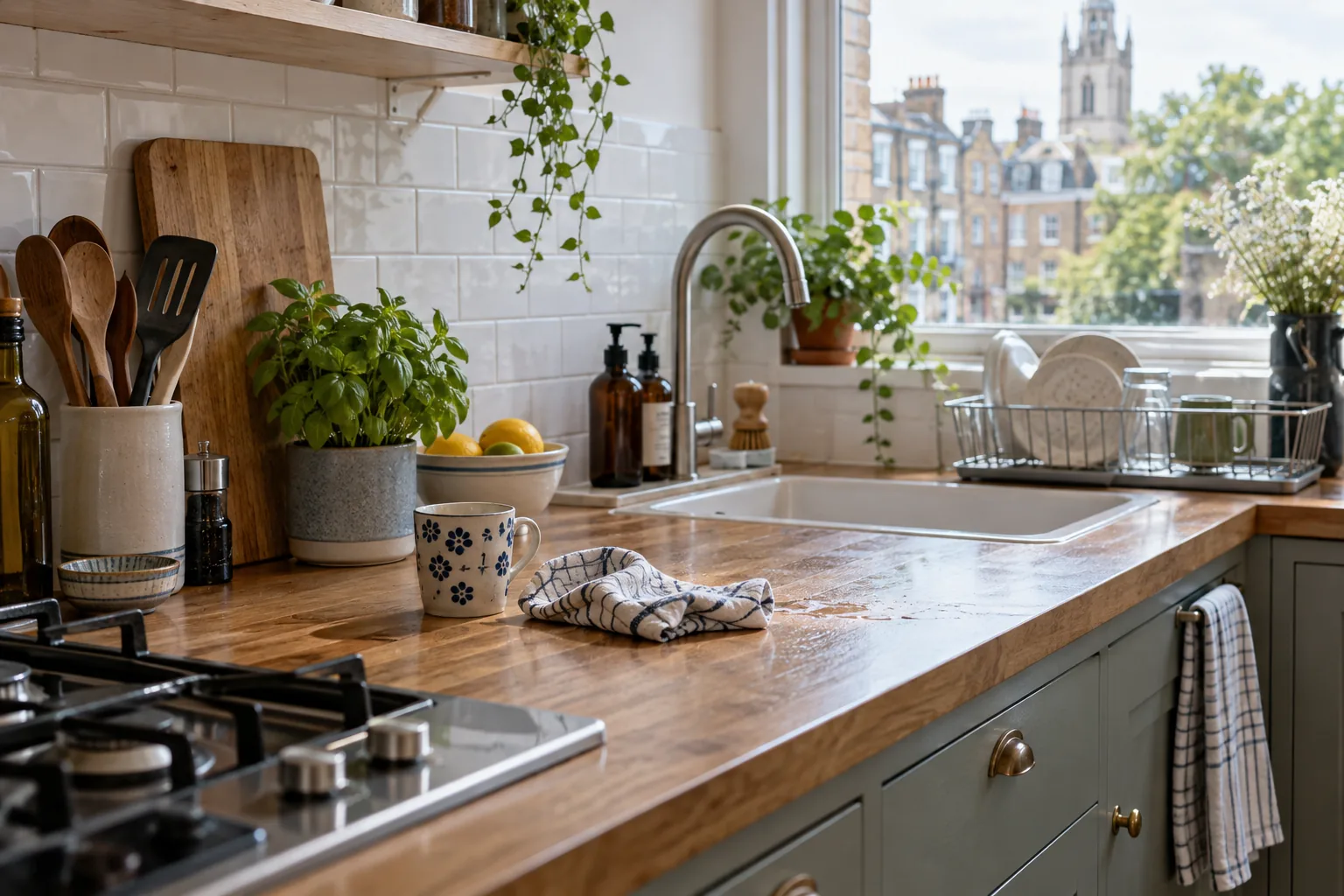
A kitchen can be clean at the end of a professional visit and messy again after one meal. The answer is not to repeat the whole appointment every evening. Focus on food preparation, fresh spills and water, then leave slower work for a time when the room can be cleared properly. A small, consistent routine keeps the kitchen usable and gives the next cleaner a sensible starting point.
Decide what cannot wait
Food handling sets the first priority. After preparing raw ingredients, clean the board, utensils and worktop by methods suitable for their materials. Put chilled food away promptly and clear scraps into the appropriate waste container. A splash on a cupboard door may be unsightly, but it has a different urgency from residue on a surface where the next sandwich will be made. Keep a fresh cloth for food-contact areas rather than carrying a used one from the bin or floor.
Wipe fresh grease and sauce before they harden. Lift the kettle, canister or chopping board instead of wiping around it; a small sticky ring can remain hidden beneath an object for days. Follow the cleaner’s label when it calls for a rinse on a food-contact surface. Finish with a clean, dry cloth if the material permits. Do not leave a wet cloth folded beside the sink for the next use.
Water needs attention too. Dry the area around the tap, sink rim and worktop joints after a spill. Standing water can enter an exposed laminate seam or sit beneath a bottle, even when the broad worktop looks tidy. If water keeps appearing when nobody has used the sink, note where it comes from and arrange a plumbing check. More wiping will not resolve a leak.
A ten-minute after-meal reset
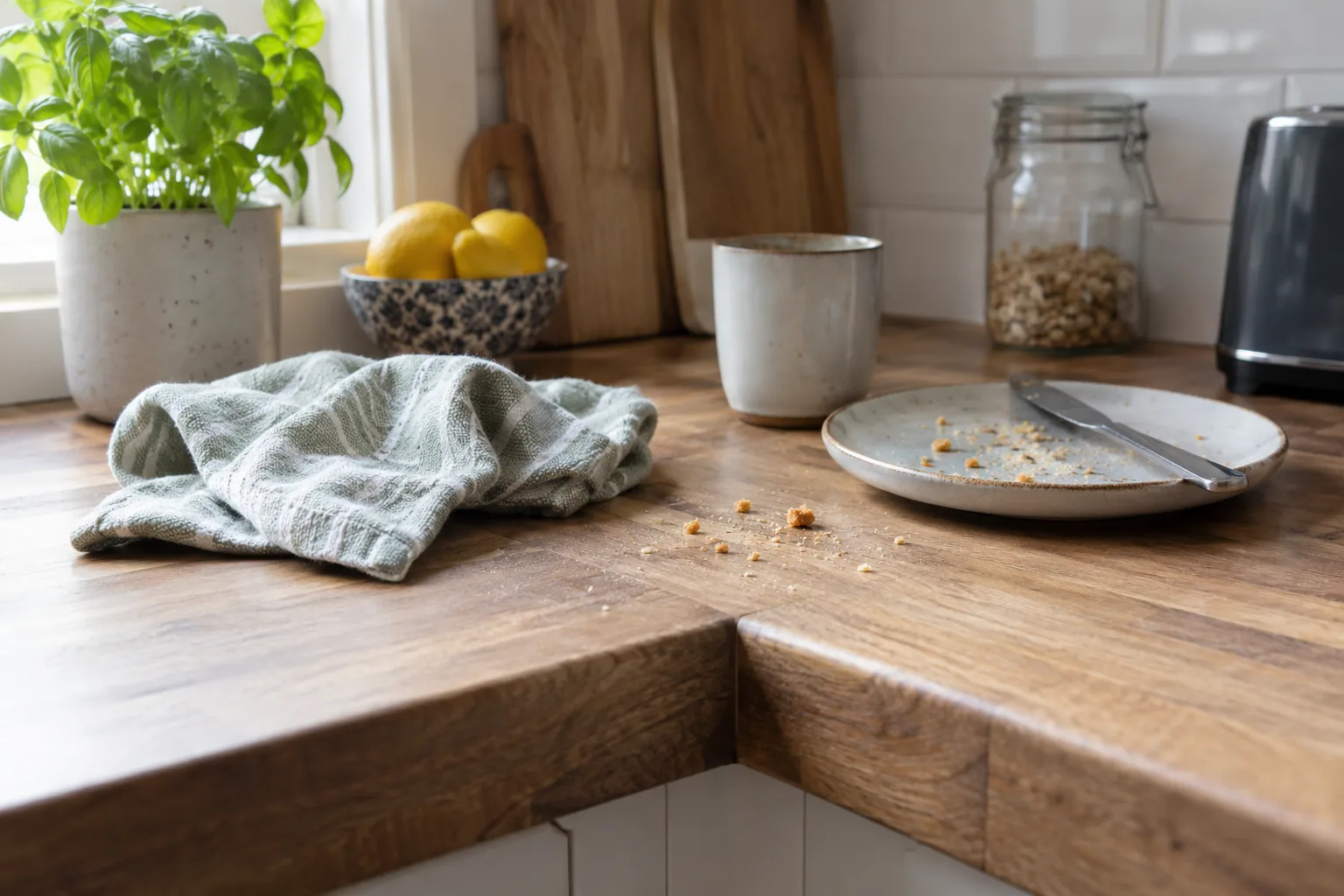
Make the reset follow the same order each time. Put away food, clear plates, collect crumbs, wash or load the dishes, then wipe the preparation surface. End with the tap, sink rim and any handle touched with messy hands. This order prevents a clean counter from being covered again by the contents of a plate or chopping board. It also makes the work easy to share: one person can handle food and dishes while another clears the table.
Keep the routine deliberately small. If a pan needs soaking, place it where it will not block the only usable worktop. If the hob has a baked-on patch, record it for a longer session rather than turning a quick reset into an unsafe scraping job. A short routine works because it is repeatable on a busy Tuesday, not because it reaches every corner.
Use the right tool for the surface. A soft cloth may suit a sealed worktop, while a wooden board, natural stone or coated hob may have specific care instructions. Do not spray towards switches or appliance vents. A product that works on a ceramic tile is not automatically suitable for stone, unsealed timber or a cabinet finish. When the material is uncertain, check the maker’s guidance and test a mild approach in a hidden place before treating a conspicuous area.
Keep the sink and waste area under control
The sink often receives the last scraps of a meal and the first attention of the next one. Remove food fragments rather than pushing them into the plughole. Clean the basin and draining board according to their finish, then dry the rim and the area behind the tap. If there is a removable strainer, empty it carefully and wash it. A slow drain or persistent odour after accessible surfaces are clean may need investigation beyond ordinary cleaning.
Empty the bin before it overfills and wipe a spill on its lid or pedal. A bin cupboard can collect crumbs and leaked liquid at the base; check it occasionally rather than assuming the bag contains everything. Keep the cloth or brush used here separate from those used on food-preparation areas. Let a washed bin or cupboard base dry before a new bag or stored product goes back.
These details can be shared between household members. A short written rule such as “clear the strainer and wipe the bin lid after dinner” is easier to follow than a vague instruction to clean the kitchen. In a shared home, decide who replaces cloths and when they are washed. A clean tool makes the daily work more effective.
Use the regular visit for accumulated tasks
A regular visit is valuable for work that is awkward to fit between meals: cabinet fronts, appliance exteriors, kickboards, skirting and reachable floor edges. Choose a few of these each week rather than expecting every detail on every appointment. If cabinet handles are greasy this week, put them above a less urgent shelf. A rotating list lets the cleaner spend time where the condition has actually changed.
Preparation matters. Remove small appliances and loose papers from the areas you want cleaned, provided you can move them safely. Tell the cleaner which cupboards may be opened and whether anything inside is fragile. Do not expect a visiting cleaner to decide which food to discard or to reorganise an unlabelled collection of containers. Those decisions belong to the household and can consume much of the booked time if left until arrival.
Review the scope of regular domestic cleaning and agree the priority surfaces. For a practical way to spread detail work across visits, see the room-rotation plan for regular cleaning. The schedule should remain flexible: a kitchen used for frequent cooking will need a different rotation from one used mainly for breakfast.
Make the routine easy to repeat
Keep the tools for the short reset close to where they are used, but store chemicals according to their labels and away from food or children. A small supply of clean cloths is more useful than one cloth used for every surface. Put used cloths aside for laundering rather than returning them damp to the cupboard. Check brushes and sponges for trapped food and replace them when they can no longer be cleaned effectively.
Give household members a clear boundary. Someone who makes a snack should put away the ingredients, clean the board and wipe a fresh spill; the person doing the evening reset can handle dishes and the sink. In a busy family kitchen, this prevents a pile of small jobs being left for one person. If a pet uses the room, keep it away from cleaning products and allow a wet floor to dry before it walks through. If children help, assign age-appropriate clearing tasks rather than asking them to handle chemicals.
At the end of each week, glance at the areas that daily work does not reach: beneath the bin, behind the tap, the edge of the hob and the floor beside the table. Write down only what actually needs attention. A short list is easier to pass to a regular cleaner than a standing instruction to deep clean the whole kitchen, and it leaves room to respond to the condition on the day.
Know when a deeper appointment is useful
Some build-up requires more preparation, contact time or access than a routine visit allows. Sticky cabinet tops, a refrigerator that must be emptied, or layered grease near the extractor are examples. Photograph the actual condition in even light and identify the materials where you can. Explain whether food and small appliances can be moved before the team arrives. That information helps set a realistic scope for a deep clean.
Separate cleanable deposits from damage. Grease on an intact cabinet panel may respond to an appropriate method; swelling at its edge will not flatten through cleaning. A loose extractor cover, broken seal or non-working appliance needs maintenance. Do not apply a stronger chemical repeatedly to compensate for a damaged finish. Note the defect and ask for the appropriate repair.
After a deeper clean, return to the small daily reset. The aim is to prevent fresh food and moisture from becoming tomorrow’s difficult job while giving slower tasks enough time and safe access when they are booked.