
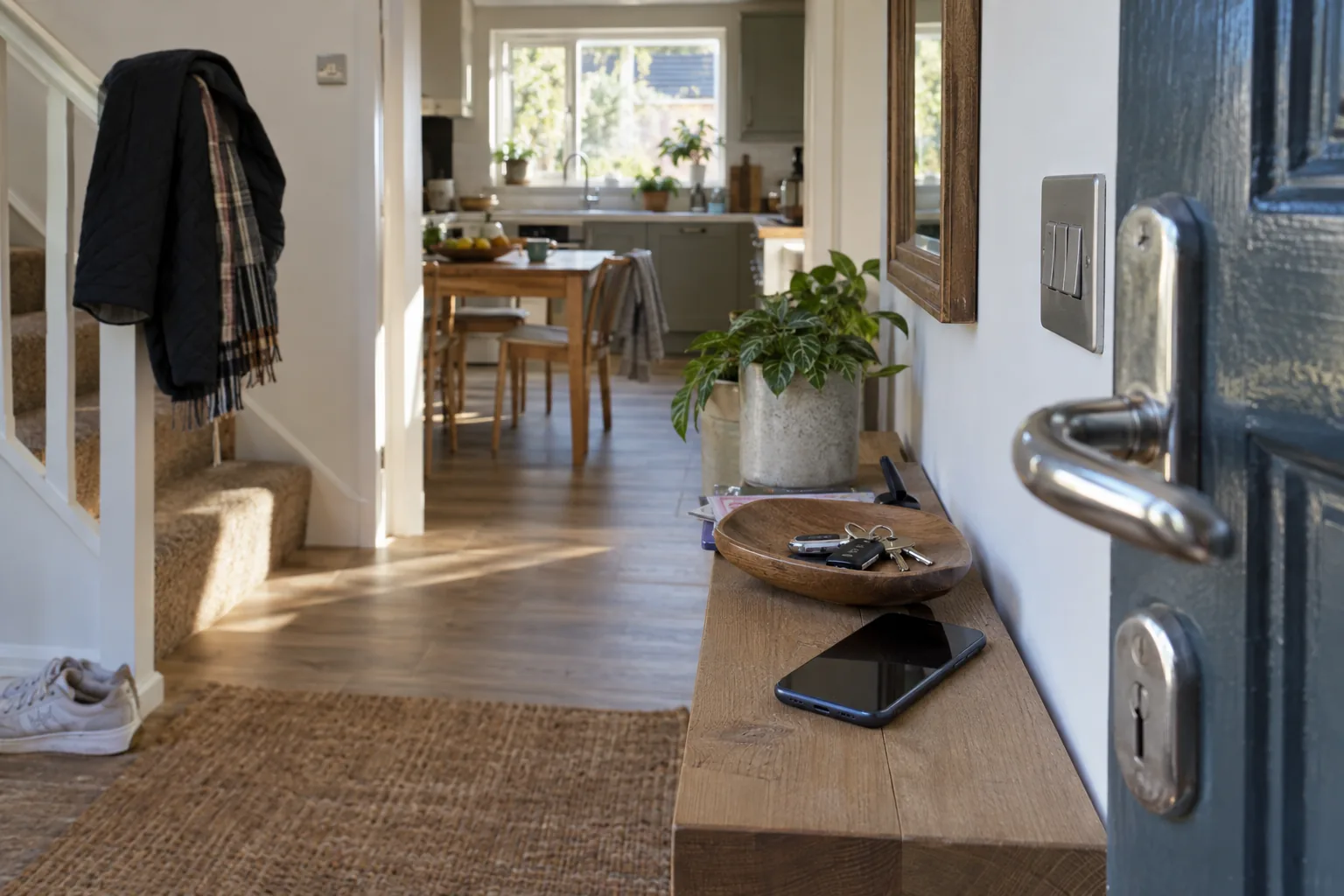
“High-touch surfaces” sounds like a fixed list, but it changes with the people and rooms in a home. A shared kitchen tap may be used dozens of times while a decorative cupboard handle is hardly touched. The useful approach is to follow real routines, remove visible soil and choose methods that protect the finish. Disinfection has a place when there is a reason for it; it should be a deliberate step with an appropriate product, not a label attached to every quick wipe.
Map the routes people use
Walk through an ordinary day. Coming home may involve the entrance handle, hall light and stair rail. Preparing a meal might mean the refrigerator handle, kettle switch, tap, bin lid and cupboard pull. A shared bathroom adds a flush plate and basin tap. Note the surfaces touched by several people or touched after food, rubbish or outdoor contact. This creates a shorter and more useful list than wiping every ornament and door in the property.
The pattern changes. A home with guests may have a busy entrance and bathroom for a day; a home office may make a particular desk edge or light switch important during the week. Review the route rather than maintaining a permanent inventory of every control. Frequency of cleaning should reflect use and visible condition. There is no single sensible number of wipes per week for all households.
Separate shared touch points from personal items. One person’s phone or remote should normally be cared for by its owner using the manufacturer’s guidance. A cleaner should not pick up a device, press buttons or spray it without permission. This boundary is especially useful in a shared home where responsibility for personal equipment is otherwise unclear.
Clean visible soil in a workable order
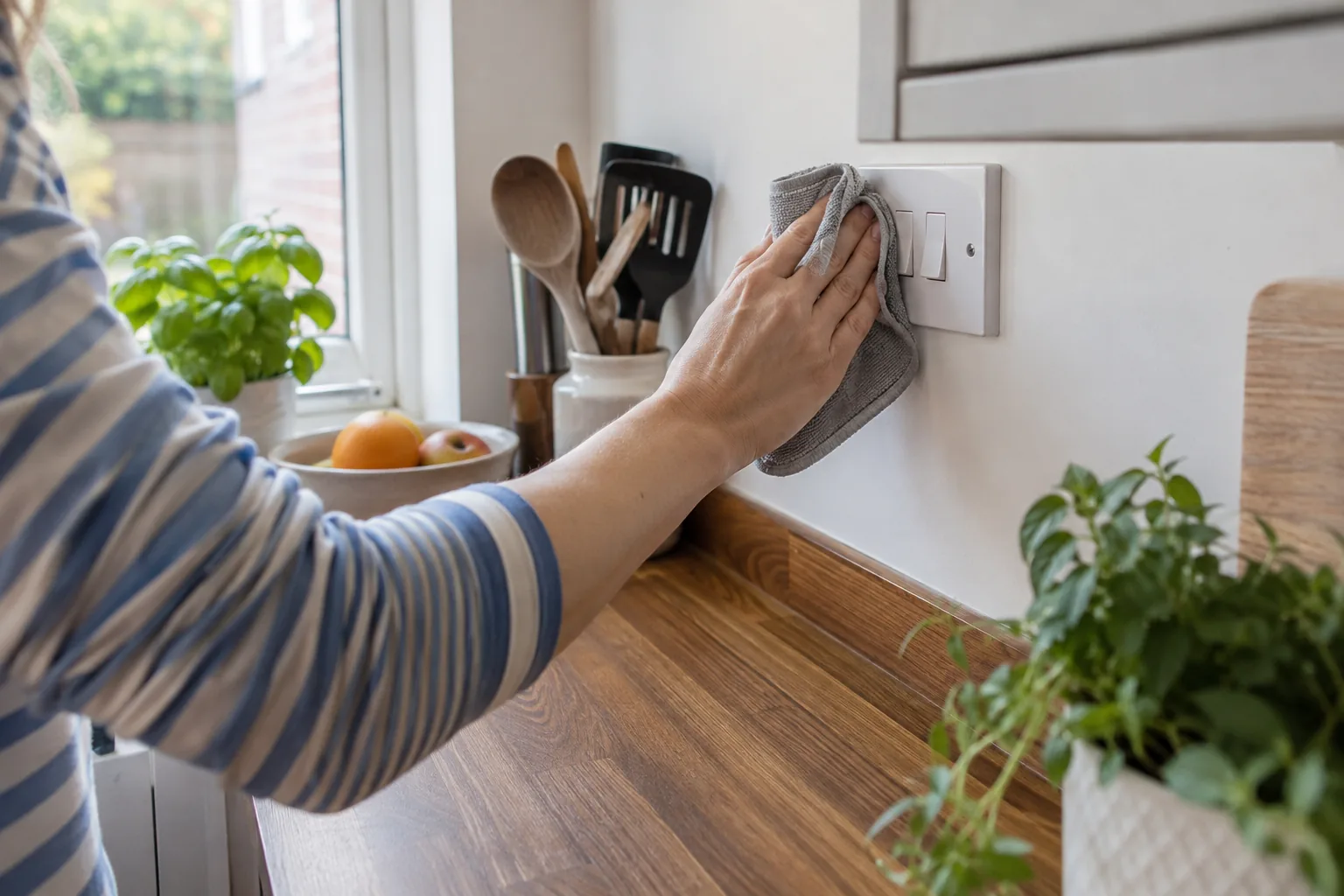
Start with ordinary soil: oil from hands on a kitchen handle, dust on a rail or a mark around a switch. Use a cleaner suitable for the material and a clean cloth. Work from less soiled to dirtier surfaces and expose a fresh face of the cloth as it loads. A cloth used on the bin pedal or toilet fitting should not return to a food-preparation area. Keep separate tools for the bathroom and kitchen where practical.
Clean a surface before applying any disinfectant that its label permits. Oil, crumbs and visible grime can interfere with the product’s intended use. Read the label for dilution, contact time, compatible materials, ventilation and any rinse instruction. Spraying and immediately wiping a surface is not equivalent to following a stated contact time. Avoid mixing formulations or using a product on a finish simply because its label mentions germs.
After cleaning, check for residue. A handle may look bright but feel sticky because too much product was left behind. Rinse with a fresh cloth if directed and allowed for the material, then dry it. People will touch the surface again immediately, so a clean, comfortable finish matters. If a fitting is loose, record it as maintenance rather than pressing harder with the cloth.
Match the method to the material
Door hardware may be stainless steel, plated metal, brass or painted wood. A product suited to ceramic tile may dull a coating or leave a film on metal. Test an inconspicuous area where the finish is unknown. Use controlled moisture around a handle’s fixing holes and dry the base. On natural or unfinished timber, avoid soaking the grain. A damaged coating can become more visible if it is rubbed aggressively in one small patch.
Electrical switches, remotes and keyboards have openings that must not receive liquid. Apply any maker-approved product to a cloth, not directly into the seams, and keep the cloth only lightly damp if permitted. Disconnect or power off equipment when its instructions require it. A visiting domestic cleaner should not dismantle a switch plate or keyboard to remove dirt inside it.
Soft furnishings are not ordinary touch-point surfaces for a spray-and-wipe routine. A chair arm in fabric may need vacuuming or a care-label assessment. Leather and coated upholstery also have specific directions. Do not extend a hard-surface disinfectant across a fabric armrest simply because people touch it. Identify the material and use the appropriate care method.
Know when disinfection is justified
Routine household upkeep generally begins with effective cleaning. A particular illness in the home or a specific contamination incident may call for additional measures. Follow current official health guidance for that situation and use a suitable labelled product on the relevant compatible surfaces. A person with medical vulnerability may need advice tailored to their circumstances. Do not assume a generic checklist can replace it.
Keep the response proportionate. If a food-preparation surface was contaminated, address that surface and the tools involved rather than applying a strong chemical to every door in the house. If a product requires a dwell time, protect the area from use during that period. Store the product safely afterwards, away from food and children. A clear sequence is more dependable than repeated spraying throughout the day.
Time the work so it lasts long enough to matter
Touch points are used throughout the day, so the moment of cleaning can affect the result. In a busy kitchen, a pass just after the evening meal may be more useful than wiping handles immediately before several people start cooking. A shared entrance handle can be included when the hallway is cleaned rather than requiring a separate round every hour. Choose a time that fits the household and allows a labelled product, if used, to remain on the surface for its required contact period.
One person should know which surfaces have just been treated. If a product needs rinsing before food contact, do that before the counter or handle is used again. Do not leave a wet switch plate, a slippery rail or a dripping door handle. Give people a clear route around any area that needs to dry. The finishing step is not simply cosmetic; it prevents a later user from touching excess product or moving it to another surface.
Keep cleaning tools in good condition. A cloth that is already greasy can transfer a film to every handle on the route. Wash reusable cloths according to their care instructions and store them dry. Replace a damaged brush or abrasive pad rather than using it on a delicate fixture. If several people share the task, provide enough clean cloths and an obvious place for used ones so the next person does not reach for the wrong tool.
Build a manageable shared routine
Write a short route that another household member can follow: for example, entrance handle, kitchen tap and fridge pull, then the shared bathroom fittings with a separate cloth. State the method for any delicate finish or electronic control. Review the route when a housemate changes or the way a room is used shifts. A list of surfaces is usually more helpful than a list of products because the method can then be chosen for each material.
During a regular domestic clean, agree which shared touch points are priorities. The cleaner can include them within the room sequence rather than making a second pass through the entire home. If time is limited, use a room-rotation plan for less frequently used fixtures. This avoids giving a rarely touched handle the same priority as the kitchen tap used every day. A room used as a workplace may have a separate cleaning arrangement; for a shared professional space, specify desks, switches and door hardware when scoping office cleaning.
Check the result after the surfaces dry. A residue, a loose fitting or a finish that has changed colour needs a different response from an ordinary fingerprint. The aim is a short, repeatable clean of the places people actually share, with extra treatment only where the circumstances and product instructions call for it.