

A room can look dusty again soon after it has been wiped. Sometimes a dry tool has lifted particles into the air only for them to settle elsewhere. Sometimes the source, such as ongoing sanding or an open storage area, is still producing material. A sensible method captures settled dust, follows the room from higher surfaces down and recognises when ordinary domestic cleaning cannot solve the source.
Understand what moves fine dust
A quick flick with a dry feather duster may clear a visible shelf while sending loose material into the room. Shaking a dusty cloth indoors has the same problem. Use a tool that retains the particles and change or fold it when loaded. If recent work has disturbed a large amount of dust, let airborne material settle before judging the final result. Keep doors or windows managed according to the work and ventilation needs; a strong draught through a dusty area may shift the material you are trying to collect.
Check for an ongoing source before repeating the clean. Fresh powder near a recently drilled wall, sanding in a neighbouring room or an extractor that deposits residue may explain a rapid return. Note where and when it appears. If a tradesperson is still working, schedule the final detailed clean after the activity ends and the area is safe. Repeated wiping during active dust production can consume time without delivering a lasting result.
Do not disturb unknown or suspect material merely to identify it. If there is a concern about hazardous building material, ask for competent assessment. A domestic cleaner can remove ordinary settled household dust; they should not claim to make the air allergen-free or certify that a renovation area is safe.
Work from higher surfaces to the floor
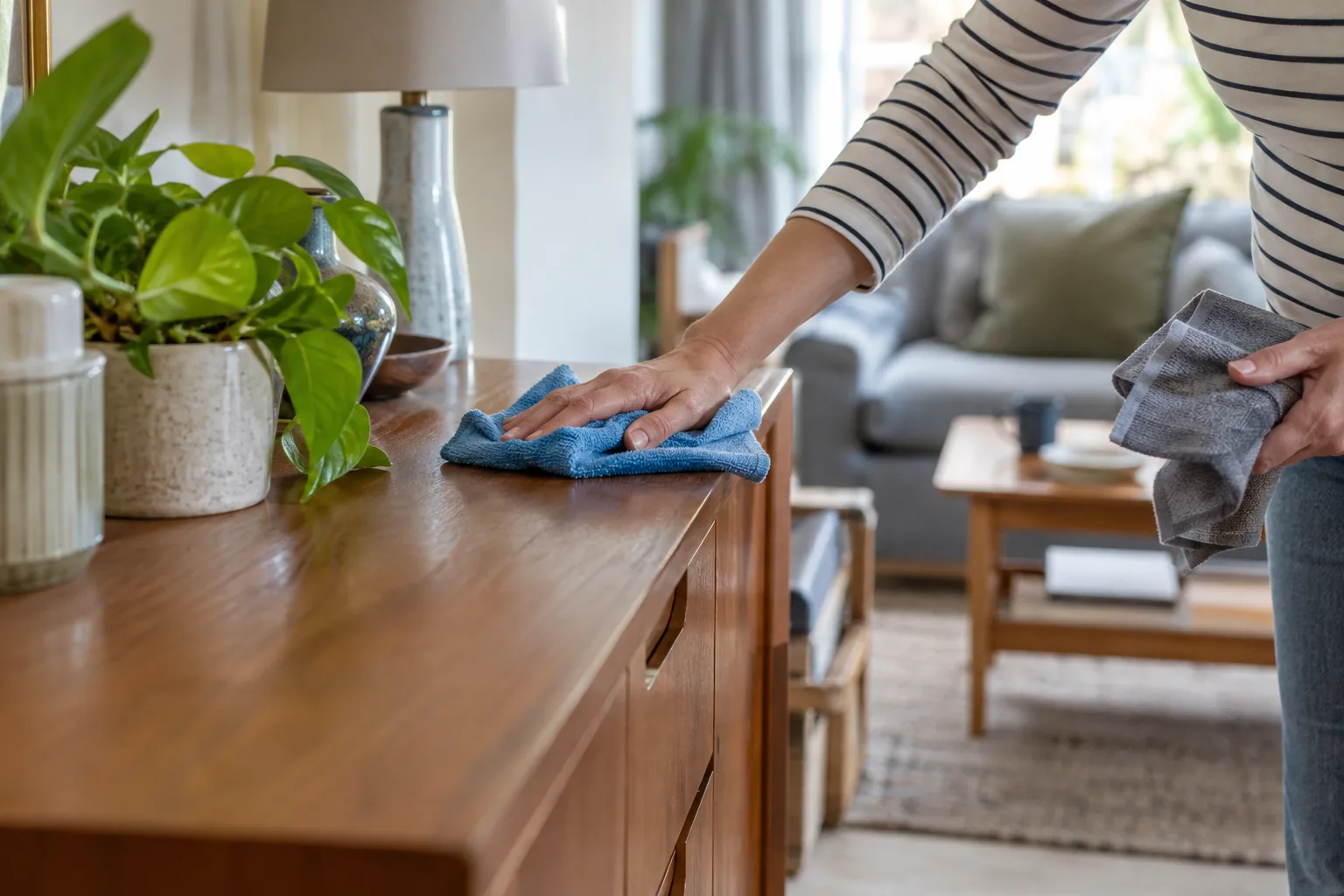
Plan a route around the room before opening a cloth. Move fragile small objects only if they can be handled safely, and ask the owner to move valuable collections or papers. Start with accessible shelf tops and ledges, then furniture, skirting and finally the floor. Dust dislodged from a high shelf will be captured in the later floor pass rather than falling onto a finished carpet.
Work around one section at a time. Dust the top and front of a shelf, then the objects that belong on it if their materials permit it. Avoid lifting an ornament by a narrow or loose part. Use a soft brush or suitable vacuum attachment for profiles and grooves that a broad cloth skips. A dark glossy surface may show any film left by a loaded cloth; switch to a clean face instead of polishing harder.
Safe reach sets the limit. Do not stand on a chair, stretch across a stairwell or move heavy furniture alone to reach a hidden ledge. Record inaccessible areas and arrange suitable access if they are important. A clear description of what could be reached is better than claiming every surface in the room was dusted.
Choose cloths for the material
A clean microfibre cloth can capture dust on many sealed surfaces. Some are used dry; a very lightly damp cloth may help on a compatible finish. The choice depends on the material. Unsealed wood, paper, delicate paint, screens and electrical equipment may be damaged by moisture. Read care instructions where available and test in a hidden place if the finish is uncertain. Apply any permitted product to the cloth, not into a seam or vent.
Fold the cloth into several faces and use a fresh face when the first is loaded. Keep a separate cloth for a heavily dusty area so grit does not reach polished furniture. Launder reusable cloths by their care instructions and let them dry before storage. A dirty cloth moved from one table to another is a method of redistribution, however expensive the cloth itself may be.
For electronics, follow the maker’s directions. A soft brush may remove loose dust around a monitor stand, but do not spray into a keyboard or open a device as part of routine housework. If dust is inside a powered appliance or ventilation duct, the task may need technical service. The visible exterior and the mechanism behind it are different scopes.
Vacuum after the higher work
Use a floor head suited to the carpet or hard-floor finish. Check that wheels and bristles are not carrying grit before moving onto a polished surface. Vacuum edges with a crevice attachment instead of forcing the main head into skirting. On upholstered furniture, an appropriate soft attachment can capture dust from accessible seams; test delicate fabric and avoid pulling loose yarns.
Maintain the vacuum. A full container, blocked hose or poorly fitted filter can reduce pickup or exhaust dust into the room. Follow its instructions for emptying and filter care. Do not claim a particular air-quality result from a visual clean. The immediate check is whether settled particles were collected without leaving a new film on the furniture and floor.
If the room has a rug, check its care label and pile before using a rotating brush. A fragile weave may need a gentler head or specialist advice. Dusting methods should respond to the surface, not simply to the amount of dust visible.
Handle storage and textiles as separate jobs
Dust inside an open bookcase differs from dust inside a full cupboard. In a bookcase, move a small group of books, clean the exposed shelf and return them when it is dry. Avoid pressing a damp cloth against paper edges. A closed cupboard should be emptied by the household before a cleaner is asked to work inside it. Do not shift private documents or decide which stored items can be discarded. This preparation can take longer than the wiping and should be included in the plan.
Curtains, fabric lampshades and upholstered chairs hold dust in fibres. Check their care labels and construction before using a brush or vacuum attachment. A hard floor nozzle can pull a loose weave or bend a lampshade frame. Test a soft attachment on an inconspicuous area and stop if fibres lift. If a textile has a stain as well as dust, do not wet it just to finish the dusting task; stain treatment needs a separate material assessment and drying plan.
Pay attention to how objects are replaced. A shelf dusted thoroughly can look grey again if dusty storage boxes are put straight back. Wipe suitable box exteriors and allow them to dry, or ask the owner to deal with them before the visit. Return books and objects to their agreed places without overcrowding the shelf. Leave a little access for the next clean. The goal is to remove the settled material from the area, not merely transfer it temporarily to a pile on the floor.
Distinguish ordinary dust from renovation residue
Dust after decorating or building work can settle on high ledges, behind doors and along floor edges in a way ordinary weekly dust does not. First confirm the trades have finished, the area is safe and remaining materials have been removed. Then plan a top-to-bottom pass with clean cloths and a suitable vacuum. A post-builders clean has a different scope from recurring household dusting. If work is still producing powder, schedule the final clean for later.
For normal living areas, agree the detailed ledges and shelves within a domestic cleaning visit. Less-used high areas can rotate between appointments rather than being rushed every time. The existing room-rotation guide can help decide what fits a regular visit. The useful test is a clean, dry surface after dust has settled, with any active source recorded separately.