
A freshly cleaned carpet needs a practical drying plan, especially when it runs through a hallway or the only bedroom. Drying is affected by the method used, the amount of moisture left in the pile, fibre, backing, room temperature and airflow. A promised universal number of hours is less helpful than knowing how the room will be used and what to check before putting furniture back. Ask the cleaner what method they will use and follow their instructions for that particular carpet.
Plan access before the appointment
Decide which rooms must remain available, where children and pets can stay, and whether anyone needs to cross a treated hall. If the carpet is in a bedroom, schedule the visit so it has a realistic period to dry before bedtime. Move light items that block access if safe to do so, and ask how heavier furniture will be handled. The cleaner may use protective tabs or blocks under furniture, but those do not make damp carpet ready for unrestricted use. Keep shoes and dirty soles away from the pile during the early drying period.
Note any pre-existing damp patches, loose seams or unusual odours before cleaning starts. These can affect what method is suitable and how you interpret the result. Tell the cleaner about a wool or other delicate fibre if known, previous spot products and any area with an uncertain backing. Do not assume that a carpet is suitable for the same amount of moisture as the one next door. Our article on when to stop treating a carpet stain yourself is useful if a problem area has already had several products applied.
Understand why drying times vary
A low-moisture method and a hot-water extraction method can leave different amounts of residual moisture, but technique and equipment matter as much as the label. Dense pile holds water differently from a short, open pile. Underlay and backing can slow evaporation. A cool, humid day offers less drying potential than a warm day with controlled airflow. A room with its door closed and furniture tightly packed may dry unevenly, even if the visible walking area feels nearly ready.
Ask the provider for a drying estimate based on the actual method and conditions, plus a conservative point at which normal use can resume. Treat an estimate as a guide, not a guarantee. Touch alone can be misleading: the top fibres may feel dry while the base of the pile remains damp. If the room still feels humid or the carpet has an unusual odour after the expected interval, seek advice before covering it or repeating treatment. More water is rarely the first answer to slow drying.
Make airflow useful without creating a problem
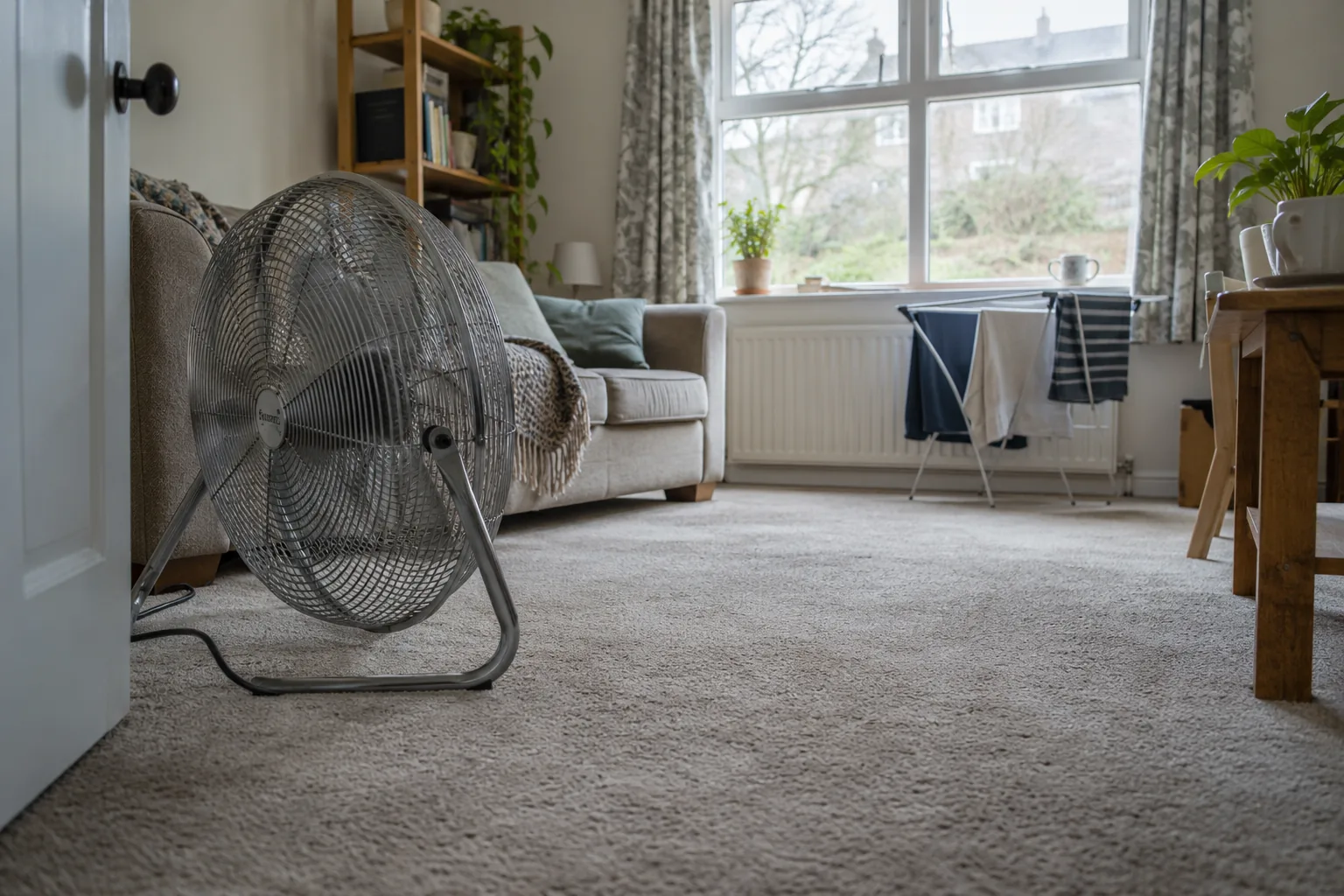
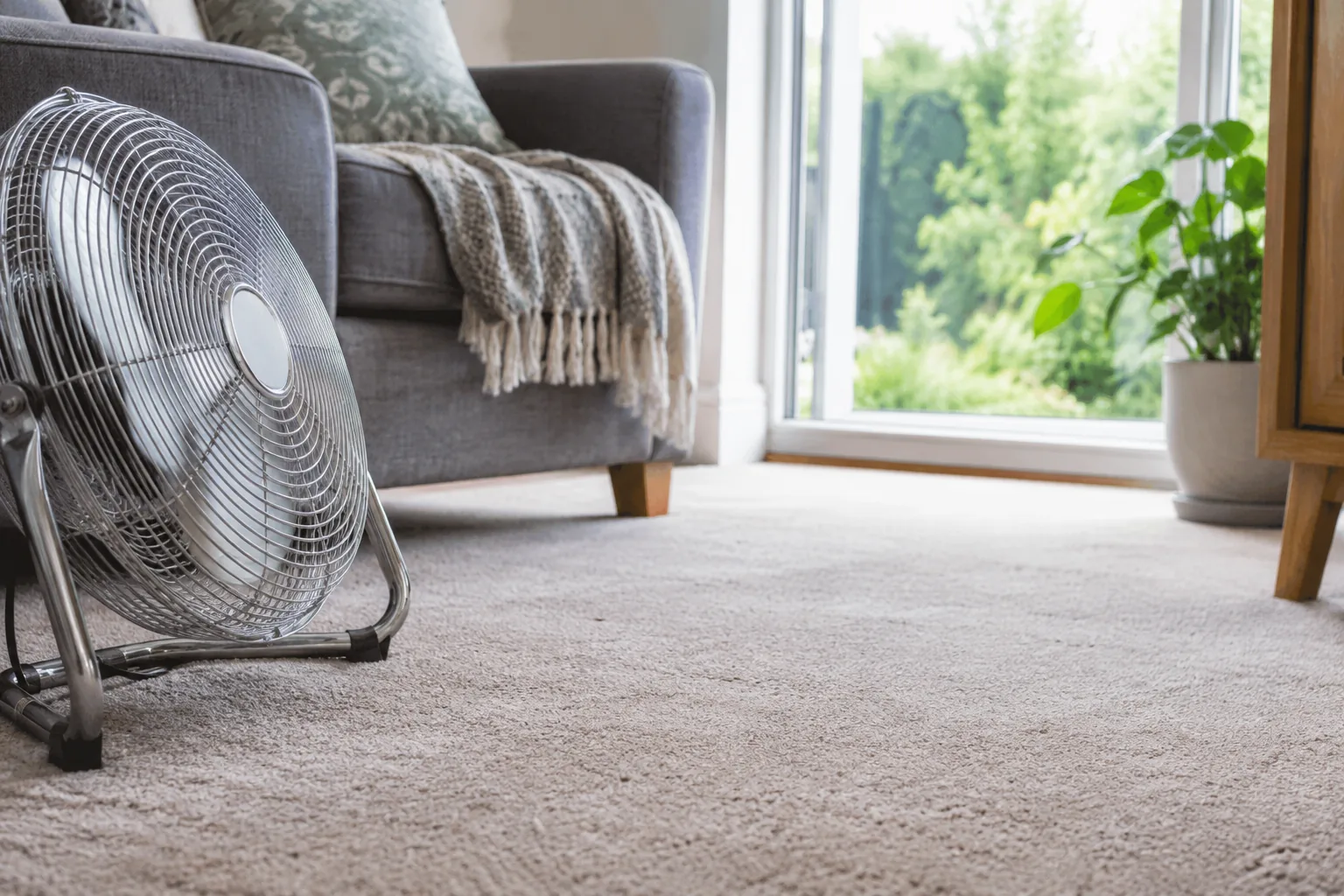
Follow the cleaner’s ventilation advice. If outdoor air is drier, opening windows can help; in cold or damp weather, sensible heating and controlled ventilation may be more effective than leaving a room open to rain. A fan can move air across the surface if placed safely and away from water or trip routes. Avoid directing intense heat at one patch, which may affect the backing or make drying uneven. A dehumidifier can help in some rooms when used according to its instructions, but it does not replace extracting excess moisture properly.
Open internal doors when practical so air can circulate, and pull curtains clear of damp carpet. Keep furniture off the treated area until the agreed time. If you have to cross a hallway, ask the cleaner about a temporary route and footwear guidance; improvised plastic sheeting can trap moisture underneath. Do not replace rugs on top of a drying carpet. The covered area will dry more slowly and may transfer colour from the rug or its backing.
If the loose rug needs cleaning as well, arrange rug cleaning as a separate textile task. Its backing, dye and drying requirements may differ from the fitted carpet beneath it; both pieces should be fully dry before they are layered again.
Return the room to use in stages
Begin with light access only when the cleaner says it is appropriate and the pile is no longer damp at its base. Use clean socks or suitable footwear as instructed. Heavy furniture should wait until the carpet is dry enough that weight will not compress wet fibres or trap moisture beneath feet. Protective tabs should remain in place for the period the cleaner recommends. When they are removed, check for any colour transfer or marks. If a piece of furniture has a metal foot or a finish that might bleed, ask for extra protection before it is set down.
Vacuuming immediately may disturb the pile or pull at still-damp fibres; ask when it is suitable to resume. Once dry, a gentle vacuum can lift the pile and remove any loose residue. Do not judge the colour while the carpet is still damp, because wet fibres often look darker. If a stain reappears as drying progresses, document it and contact the provider rather than adding another household cleaner. The source may be deeper in the pile or underlay and needs assessment.
Make a simple room plan
For a through-room or hallway, work out how people will reach the bathroom and kitchen before any cleaning solution is applied. If there is no alternative route, it may be better to clean at a time when the house will be empty for several hours. Keep a dry mat at the entrance to the treated area and explain the access plan to everyone in the household. A child or pet running across a damp carpet can bring in soil and may slip on nearby hard flooring. If the clean covers several rooms, ask whether the work can be sequenced so at least one room remains ready for use while another dries.
Check the forecast as a planning aid, but adapt to the actual weather. Opening windows during driving rain can make a room wetter, while shutting every window on a mild dry day can leave humidity trapped. The cleaner can advise which combination of ventilation, heating and fans is suitable. If a dehumidifier is used, place it where its manufacturer directs and empty it safely; its collection tank does not reveal exactly how much water remains in the carpet. Observe the carpet itself and the room conditions. A window that fogs up heavily after cleaning can indicate that moisture is still evaporating and ventilation needs attention.
Watch for signs that need follow-up
A persistent wet feel, musty smell, colour bleeding, rippling or damp skirting are reasons to speak to the cleaner promptly. Explain where the issue occurs, when the clean finished and what ventilation was used. Photographs and a simple timeline help. Do not conceal the area beneath a bed or rug while waiting. If water has reached a wall or subfloor, professional assessment may be needed beyond a normal carpet-cleaning service.
Take care with furniture whose feet were already touching a stain or damp patch before the visit. Wood finishes and metal can mark damp fibres if they are returned too early. Where a heavy wardrobe cannot be moved, ask the cleaner to explain what area can actually be treated and how airflow will reach its edge. Do not interpret an untreated strip under permanent furniture as a failure of the whole clean. Agreeing access and limitations beforehand is more useful than discovering them after the carpet is wet. Keep the final invoice or work note so you can refer to the method and aftercare instructions if a concern appears later.
Carpet cleaning should leave a room usable again, but the best schedule gives it breathing space. Place the appointment before a period when you can limit traffic, ventilate safely and return furniture gradually. The related guide to upholstery drying shows why sofas and chairs need a different access plan: their fillings and cushion construction can retain moisture in ways a carpet does not. For carpets, the practical test is the whole pile and the area beneath furniture, not merely a dry-looking surface.