

A bathroom often looks tidy just after use while water remains in the shower track, beneath a bath mat or behind a row of bottles. That moisture can make the next proper clean harder. The most useful between-visit routine therefore starts with drying and ventilation, then deals with fresh toothpaste, soap and touch marks. Old scale and damaged joints need their own time and method.
Control water before treating marks
After a shower, move bottles away from the wet ledge and let the screen or curtain sit in a position that helps it dry without obstructing the room. A squeegee can remove droplets from suitable glass; a clean cloth can dry the bottom edge and tap area. Check the manufacturer’s advice if the screen has a protective coating. Hang a damp bath mat or towel rather than leaving it pressed against the floor or wall. These small actions address fresh water. They will not remove an old mineral deposit, but they reduce the new spotting that appears on top of it.
Use the ventilation available in the room as intended. If an extractor is fitted, notice whether it runs and whether steam clears in normal use. A fan that does not work, a wall that stays wet or a pool that returns after the shower is off should be reported to the person responsible for maintenance. A cleaner can remove surface residue; they cannot diagnose a hidden leak from appearance alone. If you rent, keep a simple note of when and where the wetness appears.
A quick daily bathroom circuit
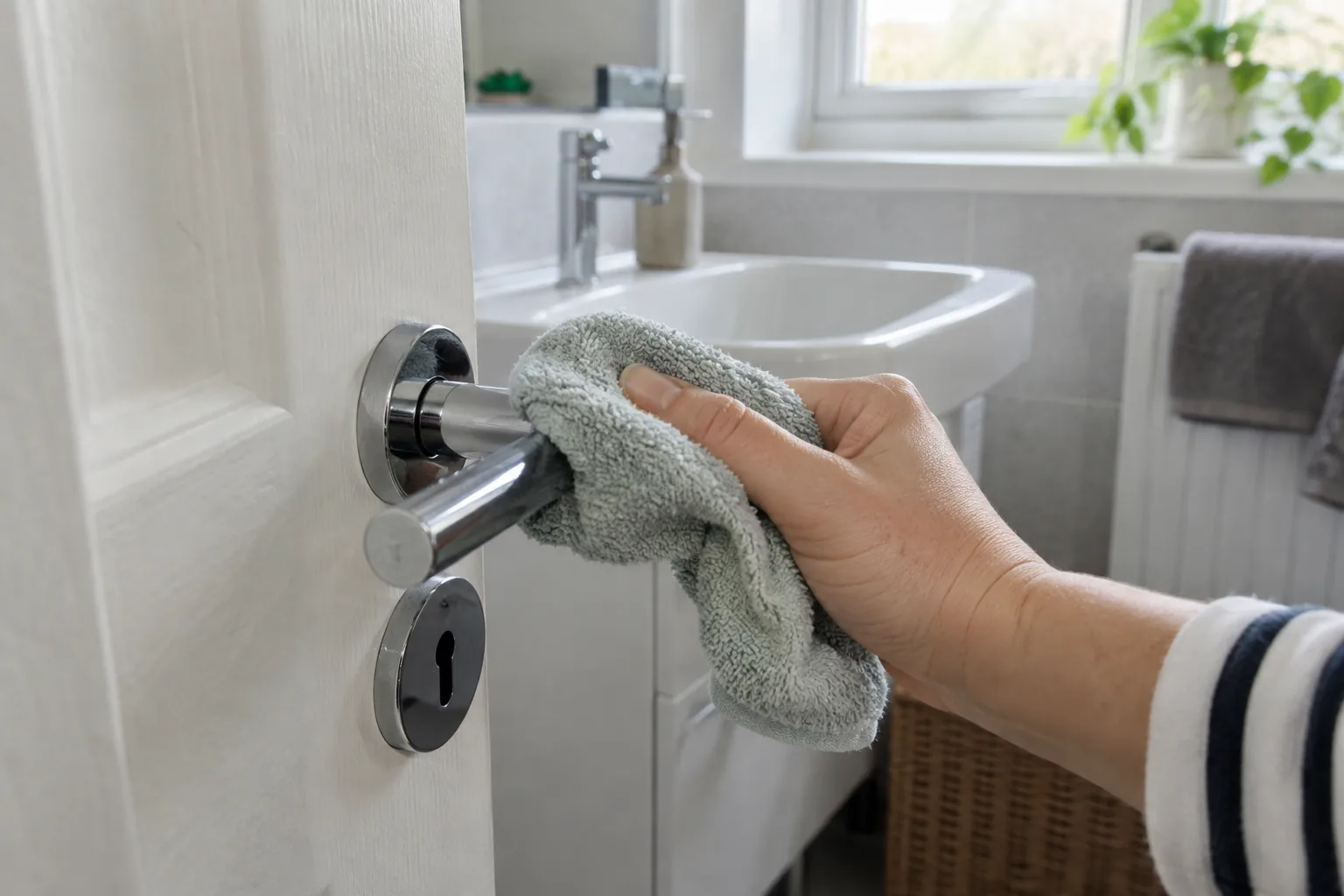
Make the circuit short enough to finish consistently. Clear the basin edge, remove fresh toothpaste or soap, wipe the tap and basin rim, then dry visible splashes. Use a separate cloth for the toilet seat and flush plate; never take that cloth back to the basin. If a toilet brush is used, allow it to drain and store it as its holder is designed. Wash reusable cloths and let them dry between sessions.
Follow the product label, including any dilution, ventilation or rinse instruction. More chemical is not necessarily more effective. A strong descaler used every day can affect some plated taps, stone or coated surfaces. Choose a product that suits each material and use only as directed. Keep sprays away from electrical switches and sockets. Where a tap or basin finish is uncertain, test an inconspicuous area before treating a prominent mark.
Put toiletries back only after the ledge is dry. Bottles often hide a ring of soap residue, and returning them immediately to a wet shelf traps the water beneath. A compact bathroom may have little space to set items aside; a dry towel outside the room can temporarily hold them while the ledge is cleaned. Avoid placing cleaning products next to toothbrushes or contact-lens supplies during the process.
Rotate the weekly details
The daily circuit should leave time for a more careful weekly pass. One week, focus on the lower shower track and the bath edge; the next, check behind taps, the base of the toilet and the floor perimeter. Lift light movable items, remove loose debris first, then use a soft tool that fits a corner without forcing it into a seal. Rinse where required and dry the area before replacing bottles or mats. This is more manageable than treating every narrow gap after every shower.
Look at the type of mark before selecting a product. White residue could be limescale, dried soap or cleaner left behind. A gentle test and a dry inspection are more informative than applying an acidic product across the whole fitting. Natural stone, vulnerable metal and coated glass can be damaged by a cleaner that is suitable for plain ceramic tile. Never mix bathroom products, especially bleach with acidic descaler. Clear and rinse one product according to its label before considering another.
If the bathroom is shared, note which details get dirty fastest. A heavily used shower may need its track checked often, while a seldom-used bath mainly collects dust on its rim. A rota based on actual use is easier to keep and gives a visiting cleaner useful priorities. For help deciding the interval between booked visits, see the guide to weekly or fortnightly cleaning.
Include the floor and bathroom storage
The floor is easy to overlook when the fixtures draw attention. Lift the bath mat, remove hair and loose debris, then use a method suited to tile, vinyl or other installed flooring. Keep excess water out of joins and along the base of fitted furniture. Pay particular attention to the area beneath the basin, where drops can be missed while the room is occupied. Let the floor dry before putting the mat back. If a tile is loose or a floor edge has lifted, record the condition rather than forcing water into the gap.
Storage shelves and medicine cabinets need a different order. Ask the household to remove personal medicines and fragile items; a cleaner should not decide what to discard. Dust or wipe the accessible shelf using a product compatible with its finish, then dry it before bottles return. Check the bases of soap dispensers and containers, which can leave a ring on a newly cleaned shelf. Do not store damp cloths in a closed cabinet. If a cupboard smells musty despite clean, dry shelves, check for a hidden drip or lack of ventilation instead of covering the smell with fragrance.
A mirror can be cleaned without spraying liquid towards its frame or nearby socket. Apply a suitable product to the cloth, work across the glass and dry the lower edge. A persistent dark patch behind the mirror backing is not surface dirt and may need replacement. The same principle applies across the room: clean what is accessible and sound, then record a defect accurately rather than trying to polish it away.
Know what cleaning cannot fix
Some dark marks sit on sound grout and can be treated as surface soil. Others appear beneath flexible sealant, beside a gap or on paint that remains damp. Do not pry under silicone or scrub crumbling grout to chase the colour. If a joint is loose or missing, it may need repair before repeated washing makes sense. Photograph the dry condition in even light and describe exactly where it returns. Avoid claiming a cause or a particular type of growth from colour alone.
Pay attention to a drip that appears after the tap is turned off, a toilet base that remains wet or paint that peels near an extractor. These signs deserve maintenance attention. A routine wipe can make the room presentable while leaving the source untouched. Tell a landlord or property manager promptly when the condition is recurring. The record should distinguish what was cleaned from what remained wet or damaged.
Prepare the room for a booked clean
Clear toiletries from the surfaces you want cleaned and tell the cleaner about any vulnerable finish or loose fitting. If scale has built up over months, allow more time than a routine visit and describe the actual condition. A domestic cleaning visit can include a rotation of accessible details, while a more substantial deposit may call for the scope of a deep clean. Neither service replaces a repair to failed sealant or an extractor.
Leave a period for the surfaces to dry after the work. A damp track or cupboard should not be covered immediately with bottles, mats or stored towels. Inspect in good light once the product film and water have gone. If a mark remains, note whether the material feels sound and whether the colour is within the surface rather than loose on it. Repeated abrasive treatment may do more harm than a visible stain.
The between-visit routine can stay simple: dry the wettest places, remove fresh soil, keep toilet tools separate and report recurring moisture. Those actions make the bathroom easier to use and give the next thorough clean a clear, realistic scope.